
The yellow leaves on a monstera almost always point to something fixable.
Monstera leaves turn yellow from overwatering, underwatering, low light, nutrient deficiency, root rot, or natural aging. The most common cause is overwatering — soggy soil suffocates roots and blocks nutrient uptake. Fix it by checking soil moisture before watering, moving your monstera to bright indirect light, and feeding with diluted liquid fertilizer every 4–6 weeks during spring and summer.
Before you panic and repot everything, let’s walk through exactly what’s causing those yellow leaves and what you should do about each one. Identifying the pattern of yellowing is the key — it tells you almost everything you need to know.
Why Are My Monstera Leaves Turning Yellow?
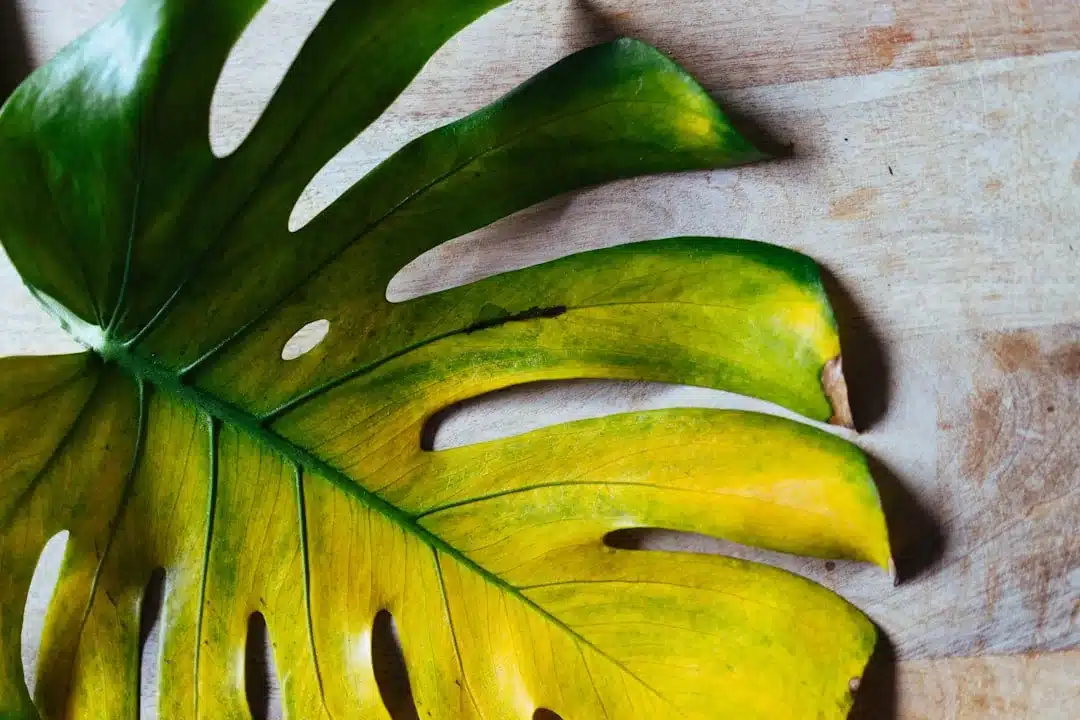
Not all yellow leaves look the same, and that difference matters. A leaf yellowing uniformly from the outside in tells a different story than one that yellows between the veins, or one at the very base of the plant.
Just like diagnosing holes on rose leaves, the visual pattern is your diagnostic starting point — get that right and the fix becomes obvious.
Here are the six most common causes, and how to tell them apart.
Overwatering

Overwatering is by far the most common reason monsteras develop yellow leaves, especially in low-light indoor environments where the soil stays wet for a long time.
When roots sit in constantly soggy soil, they can’t breathe. Oxygen-deprived roots stop absorbing nutrients and water efficiently — the plant starves even though the soil is wet.
How to identify it:
The soil will feel wet or damp more than 2 inches below the surface. Leaves often look limp and yellowing at the same time, and you may notice the yellowing affects multiple leaves at once — not just one isolated one. You might also spot leaves turning translucent or glassy before full yellowing sets in.
The fix is to let the soil dry out completely before watering again, and to check that your pot has adequate drainage holes.
Underwatering

On the other end, a thirsty monstera will also yellow — but it looks different.
Underwatered leaves tend to yellow and crisp at the edges first, and the soil will feel bone dry well below the surface. The plant may also droop noticeably.
How to identify it:
Push your finger 2 inches into the soil. If it’s completely dry and the leaves are yellowing with brown, crispy tips or edges, underwatering is the likely culprit.
The fix is a thorough, slow watering until water drains freely from the bottom, then resuming a consistent schedule — typically every 7–10 days in warm months, every 14–21 days in winter.
Root Rot
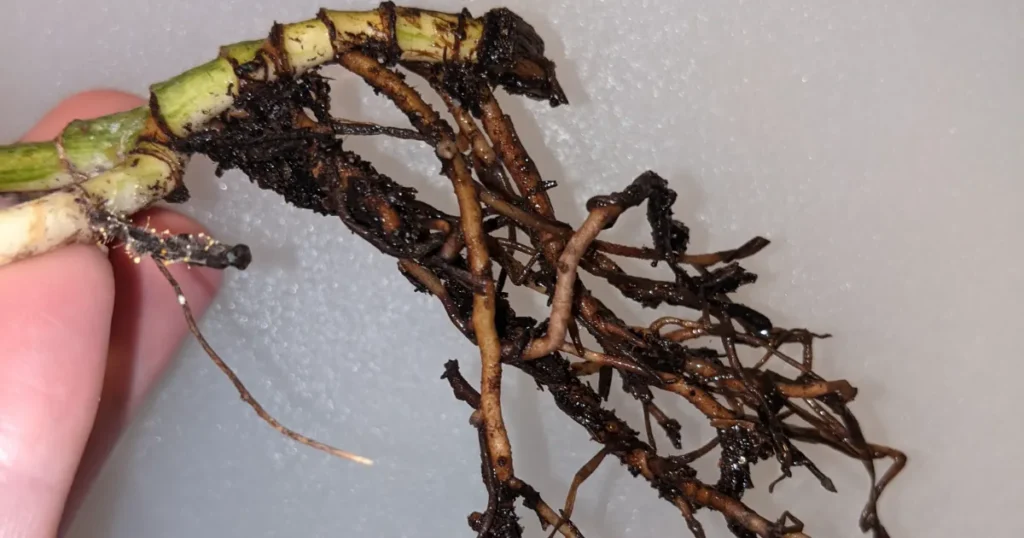
Root rot is what happens when overwatering goes on too long. It’s overwatering’s more serious consequence, and it warrants its own section because the treatment is more involved.
When soil stays wet for extended periods, fungal pathogens (most commonly Phytophthora and Pythium species) attack the root system, turning healthy white roots to brown, mushy tissue.
How to identify it:
Lift the plant out of its pot. Healthy roots are white or light tan and firm. Rotten roots are brown or black, soft, and may smell unpleasant. Yellow leaves combined with mushy roots and persistently wet soil is a clear sign of root rot.
To fix root rot, trim all affected roots with clean scissors or shears, dust the cuts with cinnamon (a natural antifungal), and repot into fresh, well-draining soil. Let the plant recover in bright indirect light with careful, reduced watering.
Low Light

Monsteras are tropical plants that evolved under forest canopy — bright, filtered light is their natural environment. Move them too far from a window, and photosynthesis slows, chlorophyll breaks down, and leaves gradually yellow.
How to identify it:
Low-light yellowing tends to be slow and diffuse — the whole leaf lightens gradually rather than yellowing in patches. The plant may also stop producing new growth or produce very small, non-fenestrated leaves.
The fix is to move your monstera closer to a bright window. East- or west-facing windows work well. If a south-facing window is your only option, use a sheer curtain to diffuse the direct sun — direct harsh sunlight can scorch leaves.
Nutrient Deficiency

If your monstera has been in the same pot and soil for more than a year without fertilizing, nutrient depletion is a real possibility. Nitrogen deficiency is the most common culprit for generalized yellowing.
How to identify it:
Nitrogen deficiency typically causes older, lower leaves to yellow first, while newer growth stays green. Iron or magnesium deficiency causes interveinal chlorosis — the tissue between the leaf veins yellows while the veins themselves stay green.
This is similar to the nutrient patterns you’d see with yellow leaves on tomato plants, where deficiencies follow predictable visual rules.
The fix is to feed your monstera with a balanced liquid fertilizer — something around a 20-20-20 NPK ratio works well. Dilute to half strength and apply every 4–6 weeks from March through September. Hold off on fertilizing in fall and winter when the plant is dormant.
Natural Aging
Sometimes a yellow leaf is just an old leaf. Monsteras regularly shed their oldest, lowest leaves as they push out new growth. One or two yellowing leaves near the base of the plant, with no other symptoms, is completely normal.
How to identify it:
The yellowing leaf will be one of the oldest on the plant — closest to the soil, with the most wear and tear. The rest of the plant looks healthy and green, and you may notice a new leaf emerging at the same time.
No fix needed. Simply trim the yellow leaf cleanly at the base with sterilized scissors and move on.
How to Diagnose the Cause: A Step-by-Step Check
Don’t guess — work through this quick check first.
- Check the soil. Push your finger 2 inches deep. Wet and soggy? Overwatering or root rot. Bone dry? Underwatering.
- Check the roots. If soil is wet and leaves are yellow, tip the plant out and inspect the roots. Brown and mushy = root rot.
- Count the yellow leaves. One or two at the base = likely natural aging. Multiple leaves across the plant = watering, light, or nutrition issue.
- Look at the yellowing pattern. Uniform yellowing = overwatering or light. Crispy edges = underwatering. Interveinal = nutrient deficiency.
- Assess your light. Is your monstera more than 5–6 feet from a window, or in a north-facing room? Low light may be contributing.
- Check your fertilizing history. If you haven’t fed the plant in over a year, nutrient deficiency is worth testing.
If your watering schedule feels inconsistent, you’re not alone — it’s one of the most common struggles with indoor tropicals. The same diagnostic logic applies to orchid leaves turning yellow, where overwatering is also the number one offender.
Quick Reference Diagnosis Table
| Cause | Visual Pattern | Solution |
|---|---|---|
| Overwatering | Multiple leaves yellow, limp; wet soil | Let soil dry out; improve drainage |
| Underwatering | Yellowing with crispy edges; dry soil | Water thoroughly; establish consistent schedule |
| Root rot | Yellow leaves + mushy brown roots + wet soil | Trim roots, repot, reduce watering |
| Low light | Gradual, uniform lightening; slow growth | Move closer to a bright window |
| Nutrient deficiency | Older leaves yellow first; interveinal on new leaves | Fertilize at half strength every 4–6 weeks |
| Natural aging | One or two lowest leaves yellowing | Remove cleanly; no action needed |
How to Fix Yellow Monstera Leaves
Most fixes come down to three core adjustments. Here’s how to execute each one properly.
Fix Overwatering and Root Rot
Step 1: Stop watering immediately.
Let the soil dry out completely before considering watering again.
Step 2: Check and improve drainage.
Make sure your pot has drainage holes. If it doesn’t, repot into one that does. Monstera roots need air as much as they need water.
Step 3: Inspect the roots.
If you suspect root rot, remove the plant from its pot, shake off old soil, and examine the root ball. Trim any brown, soft, or foul-smelling roots back to healthy white tissue using sterilized scissors.
Step 4: Repot with fresh, well-draining soil.
A good monstera mix is roughly 40% potting soil, 30% perlite, and 30% orchid bark. This combination holds some moisture while allowing excellent airflow around the roots.
Step 5: Resume careful watering.
Water only when the top 2 inches of soil are dry. In most indoor conditions, that means watering once every 7–10 days in growing season.
Fix Underwatering
Step 1: Water slowly and thoroughly.
Pour water gradually until it flows freely from the drainage holes. This ensures the entire root zone is hydrated, not just the surface.
Step 2: Set a watering reminder.
Monsteras do well on a consistent schedule. Check moisture every 5–7 days in spring and summer; every 10–14 days in fall and winter.
Fix Nutrient Deficiency
Step 1: Choose a balanced liquid fertilizer.
A balanced NPK (20-20-20 or similar) or a formulation designed for tropical foliage plants works well for monsteras.
Step 2: Dilute to half strength.
Concentrated fertilizer can burn roots, especially if the plant is already stressed. Half strength protects the plant while still delivering nutrients.
Step 3: Apply every 4–6 weeks.
Feed from early spring through late summer. Pause completely from October through February.
Prevention: Keeping Monstera Leaves Green Long-Term
The best approach to yellow leaves is never getting there in the first place. These habits make a real difference.
Water by feel, not by calendar. Soil moisture varies with pot size, season, humidity, and light levels — a set schedule ignores all of that. Always check the soil before you water.
Give your monstera a stable, bright spot. East- or west-facing windows are ideal. Consistent light means consistent photosynthesis — the engine that keeps those leaves green and glossy.
Feed regularly during the growing season, but not in winter. Overfertilizing a dormant plant causes salt buildup in the soil, which can cause its own set of problems including — you guessed it — yellowing leaves.
Neem oil is a useful preventive tool for long-term plant health. A diluted spray (2 tablespoons neem oil + 1 teaspoon liquid dish soap per gallon of water) applied monthly keeps fungal issues and pest pressure low, both of which can stress the plant and contribute to yellowing.
I keep neem oil on hand as a monthly preventive spray — it keeps fungal stress and pest pressure low, both of which can contribute to yellowing.
I use bliss pure neem oil from Amazon for a great price. It works great when it comes to shining leaves and provides a layer of protection for plants against common pests.

When to Worry
Most yellow leaves on a monstera are manageable. You should escalate your response if:
- More than 30–40% of the leaves are yellowing at once
- New growth is yellowing immediately after emerging
- The stem is soft, mushy, or discolored at the base (stem rot)
- You see signs of pests — webbing (spider mites), white cottony clusters (mealybugs), or sticky residue (scale insects)
Stem rot and severe root rot may require cutting the plant back to healthy tissue and propagating from a healthy stem cutting. It’s a last resort, but monsteras propagate readily and often come back stronger.
Frequently Asked Questions
Should I remove yellow leaves from my monstera?
Yes — once a leaf has turned fully yellow, it won’t recover. Remove it cleanly at the base with sterilized scissors to redirect the plant’s energy into healthy growth and reduce the risk of fungal infection.
Can yellow monstera leaves turn green again?
Partially yellowed leaves may stabilize and remain on the plant, but a fully yellow leaf will not return to green. The chlorophyll is gone. Focus on stopping the cause so new leaves come in healthy.
How often should I water my monstera to prevent yellowing?
Most indoor monsteras need watering every 7–10 days in spring and summer, and every 14–21 days in fall and winter. Always check that the top 2 inches of soil are dry before watering.
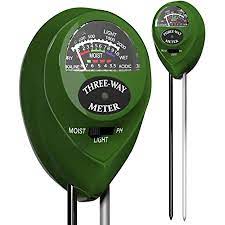
I use a 3-in-1 moisture meter to take the guesswork out of watering — it tells me exactly when the top 2 inches are dry, which is the key signal for monsteras.
Take the guesswork out of watering plants and keeping the soil moist. It is both cost-effective and durable.
Best of all, it also measures pH and light. It’s worth a look.
Is yellow leaf on monstera a sign of overwatering or underwatering?
Both cause yellowing, but overwatering is far more common indoors. Overwatered leaves tend to be limp and soft; underwatered leaves tend to yellow with dry, crispy edges. Check the soil moisture to confirm.
Can too much direct sunlight cause yellow leaves?
Yes. While low light is more commonly the culprit, intense direct sun — especially through south-facing windows in summer — can scorch and bleach monstera leaves. Bright indirect light is ideal.
How do I know if my monstera has root rot?
Tip the plant out of its pot and examine the roots. Healthy roots are white and firm. Rotten roots are brown or black, mushy, and may smell sour or unpleasant. Yellow leaves combined with persistently wet soil is a strong signal to check.
The Bottom Line
Yellow leaves on a monstera are almost always a message, not a death sentence. Overwatering is the most frequent cause, followed by root rot, low light, and nutrient deficiency — and each one leaves a distinct clue in how and where the yellowing appears.
Work through the soil check, inspect the roots if needed, adjust your light and watering routine, and feed the plant during its growing season. In most cases, new healthy growth will follow within a few weeks.
The key is to diagnose before you act — check the soil, look at the pattern, and match the fix to the actual cause rather than guessing.
Related Posts
- Holes on Rose Leaves: Causes and How to Fix Them
- Rose Leaves Turning Yellow: Causes and Fixes
- Orchid Leaves Turning Yellow: What It Means
- Cucumber Leaves Turning Yellow
- Lavender Leaves Turning Yellow
Related Articles
Pepper leaves curling? Learn the 7 most common causes — from underwatering and heat stress to aphids and viral disease — plus step-by-step fixes to help your plants recover fast.
Pepper Leaves Turning Yellow: Why It Happens and How to Fix It
Pepper plant leaves turning yellow? Learn the 7 most common causes — from nitrogen deficiency to overwatering — and get specific, actionable fixes to bring your pepper plants back to health.