
The yellowing of lavender leaves almost always point to a fixable growing condition. It’s rarely a death sentence for the plant.
Lavender leaves turn yellow from overwatering, poor drainage, root rot, nitrogen deficiency, over-fertilization, natural aging of lower foliage, or transplant shock. The most common culprit is waterlogged soil suffocating the roots lavender is a Mediterranean plant that thrives in dry, well-drained conditions. Most causes are fully reversible with simple soil amendments, watering adjustments, or a change in fertilizer routine.
Before you reach for any product or start digging up your plant, identifying the cause makes all the difference. The fix for overwatering is almost the opposite of the fix for nutrient deficiency, so getting the diagnosis right first saves you from making things worse.
Why Do Lavender Leaves Turn Yellow?
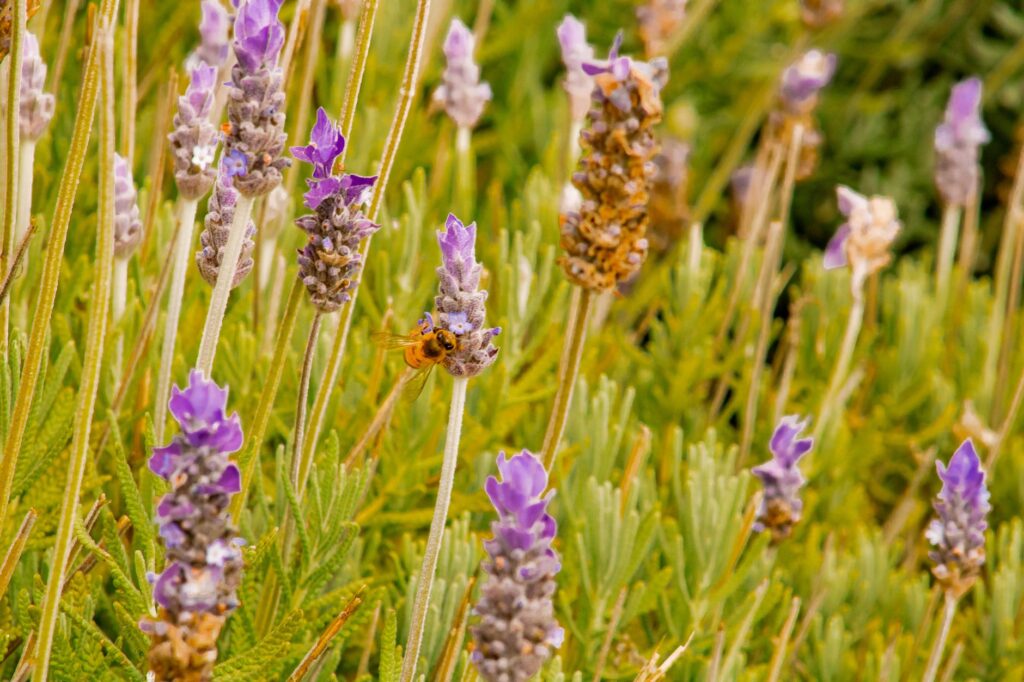
Lavender is adapted to poor, dry, rocky soils in the Mediterranean. It evolved to struggle in rich, wet, fertilized conditions which is the exact opposite of what most gardeners instinctively provide.
Most yellowing problems come down to too much water, too much nutrition, or a soil environment that traps moisture against the roots.
Understanding what “too much” looks like for lavender helps you spot the cause quickly and correct it before the whole plant declines.
The 7 Causes of Yellow Lavender Leaves (and How to Fix Each One)
1. Overwatering and Waterlogged Soil

Overwatering is the single most common reason lavender turns yellow. Most gardeners water lavender the same way they water their other plants and that’s usually too often.
What it looks like: Yellow leaves starting from the lower stems and working upward. The soil feels damp or soggy well after watering. Stems may feel soft near the base.
What causes it: Lavender roots need oxygen between waterings. When soil stays wet, roots are starved of air and begin to break down even before true root rot sets in. This cuts off the plant’s ability to move nutrients to the leaves.
Just like rose leaves showing unusual symptoms, the first sign of a root problem in lavender often shows up as leaf discolouration rather than wilting.
How to fix overwatering:
- Stop watering immediately and allow the soil to dry out completely before the next watering session.
- Push your finger 2 inches into the soil only water when it feels completely dry at that depth.
- Water deeply but infrequently: once every 1014 days during the growing season, and once every 4 – 6 weeks in winter.
- If the pot has no drainage hole, repot into one that does within the next 4 – 8 hours.
I use a simple soil moisture meter from Amazon it tells you exactly when lavender needs water and prevents the overwatering that causes yellowing. View on Amazon
2. Poor Drainage and Compacted Clay Soil

Even if you water correctly, the wrong soil will hold moisture long enough to cause the same yellowing symptoms as overwatering.
What it looks like: Yellow leaves with soil that drains slowly or puddles on the surface after rain. The problem often gets worse in autumn and winter when rainfall increases.
What causes it: Clay-heavy or compacted soils don’t allow excess water to escape quickly enough. Lavender roots sit in saturated conditions for hours or days after each watering or rainfall.
How to fix poor drainage:
- Dig up the plant carefully, keeping the root ball intact.
- Mix the existing soil with 3050% horticultural grit, coarse sand, or perlite before replanting.
- Plant lavender on a slight mound or raised bed so water naturally drains away from the crown.
- In containers, use a terracotta pot with drainage holes and a mix of 6 – 0% potting compost and 4 – 0% perlite or grit.
- Add a 1 – 2 inch layer of gravel or grit mulch around the base to prevent surface moisture from sitting against the stems.
3. Root Rot from Fungal Pathogens
Root rot takes hold when waterlogged conditions persist long enough for fungal pathogens like Phytophthora and Fusarium to colonise the root system.
What it looks like: Yellow leaves that quickly turn brown and dry, starting at the base of the plant. Stems may look blackened at the soil line. When you pull the plant out, roots appear brown, mushy, or smell sour.
What causes it: Fungal root rot thrives in wet, poorly aerated soil. It spreads rapidly and can kill an entire plant within a few weeks if left untreated.
How to fix root rot:
- Remove the plant from its pot or dig it up from the ground.
- Shake off all soil and rinse the roots under clean water.
- Use clean, sharp scissors to cut away all brown, mushy, or discoloured roots disinfect the blades with 7 – 0% isopropyl alcohol between cuts.
- Allow the trimmed roots to air-dry for 3060 minutes before replanting.
- Replant in fresh, well-draining soil mixed with 4 – 0% perlite or horticultural grit.
- Drench the new soil with a solution of 1 part 3% hydrogen peroxide mixed with 4 parts water to kill any remaining fungal spores.
- Do not water again for 710 days after replanting.
4. Nitrogen Deficiency in Sandy Soil

While lavender doesn’t want rich soil, it can occasionally run short on nitrogen especially in very sandy or fast-draining ground where nutrients wash out quickly.
What it looks like: Pale, uniform yellowing that starts with the oldest leaves at the bottom of the plant and moves upward slowly. The plant looks washed out overall rather than spotty.
What causes it: Sandy or very free-draining soils don’t hold nutrients well. Heavy rain or excessive watering can leach what little nitrogen is present, leaving roots with nothing to draw from.
This is similar to yellowing leaves in lettuce, where the pattern of yellowing bottom-up and uniform is one of the clearest signs that nitrogen is the issue rather than water stress.
How to fix nitrogen deficiency:
- Apply a balanced, slow-release fertilizer with a ratio of 1 – 0-1 – 0-1 – 0 or similar use half the dose recommended on the packet, as lavender is sensitive to over-feeding.
- Alternatively, top-dress with a 1-inch layer of well-aged compost around the base (not touching the stems) once in spring.
- Water lightly after applying to help nutrients reach the root zone.
- Reassess after 3 – 4 weeks new growth should return to a healthy grey-green colour.
5. Over-Fertilization Burning Roots
Lavender is native to nutrient-poor soil, so feeding it the same way you feed your vegetables or roses will cause more harm than good.
What it looks like: Yellow leaves with brown, crispy tips. New growth may appear bleached or distorted. The symptoms often appear suddenly after a feeding.
What causes it: Excess fertilizer salts build up in the soil and draw moisture out of roots through osmosis essentially burning them. This stress shows up immediately in the foliage, sometimes alongside curling or distorted leaves as the plant reacts to root damage.
How to fix over-fertilization:
- Water the plant heavily with plain water use roughly 3 – 4 times the pot volume to flush excess salts from the soil. Repeat this 3 times over 3 days.
- If growing in a container, consider repotting into fresh soil and discarding the old mix entirely.
- Do not apply any fertilizer for at least 6 – 8 weeks after flushing.
- Going forward, fertilize lavender no more than once per year in early spring, using a low-nitrogen fertilizer at half strength.
6. Natural Aging of Lower Leaves
Not every yellow leaf is a warning sign. Sometimes lavender is simply doing what all woody perennials do shedding old growth to make room for new.
What it looks like: A small number of yellow leaves on the very lowest part of the stems, close to the woody base. The rest of the plant looks healthy and green, with no other symptoms.
What causes it: As lavender matures, it directs energy toward new growth and naturally drops its oldest leaves. This is normal and happens most noticeably in late summer and autumn.
If you’re unsure whether the yellowing is natural ageing or something more serious, check out this guide on pale or faded leaves it explains the difference between normal colour changes and true nutrient or stress symptoms.
How to handle natural leaf aging:
- Inspect the rest of the plant carefully if only the lowest 2 – 4 leaves per stem are yellow and everything above looks healthy, no action is needed.
- Remove the yellow leaves by hand or with clean scissors to keep the plant tidy and improve airflow at the base.
- Give the plant a light trim after flowering each year to prevent the woody base from becoming too dense.
7. Transplant Shock and Root Disturbance
Moving lavender whether from pot to ground, or from one garden bed to another puts significant stress on the roots. Yellowing shortly after transplanting is a very common and usually temporary response.
What it looks like: Yellow or drooping leaves appearing within 1 – 3 weeks of transplanting. The plant may look wilted even when the soil is moist.
What causes it: Transplanting breaks fine feeder roots and disrupts the plant’s ability to take up water and nutrients while it re-establishes. The leaves yellow as the plant conserves resources.
How to fix transplant shock:
- Water the transplanted lavender once immediately after planting, then leave it alone for 1014 days before watering again.
- Do not fertilize for at least 6 weeks after transplanting this forces the roots to spread in search of nutrients rather than depending on surface feeding.
- Provide shade for 5 – 7 days if transplanting in full summer heat, using a lightweight row cover or shade cloth.
- Remove any yellow leaves to reduce the plant’s energy demands while it recovers.
- Expect full recovery within 4 – 6 weeks if conditions are right.
Quick Reference Table
| Cause | Where yellowing starts | Soil condition | Other signs | Fix |
|---|---|---|---|---|
| Overwatering | Lower leaves, upward | Wet, soggy | Soft stems | Dry out, reduce watering |
| Poor drainage | Lower leaves | Slow-draining | Worsens after rain | Add grit, raise bed |
| Root rot | Lower stems, rapid spread | Wet, sour smell | Brown/mushy roots | Trim roots, fresh soil |
| Nitrogen deficiency | Oldest leaves, uniform | Sandy, fast-draining | Pale overall colour | Half-dose slow-release feed |
| Over-fertilization | Tips first, then whole leaf | May look dry | Brown crispy tips | Flush with water |
| Natural aging | Lowest 2 – 4 leaves only | Normal | Rest of plant healthy | Remove leaves, no action |
| Transplant shock | Whole plant, post-move | Normal | Drooping | Rest, no fertilizer |
How to Prevent Yellow Lavender Leaves
- Water deeply and infrequently from the start. Lavender wants dry spells between watering. Establish a routine of watering once every 1014 days during summer and cutting back to once a month in cooler weather.
- Always plant in fast-draining soil. Before planting, work in at least 3 – 0% coarse grit or perlite to any existing soil. Lavender in heavy clay will struggle no matter how carefully you water.
- Choose the right pot with drainage holes. In containers, terracotta is ideal because it wicks moisture from the soil. Never use a pot without drainage even one waterlogging event can trigger root rot.
- Avoid high-nitrogen fertilizers. Feed lavender no more than once a year in early spring with a low-nitrogen, balanced fertilizer at half the recommended dose. Less is genuinely more for this plant.
- Prune annually after flowering. Cut stems back by about one-third after the flowers fade. This prevents the woody base from becoming overcrowded, improves airflow, and reduces the risk of fungal issues building up at the plant’s centre.
- Check for pests regularly. While lavender is relatively pest-resistant, stressed plants can attract insects that worsen yellowing. If you notice unusual speckling or residue alongside yellow leaves, check the undersides of leaves for pest eggs and treat promptly.
- Use a preventative neem oil spray each spring. I keep cold-pressed neem oil from Amazon on hand for preventative sprays it stops fungal issues and pests before they cause yellowing. Mix 2 teaspoons of neem oil concentrate with 1 teaspoon of dish soap in 1 litre of water, and spray the whole plant thoroughly once every 2 – 3 weeks in spring. View on Amazon
The Bottom Line
Lavender is a tough, drought-tolerant plant but it’s not tolerant of wet feet or overfeeding. When yellow leaves appear, the cause is almost always rooted in too much of something: too much water, too much fertilizer, or too much moisture sitting in poorly draining soil.
Work through the causes methodically. Start by checking your watering frequency and soil drainage before assuming a nutrient problem. In the vast majority of cases, cutting back on water and improving drainage will resolve the yellowing within a few weeks.
The single most important thing you can do for lavender is plant it in fast-draining soil and resist the urge to water it too often get those two things right, and yellow leaves will rarely be a problem.
Related Posts:
- Holes on Rose Leaves: Causes and How to Fix Them
- Lettuce Leaves Turning Yellow: Causes and Solutions Explained
- Yellow Eggs on Leaves: What They Are and What to Do
- Leaves Turning Transparent or Translucent: Causes and Fixes
- Pale Plant Leaves: Why It Happens and How to Fix It
Related Articles
Pepper leaves curling? Learn the 7 most common causes — from underwatering and heat stress to aphids and viral disease — plus step-by-step fixes to help your plants recover fast.
Pepper Leaves Turning Yellow: Why It Happens and How to Fix It
Pepper plant leaves turning yellow? Learn the 7 most common causes — from nitrogen deficiency to overwatering — and get specific, actionable fixes to bring your pepper plants back to health.