
This is one of the most common pepper plant complaints I hear, and in most cases it’s very fixable once you know what you’re looking at.
Pepper leaves curl when temperatures drop below 55°F or spike above 85°F, the plant is overwatered or underwatered, aphids or spider mites attack, or viral diseases strike. The good news is most cases are fixable with temperature protection, consistent watering, pest removal with a neem oil spray, and choosing disease-resistant varieties.
Whether you’re growing bell peppers, jalapeños, habaneros, or banana peppers, this guide covers every cause, how to tell them apart, and exactly what to do next. Curling leaves on other plants? Check out our full guide on plant leaves curling for a broader look at the same problem across species.
Why Are My Pepper Leaves Curling? The Main Causes
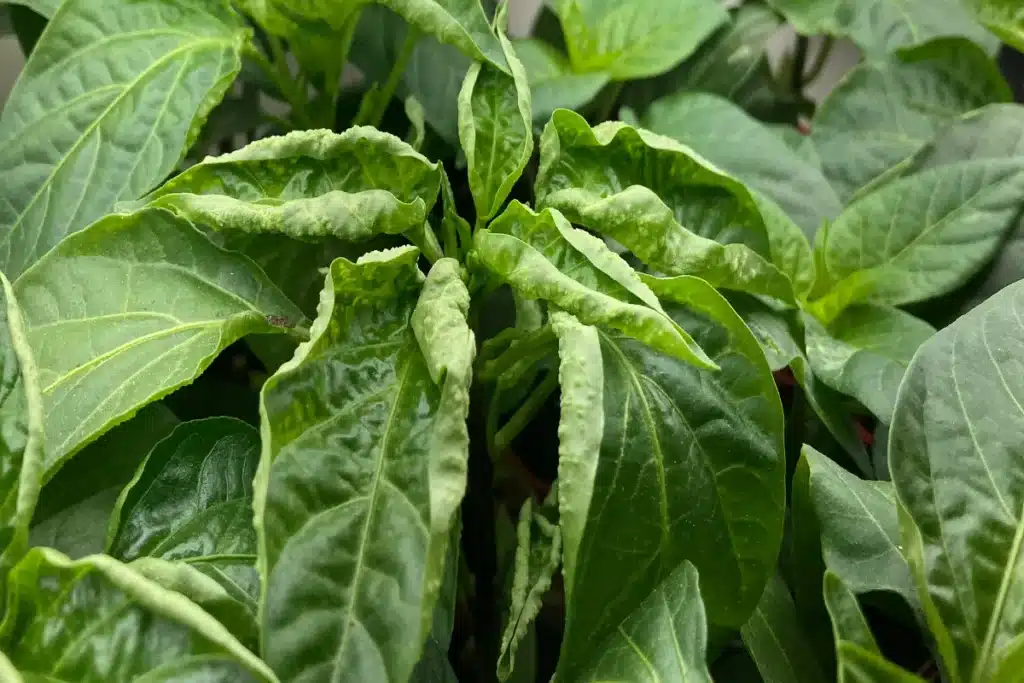
Pepper leaves curl for one of several reasons — and the direction and pattern of the curl is often your first clue. Let’s break each one down.
Heat Stress and High Temperatures
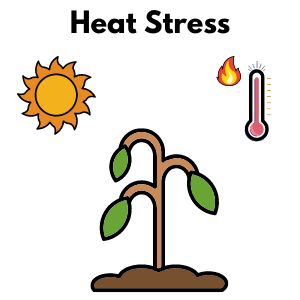
This is the most common culprit in summer, especially in containers where the root zone heats up fast.
When temperatures climb above 85°F, peppers start rolling their leaves inward — essentially folding them lengthwise to reduce the surface area exposed to sun and heat. It’s a survival response, not a disease.
How to identify it:
The curling tends to be uniform across the whole plant. Leaves roll upward and inward along the midrib, like a taco. You’ll often notice it appearing suddenly on the hottest part of the day and easing slightly in the evening.
How to fix it:
Move container plants to afternoon shade if temperatures are consistently above 90°F. For in-ground plants, use a shade cloth — 30–40% shade cloth works well without blocking too much light. Mulch the root zone with 2–3 inches of straw or wood chips to keep soil temperatures down. Make sure you’re watering deeply in the early morning.
Cold Stress and Low Temperatures
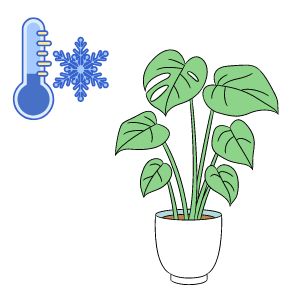
The flip side of heat stress. Peppers are warm-season plants that originate in tropical climates. Once temperatures dip below 55°F — especially at night — leaves can curl downward and inward, and the plant basically locks up.
How to identify it:
Curling tends to appear in the morning after a cold night, and the leaves may also look slightly puckered or darker than normal. The whole plant may look sluggish. New growth is often most affected.
How to fix it:
Cover plants with a frost cloth or row cover when nights dip below 55°F. If you’re growing in containers, bring them indoors or into a greenhouse. Once temperatures stabilize above 60°F, most plants recover on their own within a week.
Underwatering and Drought Stress

Peppers need consistent moisture. When the soil dries out too much, leaves curl and wilt as the plant tries to conserve water.
How to identify it:
The curl tends to be a soft, downward droop combined with a slight wilt. The whole plant looks tired and limp. Stick your finger 2 inches into the soil — if it’s dry, underwatering is your answer. Leaves may also feel dry or papery at the edges.
How to fix it:
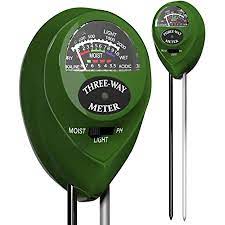
Water deeply and slowly until water runs freely from the drainage holes. Then establish a consistent watering routine — most peppers in-ground need about 1–2 inches of water per week, while container peppers may need watering every 1–2 days in summer heat. A moisture meter takes the guesswork out entirely.
I keep a moisture meter on hand for all my pepper containers — it takes the guesswork out of watering and prevents both underwatering and overwatering mistakes.
Take the guesswork out of watering plants and keeping the soil moist. It is both cost-effective and durable.
Best of all, it also measures pH and light. It’s worth a look.
Overwatering and Root Rot

Overwatering is just as damaging as drought, and it’s a common mistake with peppers in containers or heavy clay soil.
How to identify it:
Leaves curl but also look yellowed, soft, or dull. The soil will be consistently wet or waterlogged. You may notice the stems look mushy near the base, or there’s a slightly sour smell from the soil. This often goes hand-in-hand with pepper leaves turning yellow — if you’re seeing both symptoms, overwatering is a strong suspect.
How to fix it:
Let the soil dry out fully between waterings. If root rot has set in, unpot the plant, trim away any black or mushy roots with sterilized scissors, and repot in fresh, well-draining mix. For in-ground plants, improve drainage by adding perlite or coarse sand to the planting area.
Aphids
Aphids are tiny, soft-bodied insects that cluster on the undersides of leaves and new growth, sucking sap and causing leaves to curl, pucker, and distort — especially new growth at the top of the plant.
How to identify it:
Look closely at the underside of curled leaves. Aphids are usually pale green, yellow, black, or white — about 1–2mm long — and they cluster in dense colonies. You may also notice sticky honeydew residue on the leaves or a black sooty mold growing on top of it. If you’ve been spotting unusual things on your leaves, it’s also worth checking our guide on black eggs on leaves — aphid eggs are sometimes mistaken for these.
How to fix it:
A hard spray of water from a hose knocks off most of the colony on the spot. Follow up with a neem oil spray: mix 2 teaspoons of neem oil with 1 teaspoon of dish soap in 1 quart of water and spray the undersides of leaves every 5–7 days for 2–3 weeks. Introduce beneficial insects like ladybugs or lacewings if aphids keep returning.
Tip: Spray neem oil in the early morning or evening — never in direct midday sun, or you risk leaf scorch on top of the pest problem.
Spider Mites
Spider mites thrive in hot, dry conditions — which is exactly when peppers are under the most stress. They’re nearly invisible to the naked eye but leave unmistakable signs.
How to identify it:
Look for fine webbing on the undersides of leaves, especially between veins. Leaves will develop tiny stippled dots (bronze or silver) and may curl, yellow, and drop. Run a piece of white paper under a leaf and tap — if tiny moving dots appear, you’ve got spider mites.
How to fix it:
Increase humidity around the plant immediately (mites hate it). Spray leaves — especially the undersides — with the same neem oil solution above. For severe infestations, an insecticidal soap spray (2 tablespoons per quart of water) applied every 3 days for 2 weeks is very effective. Remove the most heavily infested leaves and dispose of them.
Broad Mites and Cyclamen Mites
These are far smaller than spider mites and often missed, but they cause distinctive damage.
How to identify it:
New growth at the top of the plant looks severely distorted — leaves are tiny, twisted, shiny, and brittle. The growing tip may look almost blistered or like it’s been burned. This damage pattern is very specific and is different from the uniform curling of heat or water stress.
How to fix it:
These mites are harder to control than spider mites. Remove and destroy severely affected growth. Apply neem oil or a miticide labeled for cyclamen mites every 3–5 days for 3 weeks. Affected plants can recover if damage is caught early, but badly infested plants may not produce well that season.
How to Diagnose the Cause: A Quick Reference Table
| Cause | Visual Pattern | Key Clue | Solution |
|---|---|---|---|
| Heat stress | Uniform inward roll, whole plant | Appears on hottest days | Shade cloth, morning watering, mulch |
| Cold stress | Downward curl, puckering | After cold nights below 55°F | Row cover, bring indoors |
| Underwatering | Soft droop + wilt, dry edges | Dry soil 2″ down | Deep watering, consistent schedule |
| Overwatering | Curl + yellow, soggy soil | Wet soil, mushy stems | Dry out, improve drainage |
| Aphids | New growth distorted, sticky residue | Colonies on undersides | Neem oil spray, water blast |
| Spider mites | Stippling, webbing on undersides | Tiny dots on white paper test | Neem oil, insecticidal soap |
| Broad/cyclamen mites | Twisted, shiny, brittle new growth | Extreme distortion at growing tip | Remove affected growth, neem oil |
| Viral disease | Mosaic pattern, no pest found | Mottled or mosaic coloring | Remove plant, prevent spread |
Viral Diseases: When Curling Can’t Be Fixed
This is the part nobody wants to hear, but it matters.
Pepper mild mottle virus, tomato mosaic virus, and cucumber mosaic virus can all infect peppers. Aphids and contaminated tools spread them.
How to identify it:
The leaves show a mosaic or mottled pattern — irregular patches of light and dark green — along with curling and distortion. The plant may be stunted overall. Crucially, there will be no pests found, and the soil conditions are fine. If you’ve ruled out everything else, this is worth considering. If you grow tomatoes nearby, this guide on tomato leaves curling covers overlapping viral risks in the nightshade family.
What to do:
There is no cure for viral infection. Remove and destroy the plant (do not compost it). Disinfect your tools with a 10% bleach solution before touching other plants. Going forward, choose virus-resistant pepper varieties, control aphids aggressively, and avoid handling plants after touching a potentially infected one.
Prevention: Stop Pepper Leaves from Curling Before They Start
Most of the causes above are preventable with a consistent care routine.
Water consistently. The number one thing you can do is avoid both extremes. Water deeply when the top 1–2 inches of soil feel dry, and never let containers sit in standing water.
Mulch generously. A 2–3 inch layer of mulch around the base regulates soil temperature, slows moisture loss, and reduces stress from both heat and cold swings.
Scout for pests weekly. Flip leaves over every 7 days and look for aphids, mites, or eggs. Catching them early means a simple neem oil spray handles the problem before it causes serious damage — similar to how consistent scouting stops pest damage on other garden plants like roses. If you’ve dealt with holes on rose leaves, you know how fast insect damage can escalate when it’s caught late.
I finish my weekly pest scouting with a preventive neem oil spray on the undersides of leaves — it stops aphids and mites before they cause serious damage.
I use bliss pure neem oil from Amazon for a great price. It works great when it comes to shining leaves and provides a layer of protection for plants against common pests.

Choose disease-resistant varieties. Many modern pepper varieties carry resistance to mosaic viruses. Check seed packets for resistance codes — TMV (tobacco mosaic virus) resistance is commonly listed.
Harden seedlings properly. If you’re transplanting from indoors, acclimatize plants gradually over 7–10 days before leaving them outside full-time. Transplant shock can cause temporary curling that resolves on its own, but it’s avoidable.
When to Worry
Most curling is temporary and fixable. Here’s when to take it more seriously:
- The distortion is severe and concentrated at the growing tip (possible broad mites or viral disease)
- The plant is losing leaves, not just curling them
- Multiple plants in the same area are affected simultaneously (possible viral spread or soil issue)
- You’ve corrected watering and temperature but the curling persists after two weeks
- You see the mosaic/mottled discoloration pattern on leaves alongside the curl
If you’re seeing wilting and yellowing together alongside the curl, revisit soil drainage and watering before anything else — that combination almost always points to a root-level issue.
The Bottom Line
Pepper leaves curl as a stress signal — and the signal almost always has a clear cause once you know what to look for. Start with the basics: check your soil moisture, check the temperature range your plant is living in, and flip those leaves over to look for pests.
The vast majority of cases come down to inconsistent watering, heat or cold stress, or aphids — all of which are correctable with straightforward fixes. Viral disease is the rare exception where removal is the right call.
Once you identify the cause, pepper leaf curl is almost always fixable — and with consistent watering, regular pest scouting, and a layer of mulch, most plants recover fully and go on to produce a great harvest.
Related Posts
- Plant Leaves Curling: Causes and Fixes
- Pepper Leaves Turning Yellow
- Tomato Leaves Curling
- Holes on Rose Leaves
- Succulent Leaves Curling
- Prayer Plant Leaves Curling
Related Articles
Pepper Leaves Turning Yellow: Why It Happens and How to Fix It
Pepper plant leaves turning yellow? Learn the 7 most common causes — from nitrogen deficiency to overwatering — and get specific, actionable fixes to bring your pepper plants back to health.
Monstera leaves turning yellow? Learn the 7 most common causes — overwatering, root rot, low light, nutrient deficiency, and more — plus exact fixes to bring your plant back to health.