
It’s one of the most common concerns I hear from home gardeners, and understandably so. Yellow leaves feel like a warning sign, and you want to act before you lose the plant.
Pepper leaves turn yellow from nitrogen deficiency, overwatering that suffocates roots, underwatering stress, calcium or magnesium shortages, or natural aging of lower leaves. Most cases are fixable with balanced fertilizer, a consistent watering schedule, Epsom salt foliar spray for magnesium, or letting soil dry slightly between waterings. Identifying the pattern — where the yellowing starts and how it spreads — points you to the right fix fast.
Before we dive in, if you’ve ever gone through the same process of diagnosing unexpected leaf symptoms, the same detective approach I use for holes on rose leaves applies here — look at location, pattern, and timing together.
Let’s walk through exactly why pepper leaves turn yellow and what to do about each cause.
What Causes Pepper Leaves to Turn Yellow?
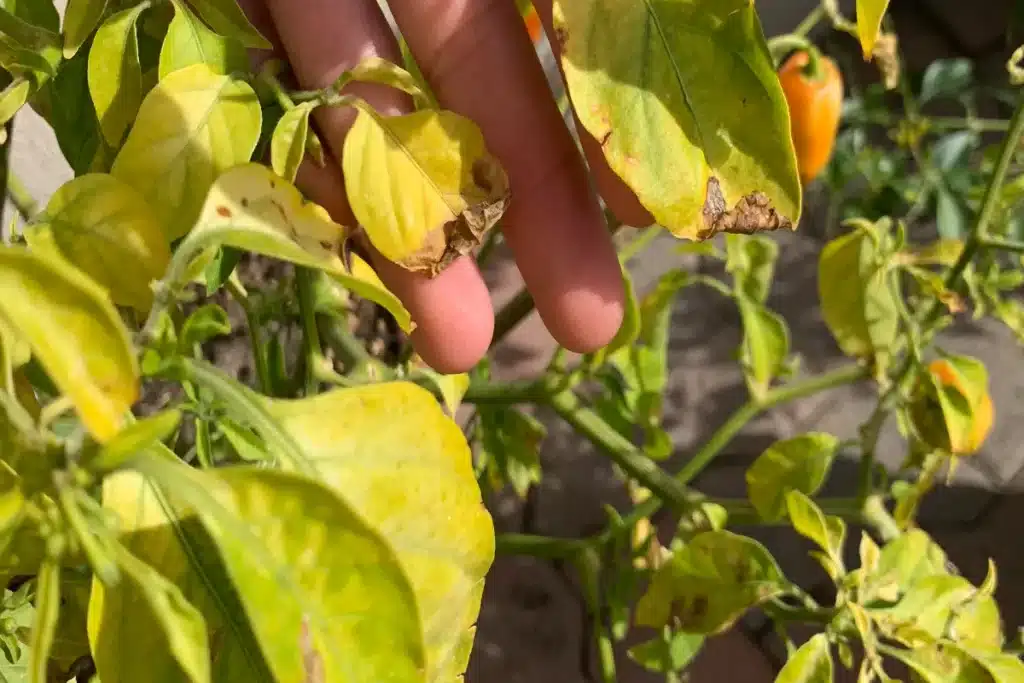
Yellow leaves on pepper plants aren’t a single problem — they’re a symptom with several different root causes. The key is looking at where the yellowing starts and how it progresses.
Lower leaves yellowing first usually points to nutrient deficiency or natural aging. Yellowing spread across the whole plant more evenly — especially with drooping — often signals a watering issue. Yellowing between the veins while veins stay green suggests a mineral shortage.
Let’s go through each cause in detail.
Nitrogen Deficiency

This is the most common reason pepper leaves turn yellow, especially in containers or sandy soil where nutrients wash out quickly.
Nitrogen is responsible for chlorophyll production — the green pigment that makes leaves green. When your plant can’t access enough nitrogen, it pulls what’s available from older leaves and sends it toward new growth. The result: yellowing that starts at the bottom of the plant and works its way up.
The leaves turn a uniform, pale yellow — not splotchy, not veiny, just a flat, faded yellow-green that gradually spreads.
Overwatering

Overwatered pepper plants are some of the most misdiagnosed in the garden. The yellowing looks almost identical to nitrogen deficiency at first glance, but the cause is completely different.
When roots sit in waterlogged soil for too long, they can’t absorb oxygen. They start to suffocate and eventually rot. A rotting root system can’t deliver water or nutrients to the plant — so even if the soil is soaking wet, the leaves yellow as if the plant is starving.
You’ll often notice the soil feels heavy and soggy, the pot has poor drainage, and the lower leaves yellow quickly. The plant may also droop despite wet soil — a telltale sign.
Underwatering
Underwatered pepper plants yellow differently. The leaves will first look dull and slightly crisp at the edges before the yellowing kicks in. You might also see wilting during the hottest part of the day that doesn’t bounce back by morning.
Stick your finger 2 inches into the soil. If it’s bone dry, underwatering is your culprit. The plant is under stress and shedding older leaves to conserve resources.
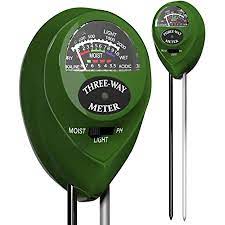
I keep a soil moisture meter on hand to take the guesswork out of watering — it’s the fastest way to know if you’re dealing with overwatering or underwatering.
Take the guesswork out of watering plants and keeping the soil moist. It is both cost-effective and durable.
Best of all, it also measures pH and light. It’s worth a look.
Magnesium Deficiency
This is the one that trips most gardeners up because it looks like a disease.
Magnesium deficiency causes interveinal chlorosis — the tissue between the leaf veins turns yellow while the veins themselves stay green. It typically shows up on middle-aged leaves first, not the oldest at the bottom or the newest at the top.
Peppers are heavy magnesium feeders, and it depletes quickly in containers or after heavy rain leaches it from the soil. If you’ve been growing peppers in the same bed for a few seasons without amending the soil, this is worth investigating.
A simple fix: dissolve 1 tablespoon of Epsom salt (magnesium sulfate) in 1 gallon of water and apply as a foliar spray every two weeks. Results are usually visible within a week.
Calcium Deficiency
Calcium deficiency in peppers tends to show up alongside blossom-end rot (the black sunken patch at the bottom of peppers), but leaves can also show symptoms — pale yellowing on newer growth, along with distorted or cupped leaf edges.
Unlike magnesium, calcium deficiency is often less about what’s in the soil and more about watering consistency. Calcium moves through plants via water uptake — inconsistent watering means inconsistent calcium delivery, even if the soil has plenty.
Natural Leaf Senescence (Normal Aging)
Not every yellow leaf is a problem. Lower leaves on pepper plants naturally yellow and drop as the plant matures — it’s redirecting energy to fruiting and new growth at the top.
If only the very bottom leaves are yellowing (1–3 at a time), the plant looks otherwise healthy, and new growth at the top is green and strong, you’re witnessing normal aging. No action needed — just remove the leaves cleanly.
Pests and Disease
Spider mites, aphids, and whiteflies can all cause yellowing. Pest-related yellowing often comes with stippling (tiny dots), fine webbing on the undersides of leaves, or visible insects when you look closely.
If you notice yellow patches that look unusual — small scattered dots rather than even yellowing — check the undersides of leaves carefully. You may even spot yellow eggs on leaves from pests like whiteflies or spider mites, which are easy to mistake for a nutrient issue.
Fungal diseases like Phytophthora blight or Cercospora leaf spot also cause yellowing, often with dark spots or water-soaked lesions alongside the discoloration.
How to Identify the Cause
The pattern of yellowing is your diagnostic tool.
| Cause | Visual Pattern | First Location |
|---|---|---|
| Nitrogen deficiency | Uniform pale yellow | Bottom leaves first, spreads upward |
| Overwatering | Yellow + drooping, soggy soil | Lower and mid leaves |
| Underwatering | Yellow + crispy edges, dry soil | Lower leaves, plant wilts |
| Magnesium deficiency | Yellow between veins, veins stay green | Middle-aged leaves |
| Calcium deficiency | Pale new growth, cupped/distorted leaves | Newest growth |
| Natural aging | Gradual yellowing on a few leaves | Lowest leaves only |
| Pests | Stippled, dotted, or patchy yellowing | Scattered, often underside damage |
| Disease | Yellow spots with dark lesions | Anywhere, often spreading |
This same pattern-based approach works across vegetables. If you grow tomatoes alongside your peppers, the causes of yellow leaves on tomato plants overlap significantly — nitrogen, magnesium, and watering issues are common culprits across both crops.
How to Fix Yellow Pepper Leaves
Fix Nitrogen Deficiency
Apply a balanced or nitrogen-forward fertilizer:
A 10-10-10 granular fertilizer or a liquid fish emulsion (diluted to label instructions, typically 1–2 tablespoons per gallon of water) applied every 2–3 weeks during the growing season will restore nitrogen levels quickly. Results usually show in new growth within 7–10 days.
For container-grown peppers, nutrients flush out faster — fertilize every 2 weeks rather than monthly.
Fix Overwatering
Let the soil dry out and improve drainage:
Stop watering until the top 2 inches of soil feel dry to the touch. For containers, check that drainage holes are clear. If the root ball is soggy and smells musty, unpot the plant, trim any black or mushy roots, and repot in fresh well-draining mix (equal parts potting soil and perlite works well).
Going forward, water deeply but infrequently — rather than a little every day.
Fix Underwatering
Water deeply and establish a consistent schedule:
Give the plant a thorough soak until water drains from the bottom of the pot. Peppers in containers during summer may need water every 1–2 days in peak heat; in-ground plants every 2–3 days. Mulching around the base of in-ground plants retains moisture significantly.
Fix Magnesium Deficiency
Apply Epsom salt foliar spray:
Dissolve 1 tablespoon of Epsom salt in 1 gallon of water and spray directly onto leaves, making sure to coat both sides. Repeat every two weeks. For severe cases, you can also water the Epsom salt solution directly into the soil.
Fix Calcium Deficiency
Water consistently and consider a calcium supplement:
The most important step is consistent watering — aim for even soil moisture rather than wet-dry extremes. You can also add crushed eggshells to the soil surface, use a calcium-containing fertilizer, or apply a diluted calcium foliar spray.
Address Pest Yellowing
Identify the pest, then treat accordingly:
For spider mites and aphids, a neem oil spray (2 tablespoons neem oil + 1 teaspoon dish soap per gallon of water) applied to all leaf surfaces every 5–7 days handles most infestations. For whiteflies, yellow sticky traps help monitor and reduce populations.
Note: Always spray neem oil in the early morning or evening — never during peak sun hours, which can cause leaf burn.
This is a parallel issue to what happens in cucurbits too — cucumber leaves turning yellow often comes down to the same shortlist of nutrient, water, and pest causes, so if you’re gardening several crops at once, the diagnostic process transfers.
Quick Reference Diagnosis Table
| What You See | Most Likely Cause | First Fix |
|---|---|---|
| Uniform pale yellow from bottom up | Nitrogen deficiency | Fish emulsion or balanced fertilizer |
| Yellow + drooping + wet soil | Overwatering | Stop watering, improve drainage |
| Yellow + crispy edges + dry soil | Underwatering | Deep watering, add mulch |
| Yellow between veins, green veins | Magnesium deficiency | Epsom salt foliar spray |
| Pale, cupped new growth | Calcium deficiency | Consistent watering + calcium supplement |
| 1–3 lowest leaves yellowing only | Natural aging | Remove cleanly, no action needed |
| Spotted yellow with webbing or bugs | Pests | Neem oil spray |
| Yellow spots with dark edges | Fungal disease | Fungicide, improve air circulation |
Prevention
The best way to keep pepper leaves green is to build consistent habits into your routine rather than reacting when yellowing starts.
Feed regularly throughout the growing season.
A balanced slow-release fertilizer at planting, followed by a liquid fertilizer every 2–3 weeks once plants start setting fruit, covers most nutritional needs. Switch to a low-nitrogen, higher-phosphorus fertilizer once heavy fruiting begins — too much nitrogen late in the season promotes leafy growth over peppers.
Water deeply and consistently
rather than shallowly and often. For containers, water when the top 2 inches feel dry. For in-ground plants, 1–1.5 inches of water per week (from rain or irrigation) is the standard target.
Amend your soil before the season.
Work in compost and a balanced granular fertilizer before planting. If you’ve grown peppers or related crops in the same spot before, rotate to a fresh bed to avoid depleted soil and lingering disease.
Finish with a neem oil preventative spray
once a month during the growing season — it discourages fungal disease, spider mites, aphids, and whiteflies before they take hold.
It’s also worth noting that pepper yellowing is just one of many leaf symptom patterns to understand. Transparency in leaves, for example, tells a completely different story — if you ever notice leaves going pale and see-through rather than yellow, leaves turning transparent is a separate issue worth reading about.
When to Worry
Most yellow leaves on pepper plants are fixable and non-emergency. But there are situations where the plant needs more urgent attention.
Worry if: yellowing is spreading rapidly across most of the plant, new growth is coming in yellow or deformed, the stem base is darkening or softening, or you see signs of systemic disease (dark streaks on stems, foul-smelling soil, widespread lesions).
Rapid full-plant yellowing with stem discoloration often signals root rot or a soilborne disease like Phytophthora. At that stage, unpotting to inspect the roots is the next step — if more than 50% of roots are black and mushy, the plant may not recover.
For single branches yellowing suddenly while the rest of the plant looks fine, inspect closely for pest damage or a broken stem restricting water flow.
The Bottom Line
Yellow leaves on pepper plants are almost always a diagnosable and fixable problem. Start by looking at where the yellowing begins — bottom-up for nitrogen or age, scattered for pests, interveinal for magnesium — and match what you see to the right fix.
Most cases come down to one of four things: inconsistent watering, a nutrient deficiency, natural aging, or pest pressure. With a balanced feeding routine, consistent moisture, and a monthly neem oil preventative spray, you can keep your pepper plants producing green, healthy leaves all season.
The key takeaway: don’t panic at the first yellow leaf — instead, read the pattern, identify the cause, and apply the specific fix. Your pepper plant will tell you exactly what it needs if you know how to look.
Related Posts
- Holes on Rose Leaves: Causes and Fixes
- Yellow Leaves on Tomato Plants
- Squash Leaves Turning Yellow
- Rose Leaves Turning Yellow
- Cucumber Leaves Turning Yellow
Related Articles
Pepper leaves curling? Learn the 7 most common causes — from underwatering and heat stress to aphids and viral disease — plus step-by-step fixes to help your plants recover fast.
Monstera leaves turning yellow? Learn the 7 most common causes — overwatering, root rot, low light, nutrient deficiency, and more — plus exact fixes to bring your plant back to health.