
You’ve heard Epsom salt might help but you’re not sure if it actually works or if it’s just garden folklore.
The good news is it’s not a myth. There’s a real reason it works, and a real way to use it.
Epsom salt provides magnesium and sulfur that tomatoes need for chlorophyll production, fruit development, and nutrient uptake. Mix 1 tablespoon per gallon of water and apply as a foliar spray or soil drench every 2 – 4 weeks during the growing season, or work 1 tablespoon into the planting hole at transplant time. It helps correct yellowing leaves caused by magnesium deficiency, supports better fruit set, and can reduce problems like blossom end rot when deficiency is the underlying cause.
I started using Epsom salt on my tomatoes after noticing that persistent interveinal yellowing where the leaf itself turns yellow but the veins stay green.
Before you start pouring it on everything, though, it helps to understand what Epsom salt actually does, when your tomatoes genuinely need it, and when it won’t make a difference.
What Is Epsom Salt and Why Do Tomatoes Need It?
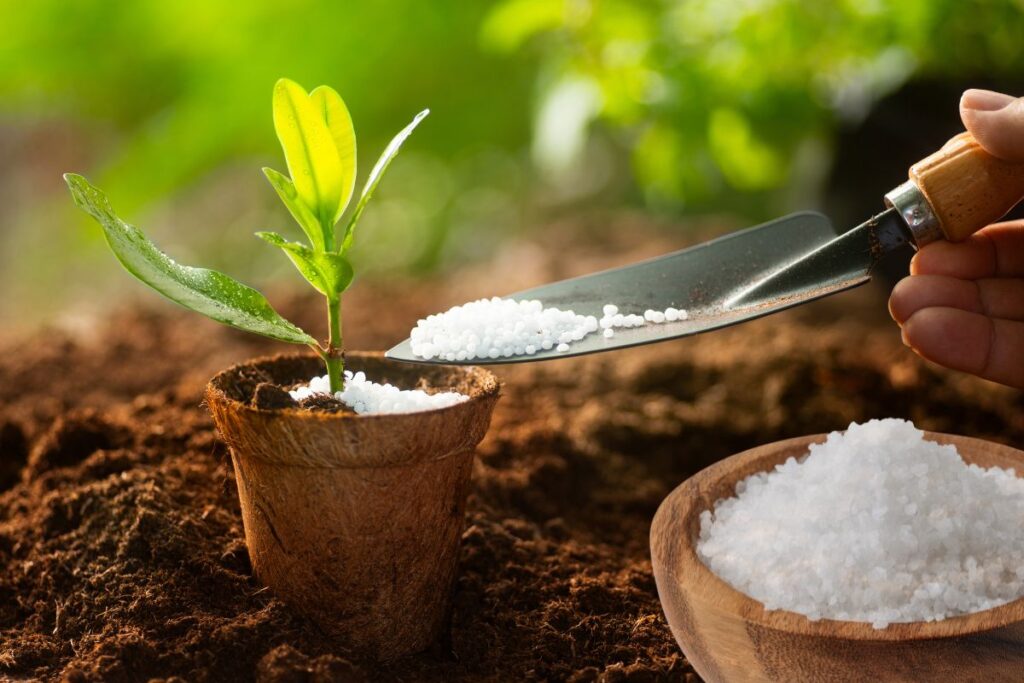
Epsom salt is magnesium sulfate a naturally occurring mineral compound made up of magnesium, sulfur, and oxygen. It’s not table salt, and it won’t harm your soil the way sodium-based salts do.
Tomatoes are heavy feeders. They pull large amounts of nutrients from the soil throughout the season, and magnesium is one they burn through fast.
Magnesium sits at the center of every chlorophyll molecule. Without enough of it, your plant can’t photosynthesize properly which means slower growth, paler leaves, and reduced fruit production. Sulfur supports protein synthesis and enzyme function, so it’s not a throwaway nutrient either.
The catch is that standard NPK fertilizers (nitrogen, phosphorus, potassium) often don’t include magnesium and sulfur in meaningful amounts. That’s the gap Epsom salt fills.
If you’re already using hydrogen peroxide as a household remedy for plant health, adding Epsom salt to your routine is a natural next step it targets a different deficiency but fits the same low-cost, effective approach.
Signs Your Tomatoes Actually Need Epsom Salt
Not every struggling tomato plant needs magnesium. Applying Epsom salt when it’s not needed won’t hurt much, but it also won’t help and in some cases, it can throw off your soil’s nutrient balance if used excessively.
Look for these specific signs before reaching for the bag:
Interveinal chlorosis on older leaves.
The yellowing shows up between the leaf veins while the veins themselves stay green. It starts on the lower, older leaves first this is the classic magnesium deficiency pattern.
Poor fruit set or small fruit.
When plants can’t produce enough chlorophyll, photosynthesis slows, which means less energy for fruiting. If your plants are flowering but not setting fruit well, magnesium could be part of the problem.
Slow, stunted growth mid-season.
Not at transplant later, when the plant should be pushing hard. Magnesium deficiency tends to show up once the plant is working hard to fill fruit.
Sandy or highly acidic soil.
Magnesium leaches out of sandy soil quickly. Very acidic soil (below pH 6.0) also makes magnesium less available to plant roots, even when it’s present in the soil.
If you’re seeing these signs, Epsom salt is worth trying. If your plants are green, healthy, and fruiting well, they probably don’t need it.
How to Apply Epsom Salt to Tomatoes
There are three ways to use Epsom salt on tomatoes, and each one has a slightly different purpose.
At Planting Time (Soil Application)
Work it into the planting hole before you put the transplant in.
Add 1 tablespoon of Epsom salt to the bottom of each planting hole and mix it into the soil. This gives the roots access to magnesium right from the start, when the plant is establishing itself and most vulnerable to deficiencies.
This is especially helpful if you’re growing in sandy soil or if your garden hasn’t been amended in a while.
During the Season (Soil Drench)
Dissolve 1 tablespoon of Epsom salt in 1 gallon of water and pour it directly around the base of each plant.
Apply this every 2 – 4 weeks during the growing season. Water the plant first so the roots aren’t dry when the solution hits them applying to dry roots can cause minor root stress.
This method delivers magnesium slowly through the soil and works well as a maintenance treatment once you’ve seen signs of deficiency.
Foliar Spray (Fastest Uptake)
Mix 1 tablespoon of Epsom salt per gallon of water and spray directly onto the leaves.
Spray in the morning or late afternoon never in direct midday sun, which can cause the wet leaves to scorch. Cover both the tops and undersides of leaves for best absorption.
Foliar feeding is the fastest method because the leaves absorb nutrients directly, bypassing the root uptake process. If you’re seeing acute yellowing and want a quicker response, this is the route to take.
Note: Start with the foliar spray if you’re responding to visible symptoms; switch to soil drenches for ongoing maintenance.
You can also do both a foliar spray to address existing symptoms and a soil drench to support the plant long-term. Many gardeners use Epsom salt the same way they use other natural soil amendments like banana peel water for tomatoes as part of a broader feeding routine rather than a one-time fix.
Does Epsom Salt Prevent Blossom End Rot?
This is one of the most common questions, and it deserves a direct answer.
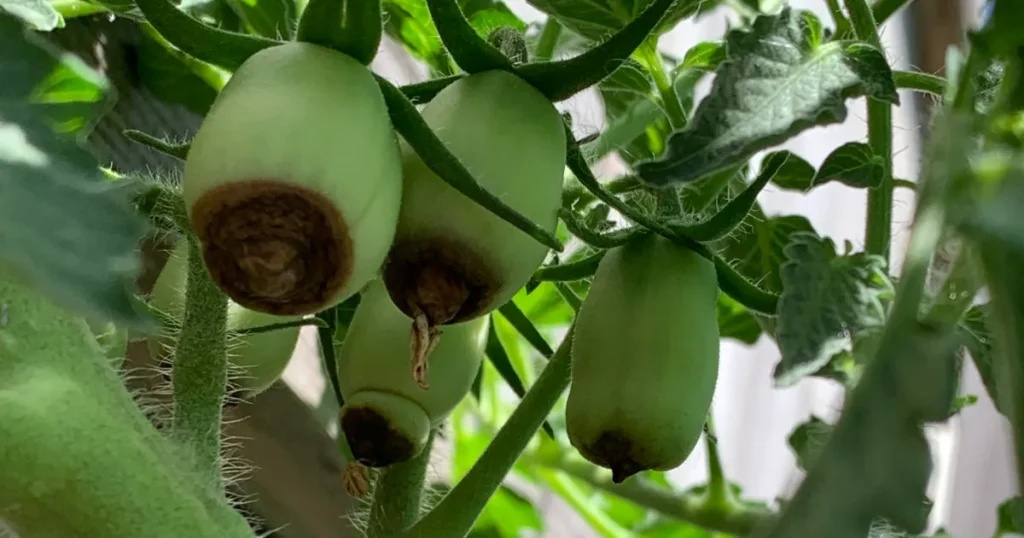
Blossom end rot is caused by calcium deficiency specifically, the plant’s inability to move calcium into the developing fruit quickly enough. It shows up as a dark, sunken patch on the bottom of tomatoes.
Epsom salt does not supply calcium. So if your blossom end rot is caused by a calcium deficiency (which is the most common cause), Epsom salt alone won’t fix it.
However, there’s a nuance. If your soil has an imbalance where excess potassium or other nutrients are blocking calcium uptake, correcting magnesium levels can sometimes improve overall nutrient uptake which may indirectly help. But it’s not a reliable standalone fix.
For a complete guide to actually preventing and fixing blossom end rot, read how to stop blossom end rot in tomatoes. That post covers calcium sources, soil pH adjustments, and watering consistency the real levers for that problem.
Epsom Salt as Part of a Broader Feeding Routine
Epsom salt isn’t a complete fertilizer. Think of it as a targeted supplement it fills one specific gap (magnesium and sulfur) that most standard fertilizers miss.
For best results, pair it with a balanced tomato fertilizer that covers nitrogen, phosphorus, and potassium, and consider adding other natural soil boosters throughout the season.
Banana peel water adds potassium, which tomatoes need in large quantities for fruit development. Coffee grounds can contribute nitrogen and slightly adjust soil pH over time. None of these are substitutes for a complete fertilizer but used together, they give your plants a well-rounded diet with minimal cost.
For reference, if you want to learn more about using Epsom salt on other plants beyond tomatoes, this guide on using Epsom salt on plants covers the broader applications in detail.
How Much Is Too Much?
More is not better with Epsom salt.
Applying too much magnesium can cause its own problems. Excess magnesium competes with calcium uptake in the soil which can actually make blossom end rot worse, not better. It can also suppress potassium absorption, leading to a different set of deficiency symptoms.
Stick to these limits:
- Planting time: 1 tablespoon per hole, once
- Soil drench: 1 tablespoon per gallon, every 2 – 4 weeks
- Foliar spray: 1 tablespoon per gallon, every 2 weeks maximum
If you’re fertilizing regularly with a complete fertilizer that already includes magnesium, reduce your Epsom salt applications to once a month rather than bi-weekly.
When in doubt, less is more. A soil test (available at most garden centers for under $15) will tell you exactly what your soil is lacking, which takes the guesswork out entirely.
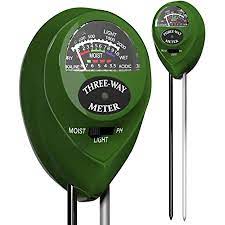
I use a 3-in-1 soil meter to check pH and moisture levels before applying Epsom salt it helps confirm whether magnesium deficiency is actually the problem.
Take the guesswork out of watering plants and keeping the soil moist. It is both cost-effective and durable.
Best of all, it also measures pH and light. It’s worth a look.
Common Mistakes When Using Epsom Salt on Tomatoes
Using it when the plant doesn’t need it.
If your tomatoes are growing well and showing no signs of magnesium deficiency, adding Epsom salt is unnecessary and can disrupt your soil’s nutrient balance over time.
Applying to dry soil without watering first.
Always water your plants before applying a soil drench. Concentrated salts hitting dry roots can cause temporary stress.
Spraying in direct afternoon sun.
Wet leaves in full sun scorch quickly. Apply foliar sprays in the morning or evening.
Expecting it to fix blossom end rot on its own.
As covered above this is a calcium issue, and Epsom salt doesn’t supply calcium. Using it as your primary fix for blossom end rot will leave you frustrated.
Applying inconsistently and then giving up.
Magnesium deficiency doesn’t reverse overnight. Give it two to three applications over a few weeks before deciding it’s not working.
Frequently Asked Questions
Can I use Epsom salt on tomatoes every week?
Every two weeks is the sweet spot for foliar sprays; every 2 – 4 weeks for soil drenches. Weekly applications are excessive and can build up to the point where they interfere with calcium and potassium uptake.
Does Epsom salt make tomatoes grow faster?
It can but only if your plants are magnesium-deficient. If your soil already has adequate magnesium, adding more won’t speed things up. It corrects a deficiency; it doesn’t boost a healthy plant.
Can I mix Epsom salt with fertilizer?
Yes. You can add 1 tablespoon of Epsom salt per gallon to your regular liquid fertilizer solution. Just don’t do this with every feeding alternate between plain fertilizer and the Epsom salt blend.
Is Epsom salt safe for all stages of tomato growth?
Yes, from transplant to fruiting. The planting-hole application is for transplant time; foliar sprays and soil drenches can be used throughout the growing season.
Does Epsom salt work in containers?
It does, but container plants are more susceptible to nutrient buildup. In containers, limit soil drenches to once a month and watch for salt crust buildup on the soil surface if you see it, flush the pot with plain water.
The Bottom Line
Epsom salt is one of the most useful and inexpensive tools you can keep in the garden shed but only when your tomatoes actually need magnesium. The signs are specific: interveinal yellowing on older leaves, poor fruit set, and slow mid-season growth, especially in sandy or acidic soil.
Used correctly 1 tablespoon per gallon of water, applied as a foliar spray or soil drench every 2 – 4 weeks it can green up deficient plants noticeably within a few applications. Pair it with a balanced fertilizer and other natural soil amendments for a complete feeding routine.
Just don’t expect it to do everything. It won’t fix blossom end rot on its own, it won’t replace a full NPK fertilizer, and applying more than needed can cause problems of its own.
The right dose at the right time is what makes Epsom salt genuinely useful and once you see a deficient tomato plant recover and start fruiting again, you’ll understand why it’s become a garden staple.
Related Posts
- Hydrogen Peroxide for Tomato Plants
- How to Stop Blossom End Rot in Tomatoes
- Banana Peel Water for Tomatoes
- Coffee Grounds for Tomatoes
- Using Epsom Salt on Plants
Related Articles
Pepper leaves curling? Learn the 7 most common causes — from underwatering and heat stress to aphids and viral disease — plus step-by-step fixes to help your plants recover fast.
Pepper Leaves Turning Yellow: Why It Happens and How to Fix It
Pepper plant leaves turning yellow? Learn the 7 most common causes — from nitrogen deficiency to overwatering — and get specific, actionable fixes to bring your pepper plants back to health.