
You’re checking on your tomatoes, excited to see them sizing up nicely and then you flip one over. There it is: a dark, sunken, leathery patch spreading across the bottom. Your heart sinks a little.
If that sounds familiar, you’re not alone. Blossom end rot is one of the most common frustrations for tomato growers, and it can appear out of nowhere even when you’ve been doing everything right.
Stop blossom end rot in tomatoes by maintaining consistent watering (1 – 2 inches per week), adding calcium through crushed eggshells or lime, mulching to regulate soil moisture, avoiding excessive nitrogen fertilizer, and ensuring soil pH stays between 6.2 – 6.8. The dark, sunken spots on tomato bottoms are caused by calcium deficiency not disease so there’s nothing to spray or cut out. Fix the growing conditions, and new fruits will come in clean.
Let’s walk through exactly what’s happening, how to diagnose the cause, and what to do about it so your next batch of tomatoes comes out perfect.
What Is Blossom End Rot and Why Does It Happen?
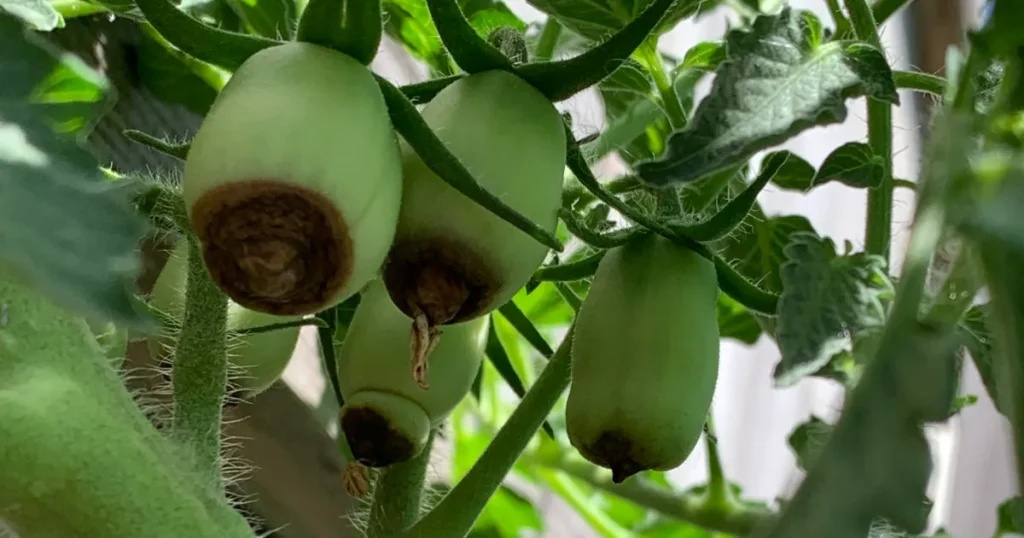
Blossom end rot (BER) is not a fungus, a virus, or a bacterial infection. It’s a physiological disorder caused by calcium deficiency in the developing fruit tissue.
Calcium is what holds plant cell walls together. When a fast-growing tomato fruit can’t get enough calcium at the cell level, the tissue at the blossom end (the bottom of the fruit, opposite the stem) breaks down. That breakdown is what you see as the dark, sunken, leathery spot.
Here’s the key thing to understand: it’s rarely that your soil has no calcium. Most garden soils have plenty. The problem is usually that calcium isn’t being transported to the fruit fast enough and the reason for that almost always comes down to water and roots.
Calcium moves through a plant dissolved in water. Inconsistent watering, damaged roots, or anything that interrupts that flow means the fruit simply doesn’t get enough, even if calcium is sitting right there in the soil.
The Most Common Causes of Blossom End Rot
Understanding why it’s happening in your specific garden is the key to fixing it permanently. These are the causes I see most often.
Inconsistent Watering
This is the number one culprit. When soil swings between bone dry and waterlogged, calcium uptake is interrupted repeatedly. The fruit cells forming during that dry spell are starved, and the damage is done before you even notice.
Container-grown tomatoes are especially vulnerable here because pots dry out much faster than garden beds.
Low Soil Calcium
If your soil is genuinely low in calcium common in sandy soils or soils that have never been amended there simply isn’t enough available for the plant to move to the fruit. A soil test will tell you this quickly.
Soil pH Outside the Ideal Range
Calcium becomes much less available to plant roots when soil pH dips below 6.2 or climbs above 6.8. Even if calcium is present, the plant can’t absorb it efficiently at the wrong pH.
Root Damage
Damaged or compacted roots can’t pull water and nutrients efficiently. This can happen from over-cultivating too close to the plant, heavy pest pressure, or root rot from overwatering.
If you’re concerned about root health, it’s worth reading through how to identify and fix root rot the early signs are subtle and easy to miss.
Too Much Nitrogen
High-nitrogen fertilizers push plants to grow leaves and stems aggressively. That rapid vegetative growth competes with fruit for calcium, leaving the tomatoes short-changed. This is a common mistake with synthetic fertilizers applied too frequently.
High Temperatures and Drought Stress
During heat waves, soil moisture evaporates quickly and plants transpire heavily. Calcium uptake can’t keep pace with the demand from rapidly swelling fruit.
How to Diagnose What’s Causing It in Your Garden
Before you reach for a bag of lime or change your watering schedule, take five minutes to observe. The pattern of damage often tells you which cause you’re dealing with.
Irregular watering is usually the cause when: BER appears after a stretch of dry weather followed by heavy rain, your container tomatoes dry out between waterings, or multiple fruits on the same plant are affected at once.
Calcium deficiency in the soil is more likely when: you’re growing in very sandy or unammended soil, you’ve never added lime or calcium to your garden, or a soil test shows pH below 6.0.
Nitrogen overload is the suspect when: your plants are very lush and leafy, you’ve been applying synthetic fertilizers heavily, and new fruits keep developing BER even after you’ve sorted out watering.
Root damage often shows alongside other symptoms: wilting even when the soil is moist, yellowing lower leaves, or soil that stays wet for unusually long periods.
How to Stop Blossom End Rot in Tomatoes
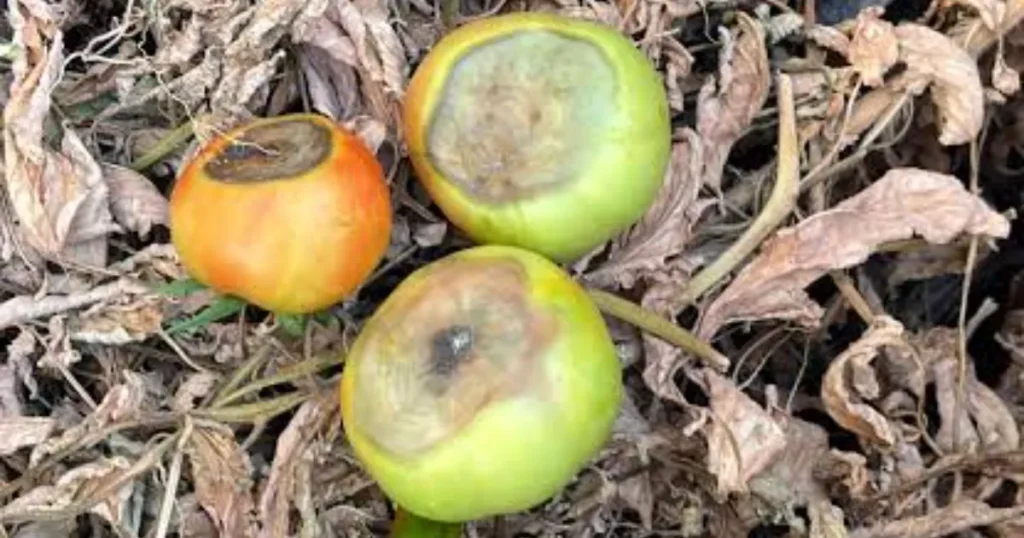
Here’s what actually works. These steps address the root causes, not just the symptoms.
1. Water Consistently Aim for 1 – 2 Inches Per Week
Get on a reliable watering schedule.
Tomatoes need around 1 – 2 inches of water per week, delivered steadily. Deep, infrequent watering (soaking the root zone every 2 – 3 days) is better than shallow daily sprinkles.
Check soil moisture 2 – 3 inches below the surface before watering. If it still feels moist, wait another day. If it’s dry, water deeply.
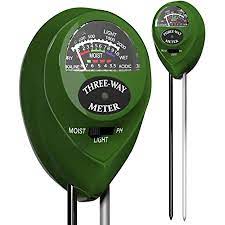
I use a 3-in-1 soil meter to check moisture depth and pH at the same time it takes the guesswork out of both watering and soil amendments.
Take the guesswork out of watering plants and keeping the soil moist. It is both cost-effective and durable.
Best of all, it also measures pH and light. It’s worth a look.
For containers, check daily in hot weather. Pots can go from moist to dangerously dry within 2448 hours during a heat wave.
2. Mulch Heavily Around the Base
Apply 2 – 3 inches of mulch over the root zone.
Straw, shredded leaves, or wood chips all work well. Mulch dramatically reduces how fast soil moisture evaporates between waterings, which is one of the easiest ways to even out the moisture swings that cause BER.
This single step has made a bigger difference in my garden than almost anything else I’ve tried.
3. Add Calcium to Your Soil
Work a calcium source into the top few inches of soil around each plant.
There are several good options:
- Crushed eggshells Free and effective over time, though they break down slowly. Best worked into soil before planting or composted first.
- Agricultural lime (calcium carbonate) Raises pH and adds calcium simultaneously. Use at label rates, typically 1 – 2 cups per plant worked into soil.
- Gypsum (calcium sulfate) Adds calcium without significantly changing pH. This is useful if your pH is already in range but calcium is low.
- Bone meal Adds both calcium and phosphorus; good as a pre-season amendment.
If you want a natural liquid feed that also supports the rest of your soil biology, banana peel water for tomatoes is worth trying it delivers potassium and micronutrients that work alongside calcium for stronger fruit development.
4. Correct Soil pH to 6.2 – 6.8
Test your soil pH and amend accordingly.
A cheap pH test kit from any garden center will do the job. If your pH is below 6.2, work in agricultural lime at the recommended rate. If it’s above 6.8, elemental sulfur can bring it down.
Don’t skip this step. You can add all the calcium you want, but if pH is off, the plant can’t use it.
5. Switch to a Balanced or Low-Nitrogen Fertilizer
Stop using high-nitrogen fertilizers once fruit sets.
Swap to a fertilizer with a balanced or fruit-focused NPK ratio something like 5-1 – 0-1 – 0 or 4-8-8 once your plants start flowering and fruiting. Save the nitrogen-heavy products for leafy greens and early vegetative growth.
Organic options like fish emulsion or compost tea are naturally balanced and much less likely to create the nitrogen overload that competes with calcium uptake.
6. Try a Foliar Calcium Spray for Quick Relief
For a fast boost while you fix the underlying issues, a calcium foliar spray can help.
Dissolve 1 tablespoon of calcium chloride in 1 gallon of water and spray directly onto the foliage and developing fruits every 5 – 7 days. This delivers calcium directly through the leaves, bypassing whatever is blocking uptake from the roots.
This is a short-term bridge it won’t replace fixing watering or soil pH, but it can rescue fruits that are just starting to show symptoms.
7. Support Root Health With Hydrogen Peroxide
Healthy roots absorb calcium far more efficiently.
If your roots have been stressed by overwatering, compaction, or inconsistent moisture, a diluted hydrogen peroxide soil drench can help oxygenate the root zone and clear out mild root rot. Use a 3% hydrogen peroxide solution diluted to 1 part H‚‚O‚‚ to 3 – 2 parts water, and water it into the soil around each plant.
I keep hydrogen peroxide on hand for mid-season root stress a diluted drench oxygenates the soil and helps roots absorb calcium more efficiently.
I use this Essential Oxygen Food Grade Hydrogen Peroxide for my plants. It kills unwanted bacteria and helps boost the overall health of the soil. It’s concentration is just right.

I’ve found this especially useful mid-season when plants have been through wet-dry stress cycles. For a full breakdown of the method and ratios, see using hydrogen peroxide for plants it covers all the applications in detail.
You can also find specific guidance for tomatoes in hydrogen peroxide for tomatoes, including how it helps with root function and soil health through the growing season.
What to Do With Affected Fruits
Remove any tomatoes that are already badly affected the rotted tissue won’t recover, and leaving them on the plant directs energy away from healthy developing fruits.
Tomatoes with only a small patch of BER on the bottom can often be salvaged. Cut away the affected area and the rest is perfectly fine to eat. The rot is not contagious; it’s not a disease.
New fruits setting after you’ve corrected the conditions will typically come in clean within 2 – 3 weeks.
Quick Reference: Blossom End Rot Causes and Fixes
| Cause | Signs | Fix |
|---|---|---|
| Inconsistent watering | Multiple fruits affected; dry spells in the weather | Water 1 – 2 inches/week; mulch deeply |
| Calcium-deficient soil | Sandy or unamended soil; pH below 6.2 | Add lime, gypsum, or eggshells |
| pH too low or too high | Confirmed by soil test | Lime to raise; sulfur to lower; target 6.2 – 6.8 |
| Nitrogen overload | Lush, leafy growth; heavy fertilizer use | Switch to low-N, fruit-focused fertilizer |
| Root damage | Wilting with moist soil; root rot | H‚‚O‚‚ drench; reduce tillage near roots |
| Heat/drought stress | Appears during hot stretches | Consistent water; shade cloth if severe |
Prevention Going Forward
Once you’ve fixed the immediate issue, these habits will keep blossom end rot from coming back season after season.
Prepare soil before planting.
Work compost, lime (if pH needs it), and gypsum into your beds each spring. This builds a calcium reserve before your plants even go in the ground.
Mulch from the start.
Don’t wait until you see problems. Lay mulch when you transplant, and top it up mid-season.
Feed correctly at each growth stage.
Higher nitrogen is fine during the first few weeks of vegetative growth. Transition to a lower-nitrogen, phosphorus- and potassium-rich fertilizer once the first flowers appear.
Don’t over-cultivate.
Avoid digging or hoeing close to established tomato plants. The roots are shallow and wide disturbing them sets back calcium uptake.
Water deeply and infrequently rather than shallowly and often.
Deep watering encourages roots to go further into the soil, where moisture is more stable.
Frequently Asked Questions
Can I eat tomatoes with blossom end rot?
Yes. Cut away the affected area which may be anywhere from a small dark spot to a large sunken patch and the rest of the fruit is completely safe to eat. BER is not a disease and cannot spread to humans or other fruit.
Will blossom end rot spread to other plants?
No. It’s a physiological disorder, not an infection. It won’t spread from plant to plant. However, if the underlying conditions (inconsistent watering, low calcium, wrong pH) aren’t fixed, other plants growing in the same soil will also develop it.
Is Epsom salt good for blossom end rot?
No and this is a common myth worth busting. Epsom salt is magnesium sulfate, not calcium. Applying it won’t help and may actually make BER worse by competing with calcium for uptake.
How quickly will new fruits come in after I fix the problem?
Usually within 2 – 3 weeks. Fruits that have already developed BER won’t recover, but new fruits setting after you’ve corrected watering and calcium availability will typically come in clean.
Can blossom end rot happen on peppers and squash too?
Yes. The same calcium deficiency mechanism affects peppers, squash, eggplant, and other fruiting vegetables. The same fixes apply.
Does a foliar calcium spray actually work?
It helps as a short-term measure, especially when you’ve just noticed the problem and want to protect developing fruits while you sort out the root cause. It’s not a substitute for fixing soil and watering, but it can reduce losses while you do.
The Bottom Line
Blossom end rot looks alarming, but it’s one of the more fixable problems you’ll encounter in the tomato garden. It comes down to calcium not reaching the fruit fast enough and that’s almost always a water or soil management issue, not something permanent.
Fix your watering schedule first, mulch generously, check your soil pH, and add a calcium source if needed. Remove the damaged fruits and give the plant 2 – 3 weeks. The new fruits coming in will be clean.
The dark patch on the bottom of your tomato is a signal, not a death sentence fix the growing conditions, and your harvest will recover.
Related Posts
- Using Hydrogen Peroxide for Plants: 1 – 1 Uses & Mixing Ratios
- Hydrogen Peroxide for Tomatoes
- Banana Peel Water for Tomatoes
- How to Identify and Fix Root Rot
- Why Are My Tomatoes Staying Green Inside?
Related Articles
Pepper leaves curling? Learn the 7 most common causes — from underwatering and heat stress to aphids and viral disease — plus step-by-step fixes to help your plants recover fast.
Pepper Leaves Turning Yellow: Why It Happens and How to Fix It
Pepper plant leaves turning yellow? Learn the 7 most common causes — from nitrogen deficiency to overwatering — and get specific, actionable fixes to bring your pepper plants back to health.