
It’s a frustrating sight to see, especially when you’ve been putting in the work to keep your garden healthy.
Squash leaves turn yellow when the plant lacks nitrogen, gets too much or too little water, suffers from powdery mildew or downy mildew, experiences natural aging of lower leaves, or faces pest damage from squash bugs or aphids. Most causes are completely fixable with balanced fertilizer, consistent watering, a fungicide spray, and pest removal and in many cases, the yellowing is just a normal part of how squash grows.
I’ve seen nearly every shade of yellow a squash plant can throw at you. The good news is that the pattern of the yellowing almost always tells you exactly what’s going wrong.
Once you know what to look for, diagnosing yellow squash leaves takes less than five minutes. Let’s walk through every cause, how to spot it, and what to do about it.
Why Are My Squash Leaves Turning Yellow?
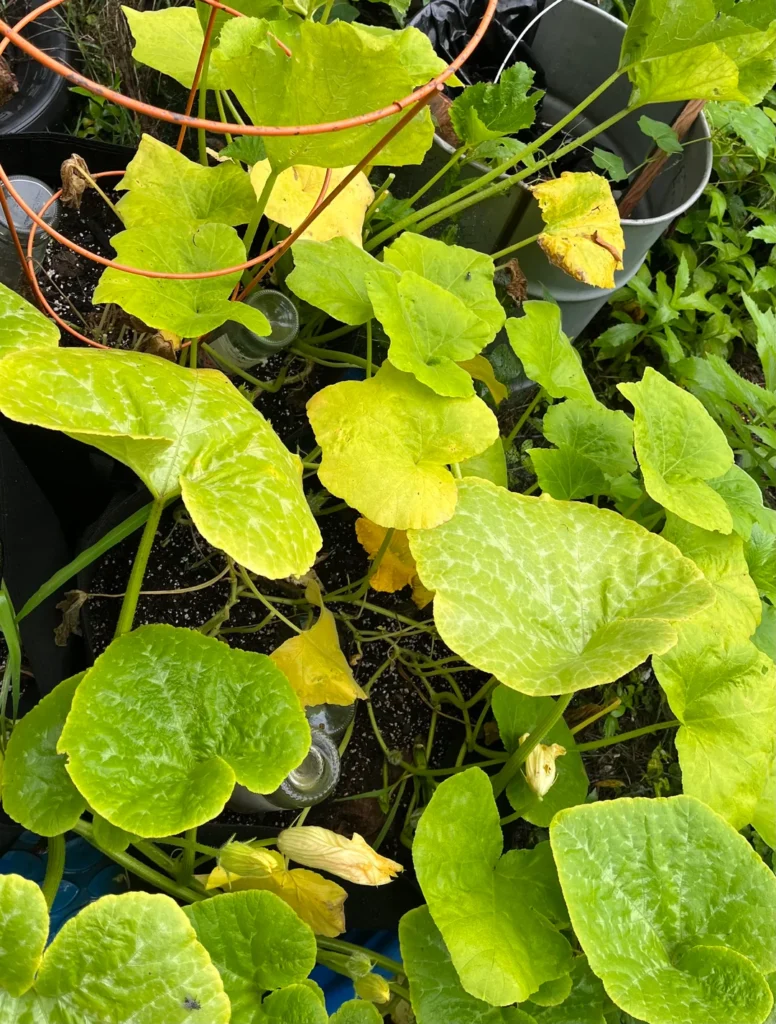
Yellowing squash leaves don’t all look alike and that’s actually your biggest clue. The location of the yellow leaves, the pattern within each leaf, and any other symptoms on the plant all point to different causes.
It’s the same principle I covered when looking at holes on rose leaves the damage pattern is your diagnostic tool. Read the plant before you reach for any spray or fertilizer.
Here’s a breakdown of every common cause.
1. Nitrogen Deficiency

How to identify it:
The oldest, lowest leaves on the plant turn uniformly pale yellow first, then the yellowing slowly moves upward toward younger growth. The leaves don’t have spots or mottled patches they just fade evenly from green to yellow to almost white.
Nitrogen is a mobile nutrient in plants, meaning when there isn’t enough to go around, the plant pulls it from older tissue to feed new growth. The bottom leaves always go first.
This is the most common cause of yellow leaves on squash plants, especially in containers or beds where the soil has been depleted by the previous season’s crop.
How to fix it:
Apply a balanced vegetable fertilizer with a higher nitrogen number look for something like a 1 – 0-5-5 or 1 – 2-6-6 NPK ratio. For a fast response, a diluted fish emulsion (1 tablespoon per gallon of water) applied weekly works well.
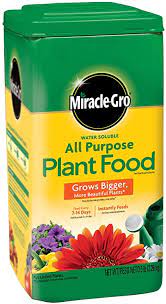
I keep a balanced soluble fertilizer on hand for quick nitrogen boosts it’s my go-to when lower leaves start fading on squash.
This Miracle-Gro Soluble fertilizer has given me some really good results in keeping my plants happy and healthy. It’s great value for money and will last a long time. You can find it by clicking here.
If you’re growing in the ground, a side-dressing of compost (about 1 – 2 inches around the base of each plant) will help over the next 2 – 3 weeks.
2. Overwatering or Underwatering

How to identify it:
Both overwatering and underwatering can turn squash leaves yellow, which makes this one tricky. The key difference is in the texture.
Overwatered squash leaves often feel soft and slightly mushy at the base. The yellowing tends to be widespread and may affect both old and new growth at the same time. The soil will be saturated and may smell faintly of rot.
Underwatered leaves, on the other hand, go yellow while also feeling dry and slightly crispy at the edges. The whole plant may droop before the color change even starts.
You may also notice curling alongside the yellowing if that’s happening, this guide on plant leaves curling covers what different types of curl mean and how to respond.
How to fix it:
For overwatering, hold off on watering and let the top 2 inches of soil dry out completely before the next session. Improve drainage if water is pooling around the base.
For underwatering, water deeply enough that water drains freely from the bottom of the container, or enough to wet the soil 6 – 8 inches deep in a garden bed then maintain consistent moisture. Squash are heavy drinkers and do best with about 1 – 1.5 inches of water per week.
3. Powdery Mildew
How to identify it:
You’ll see white or grayish powdery patches on the surface of the leaf usually starting on the upper side. As the infection spreads, the leaf beneath the powder turns yellow, then brown, and eventually dies.
Powdery mildew is a fungal disease that thrives in warm, dry days paired with cool, humid nights. It’s one of the most common problems on squash, zucchini, and cucumbers I’ve seen it wipe out the second half of an entire squash bed by mid-August if left unchecked.
How to fix it:
Remove and dispose of heavily infected leaves immediately don’t compost them. Then spray the remaining foliage with a baking soda solution (1 tablespoon baking soda + 1 teaspoon dish soap per gallon of water) every 710 days. Neem oil at a 2% dilution (2 tablespoons per gallon of water) is also effective and helps prevent reinfestation.
Improve air circulation by giving plants more space, and avoid watering from overhead late in the day.
4. Downy Mildew
How to identify it:
Downy mildew causes yellow angular patches on the upper leaf surface that are bounded by leaf veins so the patches look blocky or geometric rather than round. Flip the leaf over and you’ll often see a gray or purplish fuzzy growth on the underside directly beneath the yellow patches.
It spreads fastest in cool, wet weather and spreads through water splash and wind.
How to fix it:
Remove affected leaves as soon as you spot them. Apply a copper-based fungicide according to the package directions typically every 714 days during wet periods. Water only at the base of the plant in the morning so foliage dries out during the day.
5. Natural Aging of Lower Leaves
How to identify it:
This one isn’t a problem at all. As squash plants mature and produce fruit, the plant naturally sheds energy from the oldest, lowest leaves and redirects it to fruit development. These leaves turn uniformly yellow sometimes quite rapidly and the rest of the plant looks completely healthy and productive.
If the yellowing is limited to leaves that are shaded out by the canopy above them, and new growth is green and vigorous, this is just the plant doing what it’s supposed to do.
How to fix it:
Simply remove the yellowing leaves with clean pruning shears and dispose of them. This actually improves airflow at the base of the plant and reduces fungal risk. No fertilizer, no spray needed.
6. Squash Bugs and Aphid Damage
How to identify it:
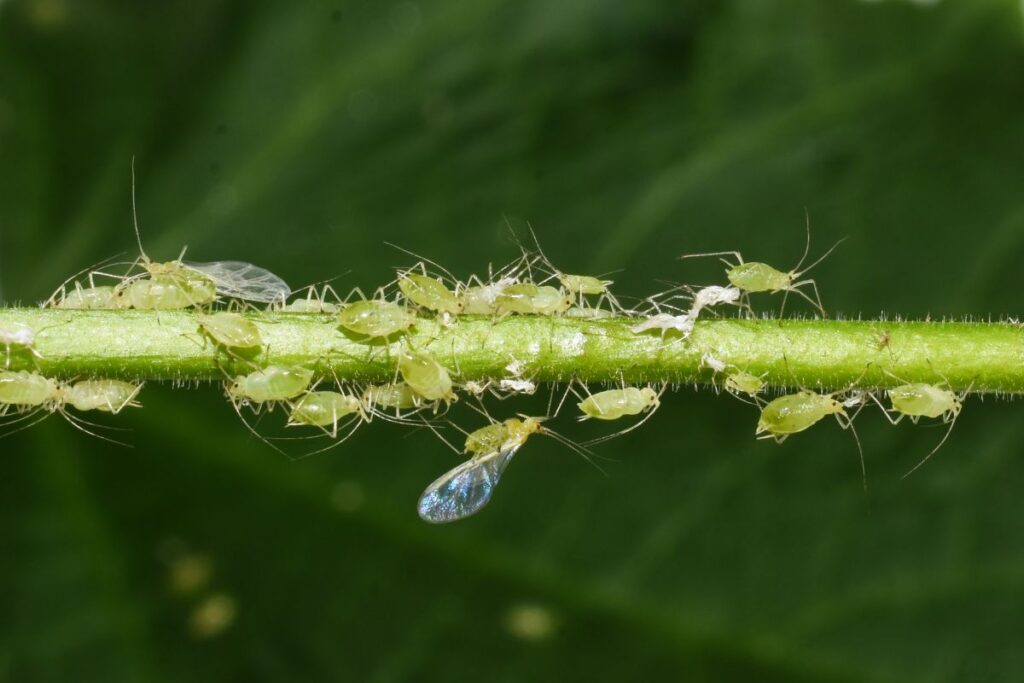
Pest-related yellowing usually appears as stippling (tiny pale dots all over the leaf surface) or larger irregular yellow patches. Check the undersides of the leaves carefully this is where squash bugs, aphids, and spider mites hide and feed.
Squash bugs are brownish-gray, about ¾ inch long, and leave brick-red egg clusters on the undersides and stems of leaves. Aphids form dense colonies of tiny soft-bodied insects, usually pale green or black.
If you’ve spotted orange or yellow egg clusters under leaves and aren’t sure what they belong to, this post on yellow eggs on leaves can help you identify them.
Squash bugs inject a toxin as they feed that causes wilting and yellowing far beyond the feeding site. A heavy infestation can collapse an entire plant in less than a week.
How to fix it:
Hand-pick squash bugs and egg masses early in the morning when they’re sluggish. Drop them into a bucket of soapy water. For aphids, a strong blast of water from a hose is often enough to knock off a large portion of the colony.
For persistent infestations, neem oil at a 2% solution applied to the undersides of leaves every 5 – 7 days is highly effective. Diatomaceous earth sprinkled around the base of the plant also deters squash bugs from moving in.
Quick Reference Diagnosis Table
| Cause | Visual Pattern | Location on Plant | Solution |
|---|---|---|---|
| Nitrogen deficiency | Uniform pale yellow, no spots | Oldest/lowest leaves first | Balanced fertilizer, fish emulsion, compost |
| Overwatering | Widespread yellow, soft leaves | Old and new growth | Reduce watering, improve drainage |
| Underwatering | Yellow + crispy edges, drooping | Whole plant | Deep watering, 1 – 1.5 inches/week |
| Powdery mildew | White powder + yellowing beneath | Upper leaf surface | Baking soda spray or neem oil |
| Downy mildew | Angular yellow patches, fuzzy underside | Upper surface / underside | Copper fungicide, base watering |
| Natural aging | Uniform yellow, healthy new growth | Lowest, most shaded leaves | Remove leaves, no treatment needed |
| Squash bugs / aphids | Stippling or irregular yellow patches | Undersides of leaves | Hand-pick, neem oil, soapy water |
How to Diagnose Your Squash Plant in 5 Minutes
Start at the bottom of the plant and work your way up.
Check the lower leaves first.
If only the oldest leaves are yellow and everything above them is green and vigorous, you’re almost certainly looking at nitrogen deficiency or natural aging.
Flip the leaves over.
Check the undersides for bugs, egg masses, or fuzzy growth. This single step rules out or confirms most pest and fungal causes. The same technique applies when diagnosing cucumber leaves turning yellow vine crops share many of the same pests and fungal diseases.
Look at the yellowing pattern.
Uniform fading = nutrient issue. Angular, vein-bounded patches = downy mildew. White powder visible = powdery mildew. Stippled dots everywhere = sucking pest.
Check the soil.
Stick your finger 2 inches into the soil. Is it bone dry or waterlogged? Either extreme causes yellowing.
Similar patterns show up across the vegetable garden if you’re also dealing with yellowing on nearby plants, yellow leaves on tomato plants covers the same diagnostic approach for that crop.
How to Prevent Yellow Leaves on Squash Plants
Prevention is easier than treatment once mildew or pests establish themselves.
Feed consistently throughout the season. Squash are heavy feeders. A balanced vegetable fertilizer every 3 – 4 weeks from transplant to late summer keeps nitrogen levels stable and prevents deficiency yellowing before it starts.
Water at the base, not overhead. Drip irrigation or a watering wand aimed at the soil not the foliage dramatically reduces fungal pressure. Water in the morning if overhead watering is unavoidable.
Space plants generously. Squash plants need room at least 3 feet between plants in a row, 4 – 6 feet for sprawling varieties. Dense planting traps humidity and creates the perfect environment for powdery mildew.
Tip: A preventative neem oil spray (2 tablespoons per gallon of water) applied every 1 – 4 days starting when plants are young is one of the most reliable ways to stay ahead of both fungal disease and pest pressure all season long.
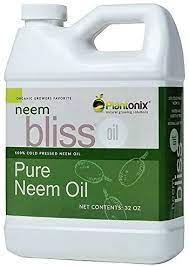
I finish most squash pest-prevention routines with a light neem oil spray every two weeks it handles both fungal pressure and early pest populations before they explode.
I use bliss pure neem oil from Amazon for a great price. It works great when it comes to shining leaves and provides a layer of protection for plants against common pests.
Rotate your crops. Planting squash in the same bed year after year allows soil-borne diseases and overwintering pests to build up. Rotate to a different bed every 2 – 3 years.
Remove lower leaves proactively. Once the plant reaches about 3 feet of sprawl or height, removing the lowest 4 – 6 leaves improves airflow at the base and reduces mildew risk significantly.
When to Worry
Most yellow squash leaves are fixable or simply cosmetic. But a few patterns warrant more urgent action.
Worry if the yellowing is spreading rapidly from lower to upper leaves within a few days this can indicate a systemic issue like root rot from prolonged overwatering or a viral infection.
Worry if new growth is also coming in yellow or pale healthy new leaves should always be bright green. Pale new growth points to a severe nutrient deficiency, root damage, or a soil pH problem. Squash prefers a pH of 6.0 – 6.8; outside that range, nutrients become unavailable even if they’re present in the soil.
Worry if you see wilting alongside the yellowing and find large squash bug populations the toxin they inject can kill stems and cause rapid, irreversible collapse. Act on pest infestations fast.
Frequently Asked Questions
Can yellow squash leaves turn green again?
Once a leaf has gone fully yellow, it won’t recover to full green. But fixing the underlying cause whether that’s nitrogen, watering, or pests will stop the spread, and new growth will come in healthy and green.
Is it normal for squash leaves to turn yellow in summer?
Yes, partially. The oldest, lowest leaves naturally yellow as the plant matures and fruits. If only lower leaves are affected and the rest of the plant looks healthy, this is normal. Widespread or rapidly spreading yellowing on any part of the plant is not normal.
Should I remove yellow leaves from squash plants?
Yes, in almost every case. Removing yellow leaves reduces fungal spore loads, improves airflow, and keeps the plant directing energy toward healthy growth and fruit.
Why are my zucchini leaves turning yellow with white spots?
White spots combined with yellowing is the signature of powdery mildew. Apply a baking soda spray or neem oil solution immediately and remove the most heavily affected leaves.
Can too much fertilizer cause yellow leaves on squash?
Yes. Over-fertilizing especially with high-nitrogen synthetic fertilizers can cause fertilizer burn, which appears as yellowing or browning at leaf edges and tips. Follow label directions and don’t fertilize more than once every 3 – 4 weeks during the growing season.
The Bottom Line
Yellow squash leaves are one of the most common vegetable garden problems but they’re also one of the most readable. The pattern almost always tells you the cause: uniform fade from the bottom means nitrogen, angular patches mean fungal disease, stippling means pests, and soft widespread yellowing means water stress.
Start with the diagnostic steps check the bottom leaves, flip them over, assess the soil moisture, and look for any white powder or egg masses. In most cases, you’ll have a clear answer within a few minutes and a fix in place within the day.
The fastest path to a healthy squash plant is consistent care: feed every 3 – 4 weeks, water at the base, give the plant room to breathe, and do a preventative neem oil spray every couple of weeks and yellow leaves become the exception, not the rule.
Related Posts
- Holes on Rose Leaves: What’s Causing Them and How to Fix It
- Cucumber Leaves Turning Yellow: Causes and Fixes
- Rose Leaves Turning Yellow: Why It Happens and What to Do
- Lavender Leaves Turning Yellow: Causes and Solutions
- Yellow Leaves on Tomato Plants: Full Diagnosis Guide
Related Articles
Pepper leaves curling? Learn the 7 most common causes — from underwatering and heat stress to aphids and viral disease — plus step-by-step fixes to help your plants recover fast.
Pepper Leaves Turning Yellow: Why It Happens and How to Fix It
Pepper plant leaves turning yellow? Learn the 7 most common causes — from nitrogen deficiency to overwatering — and get specific, actionable fixes to bring your pepper plants back to health.