
You walk out to check on your tomato plants, expecting to see healthy green leaves and instead you spot pale, chalky patches scattered across the foliage. Maybe they’re powdery, maybe they’re crisp and bleached, maybe they look like someone flicked white paint at the plant.
It’s worrying, but it’s almost never a death sentence. White spots on tomato leaves are one of the most common problems home gardeners run into, and most causes are completely fixable once you know what you’re looking at.
The most common causes of white spots on tomato leaves are powdery mildew, sunscald, septoria leaf spot, pesticide or spray residue, edema, spider mite damage, and nutrient deficiencies (especially calcium or magnesium). Most of these are easy to treat with natural remedies like baking soda spray, neem oil, or simple changes to watering and sun exposure. With early identification, your plants can recover fully and still produce a healthy harvest.
Before you start spraying anything, it pays to identify exactly what kind of white spots you’re dealing with. Different causes need very different fixes what cures powdery mildew will do nothing for sunscald, and treating a nutrient deficiency like a fungus will only stress the plant further.
This guide walks through the seven most common culprits, what each one looks like, what causes it, and exactly how to get rid of it.
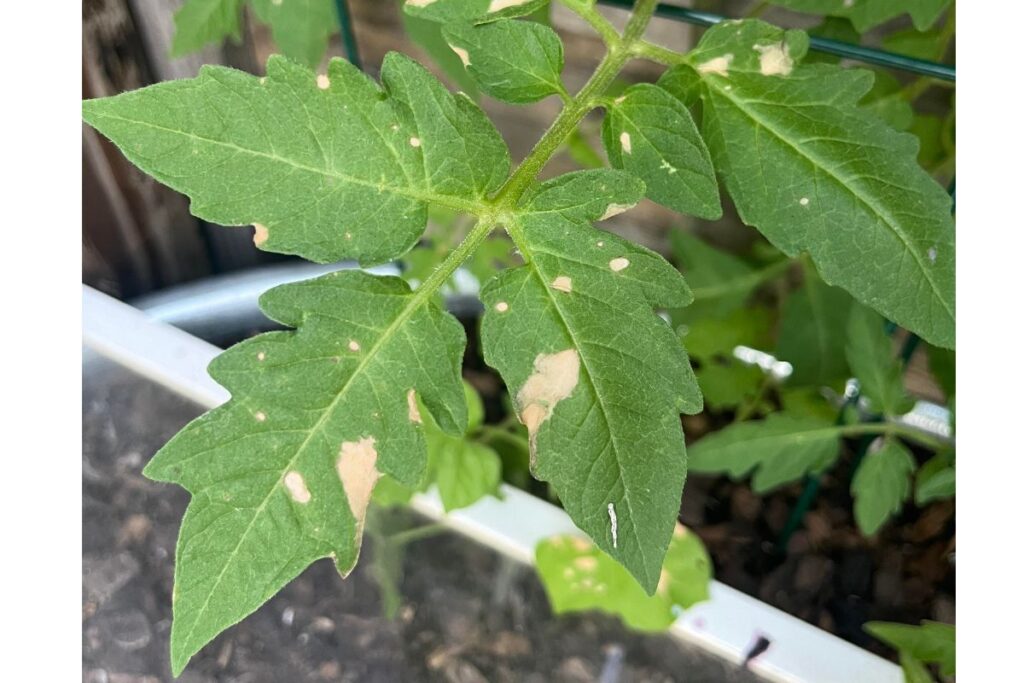
Why Do Tomato Leaves Get White Spots?
Tomato leaves develop white spots for three broad reasons: fungal or bacterial infections, environmental stress, and damage from pests or chemicals. Each leaves a slightly different signature on the leaf.
Fungal causes like powdery mildew and septoria thrive in humid, poorly ventilated conditions. Environmental causes sunscald, edema, and nutrient issues usually trace back to watering habits, sudden weather changes, or soil quality.
Pest damage, especially from spider mites and thrips, often looks like tiny white speckling rather than full patches. And finally, spray residue from pesticides or even hard water can leave white marks that aren’t damage at all just buildup.
Identifying which category your problem falls into is the first step. Here are the seven most likely culprits.
1. Powdery Mildew
Powdery mildew is the most common cause of white spots on tomato leaves, especially in humid weather or when plants are crowded together.
What it looks like: Soft, white, powdery patches that look like flour has been dusted onto the leaf surface. Starts as small circular spots and spreads to cover the entire leaf if untreated.
What it does: Blocks sunlight from reaching the leaf, weakens the plant, reduces fruit yield, and can eventually cause leaves to yellow and drop. Severe infections stunt growth.
What causes it: A fungal infection that thrives in warm days, cool nights, high humidity, and poor air circulation. Crowded plants and overhead watering make it worse.
How to get rid of powdery mildew:
- Mix 1 tablespoon of baking soda, 1 teaspoon of liquid dish soap, and 1 gallon of water in a spray bottle.
- Spray both sides of affected leaves thoroughly, early in the morning or evening.
- Repeat every 7 days for 3 – 4 weeks until the mildew is gone.
- Remove and bin (don’t compost) any heavily infected leaves before spraying.
- Improve airflow by pruning lower leaves and spacing plants at least 2 – 4 inches apart.
For a deeper look at the baking soda recipe and other uses around the garden, see our full guide on baking soda for plants it’s the single most useful kitchen remedy for tomato growers.
2. Sunscald
Sunscald looks alarming but is purely environmental it’s a sunburn, not a disease.
What it looks like: Bleached, papery white or pale yellow patches, usually on the upper or outer leaves that catch the most direct sun. The affected areas often feel crisp or thin.
What it does: Damages leaf tissue permanently in the affected spots, but doesn’t spread. The plant keeps growing, and new leaves will be fine.
What causes it: Sudden exposure to intense sunlight often after transplanting seedlings that were grown indoors, after heavy pruning, or following a stretch of cloudy weather that ends in a hot, sunny day.
How to fix sunscald:
- Move container-grown tomatoes to a spot with afternoon shade for 4 – 5 days, then gradually return them to full sun.
- For in-ground plants, drape light shade cloth (3040% shade) over the plants during the hottest part of the day for 1 week.
- Water deeply at the base every 2 – 3 days to help the plant recover never overhead in midday.
- Trim away the worst-damaged leaves only if they’re more than 5 – 0% bleached.
- Harden off seedlings before transplanting by setting them outside for 1 – 2 hours on day one, increasing by an hour each day for 7 days.
3. Septoria Leaf Spot
Septoria is a fungal disease that’s often confused with powdery mildew but behaves very differently.
What it looks like: Small circular spots with white or grey centres and dark brown or black borders. Usually appears first on the lower leaves and works its way up. Tiny black dots (the fungal fruiting bodies) may be visible in the centre of each spot.
What it does: Causes leaves to yellow, curl, and drop. Severe infections can defoliate the bottom half of a plant within weeks and dramatically reduce fruit production.
What causes it: The fungus Septoria lycopersici, which survives in soil and on infected debris. Splashing water during rain or overhead watering spreads spores from soil onto lower leaves.
How to get rid of septoria leaf spot:
- Remove all infected leaves immediately and bin them do not compost.
- Mix 2 tablespoons of neem oil and 1 teaspoon of dish soap into 1 gallon of water.
- Spray both sides of all remaining leaves every 7 days for 3 weeks.
- Mulch around the base of the plant with 2 – 3 inches of straw or wood chips to stop soil from splashing onto leaves.
- Water only at the soil line never wet the foliage.
- Rotate tomatoes to a different bed next season; don’t replant tomatoes in the same spot for 2 – 3 years.
If septoria gets ahead of you, you may also notice the symptoms that lead to tomato leaves falling off the two problems often go hand in hand.
4. Pesticide or Spray Residue
Sometimes those “white spots” aren’t damage at all they’re just dried residue from something you sprayed.
What it looks like: Chalky, dusty, or streaky white film, often distributed evenly across the leaf surface. Doesn’t get worse over time and can usually be rubbed off gently with a damp cloth.
What it does: Mostly cosmetic, but heavy residue can block sunlight and slow photosynthesis. Some sprays can also cause chemical burn if applied in midday heat.
What causes it: Diluted neem oil, baking soda spray, copper fungicide, insecticidal soap, or even hard tap water can leave visible mineral deposits when they dry on the leaf.
How to fix spray residue:
- Rinse the plant gently with a soft spray of clean water early in the morning.
- For stubborn residue, wipe affected leaves with a soft cloth dampened in plain water.
- Going forward, dilute sprays accurately and apply only in early morning or after sunset.
- If you use hard tap water, switch to rainwater or filtered water for foliar sprays.
- Never spray leaves when temperatures are above 8 – 5°F (2 – 9°C) or in direct midday sun.
5. Edema (Water Blisters)
Edema is the plant equivalent of swollen, blistered skin and it’s caused by drinking too much, too fast.
What it looks like: Small white, cream, or pale green raised bumps or blisters, usually on the underside of leaves but sometimes on top. As they age they may turn corky, tan, or rust-coloured.
What it does: Each blister is a burst plant cell. The damage is permanent on affected leaves but doesn’t spread to new growth once you fix the underlying watering issue.
What causes it: The plant takes up more water from the roots than it can release through transpiration, and the excess pressure ruptures cells in the leaves. Most common in cool, humid, cloudy weather following heavy watering.
How to fix edema:
- Cut back watering by about 3040% until the soil dries out to 1 inch below the surface between waterings.
- Improve drainage in containers by checking that drainage holes are clear and adding 1 inch of perlite or coarse sand to the mix.
- Increase air circulation around plants with a small fan if growing indoors or under cover.
- Water in the morning only, never at night, so leaves have time to transpire during the day.
- Remove the worst-affected leaves to keep the plant focused on healthy new growth.
6. Spider Mite Damage
Spider mites are nearly invisible, but the damage they leave behind is very recognisable once you’ve seen it.
What it looks like: Tiny pinpoint white or yellow speckles (called stippling) across the upper surface of leaves. With heavy infestations, you’ll also see fine webbing on the undersides and at leaf joints.
What it does: Mites pierce leaf cells and suck out the contents, leaving each puncture as a tiny pale dot. Severe infestations turn entire leaves grey or bronze, and the plant becomes weak and stunted.
What causes them: Hot, dry, dusty conditions. They thrive when humidity is low and plants are water-stressed, which is why they often appear in midsummer or on container plants.
How to get rid of spider mites:
- Spray the entire plant especially the undersides of leaves with a strong jet of water every 2 days for 1 week to knock mites off.
- Mix 2 tablespoons of neem oil and 1 teaspoon of dish soap in 1 gallon of water and spray every 5 – 7 days for 3 weeks.
- Increase humidity by misting plants in the morning during dry spells.
- Remove and bin the worst-affected leaves.
- Avoid broad-spectrum insecticides they kill the predatory mites that naturally control spider mites.
Spider mites aren’t the only tiny pests worth watching for you may also spot black eggs on leaves from related sap-sucking insects, which sometimes show up on the same stressed plants.
7. Nutrient Deficiency
Sometimes the problem isn’t on the leaf it’s in the soil.
What it looks like: Pale white or yellowish patches between the leaf veins, often with the veins themselves staying green. Calcium deficiency may show white spots on new growth; magnesium deficiency shows up on older leaves first.
What it does: Slows growth, reduces fruit set, and in the case of calcium deficiency, leads directly to blossom end rot on the fruit.
What causes it: Inconsistent watering (which prevents the plant from taking up minerals even when they’re present), depleted container soil, or growing in soil with the wrong pH for tomatoes (they prefer 6.2 – 6.8).
How to fix nutrient deficiency:
- Water deeply and consistently aim for 1 – 2 inches per week, applied evenly rather than in bursts.
- For calcium deficiency, mix 1 tablespoon of crushed eggshells or 1 teaspoon of garden lime into the top inch of soil per plant.
- For magnesium deficiency, dissolve 1 tablespoon of Epsom salt in 1 gallon of water and drench the soil around each plant every 2 weeks for 6 weeks.
- Top-dress with 1 inch of finished compost around the base of each plant every 4 weeks.
- Test soil pH with a cheap meter; if it’s below 6.0, add garden lime per the package instructions to raise it.
A natural feed many growers swear by for filling potassium and trace-mineral gaps is banana peel water for tomatoes easy to make and almost free.
Quick Reference: Identifying White Spots on Tomato Leaves
| Cause | Appearance | Where on the Plant | Harmful? | Main Fix |
|---|---|---|---|---|
| Powdery Mildew | Soft, flour-like dusting | Upper leaves first | Yes | Baking soda spray |
| Sunscald | Bleached, papery patches | Sun-facing leaves | Cosmetic | Shade + harden off |
| Septoria Leaf Spot | White centres, dark borders | Lower leaves first | Very | Neem oil + remove leaves |
| Spray Residue | Chalky, dusty film | Evenly spread | No | Rinse with water |
| Edema | Raised white blisters | Leaf undersides | Mild | Reduce watering |
| Spider Mite Damage | Tiny pinpoint stippling | Both sides, webbing | Yes | Water jet + neem oil |
| Nutrient Deficiency | Pale patches between veins | New or old leaves | Yes | Even watering + feed |
How to Prevent White Spots on Tomato Leaves
Most white-spot problems are easier to prevent than to cure. Build these habits into your routine and you’ll head off the majority of issues before they start.
- Water at the base, not overhead. Splashing water spreads fungal spores from soil to leaves and creates the humid leaf surface that powdery mildew loves. A simple drip line or watering can held low solves this entirely.
- Space plants properly. Crowded plants trap humidity and starve each other of airflow. Give each tomato plant at least 2 – 4 inches of breathing room, and prune the lowest 6 – 8 inches of foliage once the plant is established.
- Mulch around the base. A 2 – 3 inch layer of straw, wood chips, or shredded leaves stops soil from splashing onto lower leaves during rain. If you’re considering leaf mulch, see using leaves in garden soil for what works and what doesn’t.
- Water consistently. Erratic watering causes edema, nutrient lockout, blossom end rot, and sunscald stress all at once. Aim for the same amount on the same schedule, adjusting only for rainfall.
- Inspect leaves weekly. Flip a few leaves over each week and look at the undersides. Most problems mites, edema, early fungal infection show up there first, and catching them early means a much easier fix.
- Rotate crops every season. Don’t plant tomatoes in the same spot two years in a row. Septoria and other tomato pathogens overwinter in soil and reinfect anything you plant on top of them.
- Spray neem oil preventatively every 1014 days. A light, regular application of neem oil (2 tablespoons per gallon of water with a teaspoon of dish soap) prevents powdery mildew, septoria, spider mites, and most other common tomato problems before they take hold. It’s the single most useful natural preventative in a tomato grower’s toolkit.
The Bottom Line
White spots on tomato leaves look scary, but they’re almost always solvable. The first job is identification powdery mildew, sunscald, septoria, residue, edema, mite damage, and nutrient deficiency all look superficially similar but need very different treatments.
Once you know which one you’re dealing with, the fixes are mostly cheap, natural, and made from things you already have at home. Baking soda spray, neem oil, better watering, and a bit of mulch will handle 9 – 0% of cases.
Your plants will recover faster than you expect. Tomatoes are resilient, and a few damaged leaves rarely affect the final harvest if you act early.
The single most important takeaway is this: most white spots come down to either too much moisture on the leaves or not enough consistency at the roots fix those two things, and almost every cause on this list goes away on its own.
Related Posts:
- Tomato Leaves Falling Off: The Reasons & Solutions
- Baking Soda For Plants: 1 – 3 Uses with Mixing Recipies
- Banana Peel Water For Tomatoes: Why tomato plants love it
- Holes On Rose Leaves: The Known Culprits and Easy Fixes
- Black Eggs on Leaves: 4 Known Culprits, Pictures & Solutions
- White Worms in Soil: 4 Types with Pictures and What they do
Related Articles
Pepper leaves curling? Learn the 7 most common causes — from underwatering and heat stress to aphids and viral disease — plus step-by-step fixes to help your plants recover fast.
Pepper Leaves Turning Yellow: Why It Happens and How to Fix It
Pepper plant leaves turning yellow? Learn the 7 most common causes — from nitrogen deficiency to overwatering — and get specific, actionable fixes to bring your pepper plants back to health.