
That cycle is exactly how root rot takes hold, and it’s one of the most common ways houseplants die. The tricky part is that the symptoms look just like underwatering, so it’s easy to make things worse without realizing it.
Root rot shows up as yellowing leaves, wilting despite wet soil, mushy brown or black roots, and a foul smell from the soil. It’s caused by overwatering, poor drainage, or fungal pathogens like Phytophthora or Pythium. You can fix it by trimming away damaged roots with sterile scissors, repotting in fresh well-draining soil, adjusting your watering schedule, and improving pot drainage most plants recover fully if you catch it early enough.
Once you know the signs, you can act fast and fast action is what saves the plant.
The key is learning to tell the difference between a thirsty plant and a drowning one. This guide walks you through exactly how to do that, how to treat root rot once you’ve confirmed it, and how to make sure it never comes back.
What Causes Root Rot?
Root rot doesn’t come out of nowhere. There’s almost always a clear reason it developed, and identifying that reason is just as important as treating the damage because if you fix the roots without fixing the cause, it comes right back.
Overwatering
This is the number one culprit. When soil stays waterlogged for too long, the oxygen in the root zone gets displaced by water. Roots need oxygen to survive without it, they suffocate and begin to decay.
It doesn’t even take that many watering sessions. Watering on a fixed schedule regardless of what the soil is actually doing is enough. If you’re curious why your soil stays wet too long, the pot size, mix type, and drainage all play a role.
Poor Drainage
Even if you water correctly, a pot without drainage holes traps moisture with nowhere to go. The same is true of dense, compacted soil that doesn’t allow water to move through freely.
Decorative pots often have no drainage if yours doesn’t, consider using it as a cachepot (outer sleeve) and keeping the plant in a functional nursery pot inside it.
Fungal Pathogens
Overwatering creates the perfect warm, wet environment for soil-borne fungi like Phytophthora and Pythium to multiply. These pathogens attack root tissue directly, spreading quickly through the root system.
Once fungal rot sets in, simply letting the soil dry out won’t be enough you’ll need to treat the roots and replace the soil entirely.
Wrong Pot Size
A pot that’s too large for the plant holds far more soil than the roots can absorb water from. That excess wet soil sits undisturbed and stays damp, which is exactly the setup root rot needs.
This is worth keeping in mind even when you’re trying to be helpful by “giving the plant room to grow.”
Root Rot Symptoms: What to Look For Above the Soil
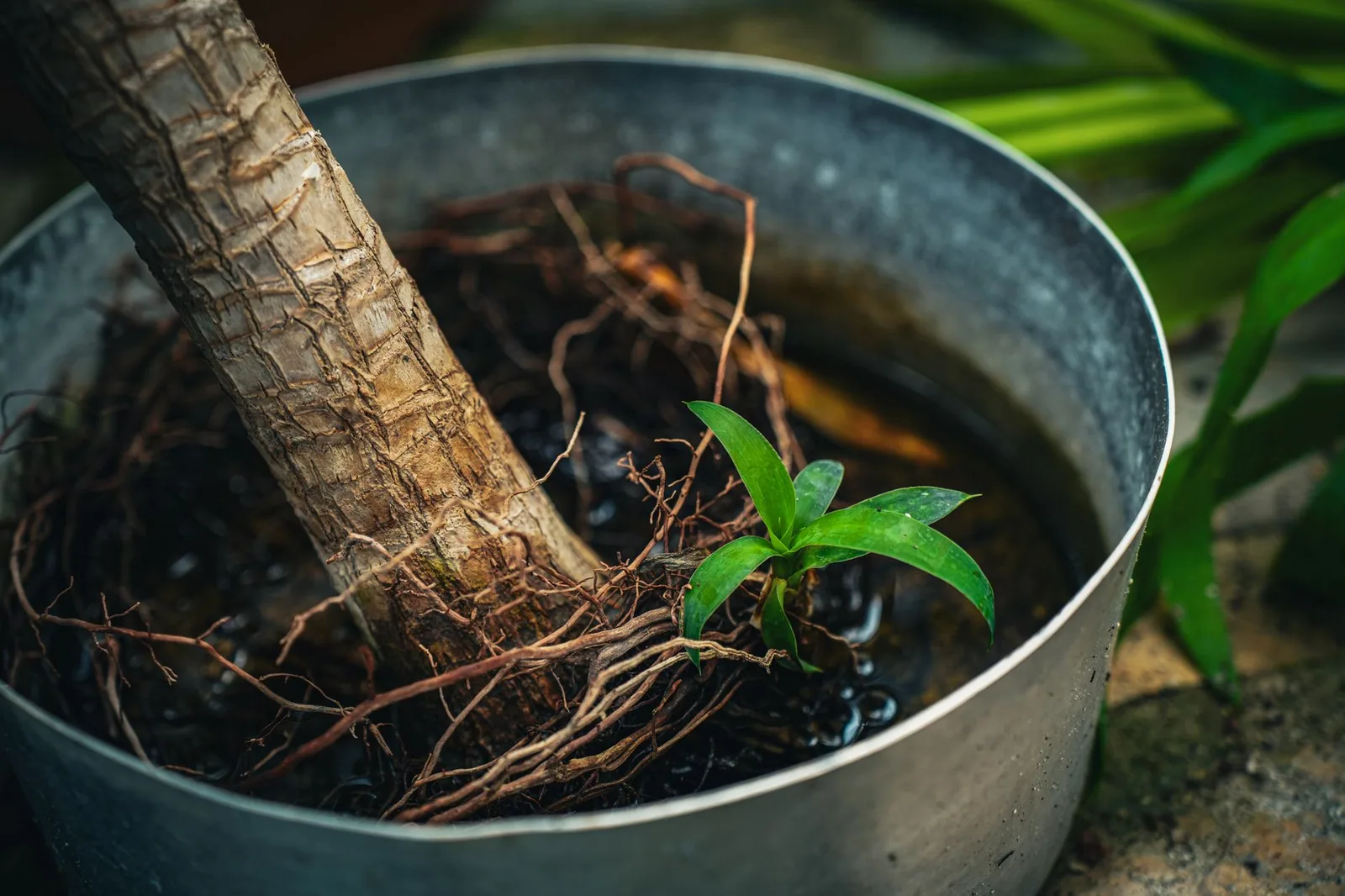
The frustrating thing about root rot is that by the time you see obvious symptoms above the soil, the damage below is often already significant. But the earlier you catch it, the better the odds of recovery.
Watch for these warning signs:
- Yellowing leaves especially lower or older leaves turning yellow even with regular watering
- Wilting despite wet soil the plant looks thirsty but the soil is moist; this is the most telling sign
- Stunted or stopped growth no new leaves for weeks during the growing season
- Leaf drop leaves falling off suddenly without browning first
- A foul, musty smell from the soil or pot healthy soil smells earthy; root rot smells rotten
- Soft, darkened stem base the lower stem may feel squishy or look discolored near the soil line
Just like diagnosing holes on rose leaves requires you to look closely at the pattern of damage, root rot diagnosis means looking at the combination of signs not just one symptom in isolation.
How to Confirm Root Rot: Checking the Roots
The only way to be certain is to look at the roots directly. Don’t skip this step it tells you how bad the rot is and whether the plant is worth saving.
Remove the plant from its pot:
Tip it gently on its side, support the base of the stem, and ease the root ball out. If it doesn’t slide out, run a butter knife along the inside edge of the pot.
Inspect the roots:
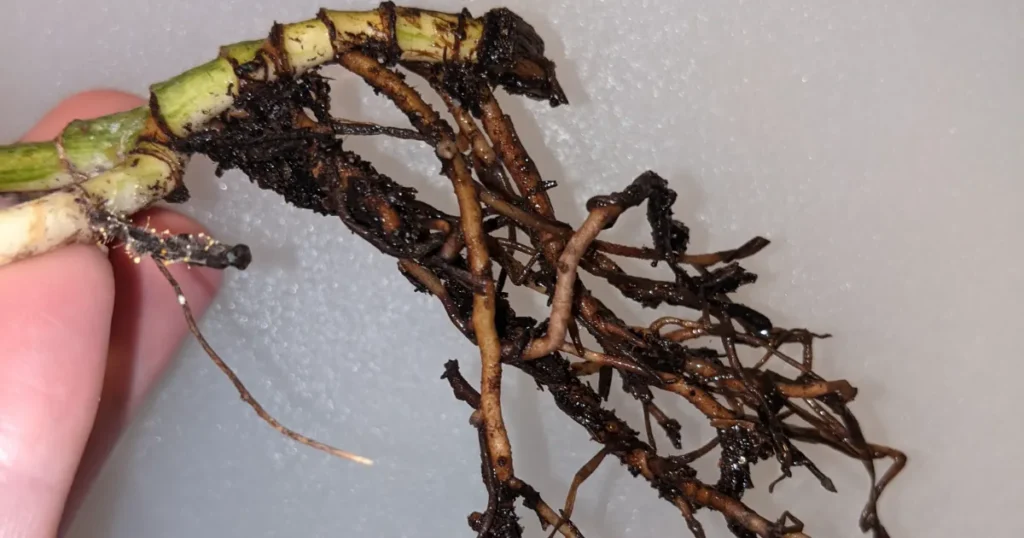
Lay the root ball on newspaper or a tray and have a look. Healthy roots are white or light tan, firm to the touch, and somewhat flexible. Rotten roots are brown or black, soft, and mushy they may fall apart when you handle them. There’s often a sour or rotten smell.
Assess the damage:
If fewer than half the roots are affected, the plant has a strong chance of recovery. If the majority of the root system is brown and mushy, it’s more serious but still worth attempting to save.
Understanding how plant root systems work helps here the roots aren’t just anchors, they’re the plant’s entire intake system for water and nutrients. Even a partial root system can sustain the plant while new roots grow back in.
How to Fix Root Rot: Step-by-Step Treatment
Once you’ve confirmed root rot, move quickly. Here’s exactly what to do.
Prepare your workspace:
Lay down newspaper and have clean scissors or pruning shears, fresh potting mix, a clean pot, and rubbing alcohol on hand. Sterilize your cutting tool by wiping the blades with rubbing alcohol this prevents spreading fungal spores to healthy tissue.
Trim the rotten roots:
Cut away every root that is brown, black, or mushy. Cut back to where the tissue is firm and white. Don’t be afraid to be thorough here leaving even a small section of rot can let it spread back into healthy tissue.
Rinse the remaining roots:
Hold the root ball under a gentle stream of room-temperature water to wash away old soil and any remaining fungal spores.
Treat with hydrogen peroxide (optional but recommended):
Mix a solution of 3% hydrogen peroxide diluted to 1 part H‚‚O‚‚ to 2 parts water. Soak the roots for 3 – 0 minutes or apply it as a root drench. The oxygen released kills anaerobic pathogens without harming the plant. This is the same principle behind using hydrogen peroxide on plants for pest and disease control it’s a simple, effective tool to have in your rotation.
I always have 3% hydrogen peroxide in my plant care kit for treating root rot it’s one of the safest and most effective tools I use.
I use this Essential Oxygen Food Grade Hydrogen Peroxide for my plants. It kills unwanted bacteria and helps boost the overall health of the soil. It’s concentration is just right.

Repot in fresh, well-draining soil:
Never reuse the old potting mix. Choose a mix appropriate for your plant type for most tropicals and houseplants, a blend of 6 – 0% quality potting mix, 3 – 0% perlite, and 1 – 0% coarse sand works well. For succulents and cacti, increase the perlite ratio to 5 – 0%.
Choose the right pot size:
Use a pot only slightly larger than the trimmed root ball 1 – 2 inches wider at most. Clean the pot with diluted bleach (1 part bleach to 9 parts water) before reusing, or use a new one. Make sure it has drainage holes.
Water sparingly after repotting:
Give the plant a light watering to help settle the soil, then hold back until the top 2 inches of soil have dried out completely. The plant needs time to establish new root growth resist the urge to water on schedule.
Quick Reference Diagnosis Table
| Symptom | What It Suggests | Action |
|---|---|---|
| Wilting + wet soil | Root rot likely | Inspect roots immediately |
| Yellow lower leaves | Overwatering or root stress | Check soil moisture and drainage |
| Mushy brown/black roots | Active root rot confirmed | Trim, treat, repot |
| Foul smell from soil | Fungal decay present | Repot in fresh mix, treat with H‚‚O‚‚ |
| Soft, dark stem base | Severe rot collar rot | Act urgently; salvage cuttings if needed |
| Only a few roots affected | Early-stage rot | Trim and repot; good recovery odds |
How to Prevent Root Rot
Once you’ve treated root rot, the goal is to make sure the conditions that caused it never return. Prevention is mostly about habits.
Water based on the soil, not the calendar.
The most reliable method is the finger test: push your finger 2 inches into the soil. If it’s still moist, don’t water yet. Most houseplants want to dry out slightly between waterings they’re far more forgiving of a little drought than of prolonged wetness.
Always use pots with drainage holes.
This is non-negotiable. If you love a decorative pot that has no holes, use it as a sleeve over a functional plastic or terracotta nursery pot. Remove the nursery pot to water, let it drain fully, then return it.
Match pot size to plant size.
A pot that’s too big is a recipe for soggy, stagnant soil. The roots should fill most of the container if there’s a lot of empty soil around the root ball, excess moisture will pool there. This is especially relevant for plants that prefer tighter root spaces, where going up too many pot sizes at once can do more harm than good.
Improve your potting mix.
Dense, peat-heavy mixes compact over time and hold water long after the plant is done absorbing it. Adding perlite or coarse sand to your mix increases drainage and aeration significantly.
Consider a moisture meter.
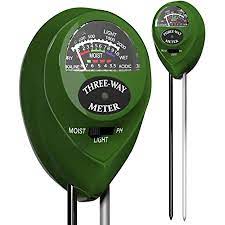
A basic soil moisture meter (usually under $15) removes all the guesswork from watering. Insert the probe into the soil, and water only when the reading drops to the dry zone for your plant type.
I keep a soil moisture meter on hand for all my potted plants it removes the guesswork from watering and has saved me from countless overwatering mistakes.
Take the guesswork out of watering plants and keeping the soil moist. It is both cost-effective and durable.
Best of all, it also measures pH and light. It’s worth a look.
Tip: A thin layer of coarse gravel at the very bottom of a pot does not improve drainage it actually creates a perched water table that keeps the soil above it wetter for longer. Drainage starts with the soil mix and the pot itself.
When to Worry: Signs the Plant May Not Recover
Most root rot cases are salvageable if caught before the stem and crown are affected. But there are situations where recovery is unlikely.
- More than two-thirds of the root system is rotten with almost no healthy white roots remaining
- The base of the stem is mushy and discolored all the way up to the first set of leaves
- Leaves are falling off rapidly and the plant has no new growth at all
In these cases, the best move is to take stem or leaf cuttings before the plant deteriorates further. If the rot hasn’t reached the upper stem, a cutting propagated in fresh, moist mix has a real chance of becoming a healthy new plant.
Frequently Asked Questions
Can a plant recover from root rot on its own?
No. Root rot doesn’t resolve by itself it progresses until the plant dies. The only way to stop it is to physically remove the rotten roots and repot in fresh soil.
How long does it take for a plant to recover from root rot?
With early treatment, most plants show improvement within 2 – 4 weeks. New root and leaf growth are the signs to watch for. Be patient the plant is rebuilding its entire intake system.
Should I water after treating root rot?
Give a very light watering immediately after repotting to help settle the soil around the roots, then wait until the top 2 inches are fully dry before watering again. Overwatering right after treatment is the fastest way to restart the problem.
Can root rot spread to other plants?
The fungal pathogens that cause root rot live in soil and can spread through contaminated tools, shared trays, or splashing water. Always sterilize tools between plants and never reuse soil from a plant that had root rot.
Does hydrogen peroxide really help?
Yes a 3% hydrogen peroxide solution diluted to 1:2 with water kills anaerobic pathogens in the root zone without damaging plant tissue. It’s a safe, inexpensive treatment that works best as a preventative soak at the time of repotting.
The Bottom Line
Root rot is one of the most preventable plant problems there is and one of the most fixable when you catch it early. The symptoms above the soil (wilting, yellowing, drooping) can look deceptively like underwatering, which is why so many gardeners accidentally make it worse.
The fix is straightforward: get the plant out of the pot, cut away every rotten root, treat with a hydrogen peroxide rinse, and repot in fresh, well-draining mix. Then adjust how you water checking soil moisture before every session, not watering on a schedule.
If your plant is wilting despite wet soil and smells off at the roots, act now the sooner you treat root rot, the better the odds of a full recovery.
Related Posts
- Why Is My Potted Plant Soil Always Wet? Here’s Why and How to Fix It
- Persistent Soil Moisture Issues in Pots
- Plant Roots Showing Above the Soil Should You Worry?
- Holes on Rose Leaves: What’s Eating Your Roses?
- Plants That Like to Be Root Bound
Related Articles
Pepper leaves curling? Learn the 7 most common causes — from underwatering and heat stress to aphids and viral disease — plus step-by-step fixes to help your plants recover fast.
Pepper Leaves Turning Yellow: Why It Happens and How to Fix It
Pepper plant leaves turning yellow? Learn the 7 most common causes — from nitrogen deficiency to overwatering — and get specific, actionable fixes to bring your pepper plants back to health.