
You head out to check on your tomato plants one morning, and something’s off. The leaves are riddled with holes small ones, large ones, ragged edges, or clean punched-out circles. It wasn’t like that yesterday.
Before you panic, take a breath. Holes in tomato leaves are one of the most common complaints from home gardeners, and in nearly every case, the problem is fixable.
Holes in tomato leaves are most commonly caused by caterpillars (including hornworms and loopers), flea beetles, slugs and snails, cutworms, or fungal diseases like bacterial speck and Septoria leaf spot. Less often, physical damage from wind or hail is the culprit. The good news is that once you correctly identify what’s causing the holes, you can treat the problem quickly using natural and low-cost methods and your plants can recover fully.
Knowing what is making those holes is the most important first step. Different pests leave different patterns, and treating for the wrong cause wastes time and money.
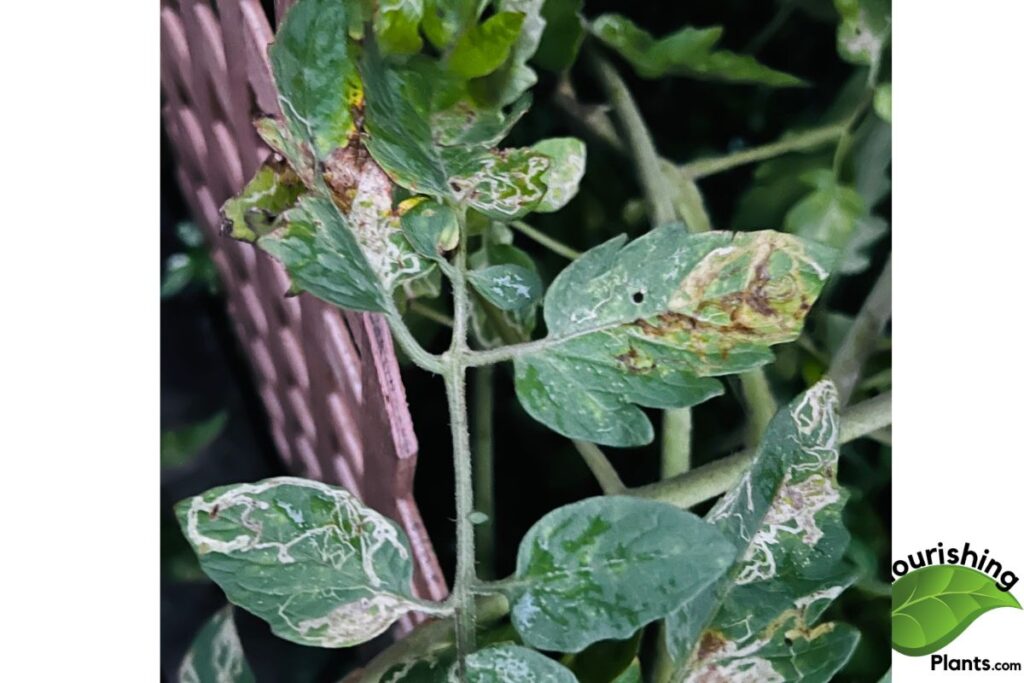
Why Do Tomato Leaves Get Holes?
Tomato plants are unfortunately attractive to a wide range of insects and pathogens. Their strong scent, lush foliage, and relatively soft leaves make them easy targets.
Insect damage typically appears as ragged or chewed holes. Pests like caterpillars eat from the leaf edge inward, while flea beetles leave tiny, scattered “shot holes” all over the surface.
Disease-related holes often start as spots yellow, brown, or black that eventually die and fall out of the leaf, leaving clean-edged holes. If you’re seeing holes alongside discolouration, disease is likely involved.
Environmental damage (hail, wind, physical contact) can mimic pest damage but usually appears suddenly after a weather event and doesn’t spread or worsen after that.
The Main Causes of Holes in Tomato Leaves
1. Caterpillars and Hornworms
Tomato hornworms (Manduca quinquemaculata) are the most dramatic offenders. These large green caterpillars can strip entire branches overnight.
Other caterpillars like cabbage loopers and armyworms also target tomatoes and leave similar damage.
What the damage looks like: Large, irregular holes often starting at the leaf edge or tip. Entire leaflets may be missing. Look for dark green or black droppings (frass) nearby.
What causes them: Adult moths lay eggs on the undersides of tomato leaves. Eggs hatch within a week during warm weather, and larvae begin feeding immediately.
How to get rid of caterpillars on tomato plants:
- Inspect the undersides of leaves carefully hornworms are surprisingly hard to spot due to their green camouflage.
- Hand-pick caterpillars and drop them into a bucket of soapy water (1 teaspoon dish soap per 1 litre of water).
- Apply Bacillus thuringiensis (Bt) spray mix according to the label, typically 1 – 2 teaspoons per litre of water and spray all leaf surfaces, including undersides.
- Reapply Bt every 5 – 7 days or after rain until no new feeding damage appears.
2. Flea Beetles
Flea beetles are tiny, jumping beetles (1 – 2 mm) that punch hundreds of small, round holes in leaves. A heavily infested plant can look like someone took a hole punch to every leaf.
What the damage looks like: Clusters of small, neat, circular holes scattered across the leaf surface not confined to the edges. Young seedlings are most vulnerable.
What causes them: Flea beetles overwinter in garden debris and emerge in spring. They’re especially problematic on young transplants and seedlings in early summer.
How to get rid of flea beetles:
- Spray affected plants with a neem oil solution mix 2 teaspoons of neem oil + ½ teaspoon of liquid dish soap per 1 litre of water.
- Apply in the early morning or evening to avoid leaf burn, coating all leaf surfaces thoroughly.
- Repeat every 7 days for 3 – 4 weeks until beetle activity stops.
- Lay sticky yellow traps near the base of plants to capture adults.
3. Slugs and Snails
Slugs and snails do their damage at night or during overcast, damp days which is why you might not see them but still find fresh holes every morning.
What the damage looks like: Irregular holes with smooth (not ragged) edges, often in the lower leaves first. A telltale silvery slime trail nearby confirms the culprit.
What causes them: Moist, shaded garden conditions are ideal for slugs. Mulch and dense planting can also harbour them close to the base of plants.
How to get rid of slugs and snails:
- Go out after dark with a torch and hand-pick slugs directly off the plants and surrounding soil.
- Scatter diatomaceous earth (DE) in a 5 cm ring around the base of each plant reapply after rain.
- Place shallow traps filled with 2 – 3 cm of beer near plants slugs are attracted to the yeast and drown.
- Remove mulch or debris directly touching plant stems to reduce daytime hiding spots.
4. Cutworms
Cutworms are soil-dwelling caterpillars that feed at night. They’re best known for cutting seedlings off at the base, but they also climb plants and chew holes in leaves.
What the damage looks like: Holes in lower leaves, often alongside wilting or a stem that looks partially severed at ground level. Damage appears suddenly overnight.
What causes them: Cutworm moths lay eggs in soil or on plant debris. Larvae emerge and feed for several weeks before pupating underground.
How to get rid of cutworms:
- Dig around the base of affected plants to find and remove the larvae by hand.
- Apply a ring of diatomaceous earth around each plant stem (5 cm wide, pressed lightly into the soil surface).
- Use a physical collar a cardboard or plastic tube pushed 2 – 3 cm into the soil around each stem to block access.
- Apply a Bt soil drench (1 – 2 teaspoons per litre of water) around the base of plants every 1014 days.
5. Septoria Leaf Spot and Bacterial Speck
Not all holes come from insects. Two common tomato diseases Septoria leaf spot and bacterial speck cause spots that dry out and fall away, leaving behind clean-edged holes.
What the damage looks like: Small, circular spots (1 – 5 mm) that start dark or water-soaked, develop a lighter centre, and eventually drop out of the leaf. Spots with holes in the centre are a strong disease indicator.
What causes them: Septoria is a fungal disease spread by water splash and humid conditions. Bacterial speck thrives in cool, wet weather. Both spread rapidly if untreated.
Just like holes on rose leaves, disease-related damage on tomatoes often gets mistaken for pest feeding so look closely at the hole edges and surrounding tissue.
How to treat Septoria leaf spot and bacterial speck:
- Remove and bag all affected leaves immediately do not compost them.
- Mix a copper-based fungicide/bactericide solution according to label directions (typically 1 – 2 tablespoons per 4 litres of water) and spray all leaf surfaces.
- Alternatively, mix 1 tablespoon of baking soda + 1 teaspoon of dish soap + 1 litre of water and spray every 5 – 7 days as a natural option.
- Water at the base of plants only avoid wetting foliage.
- Continue treatment every 710 days until no new spots appear.
6. Wind, Hail, or Physical Damage

Sometimes the damage isn’t biological at all. Hail, strong wind, or physical contact from stakes, cages, or garden tools can tear holes in leaves.
What the damage looks like: Irregular tears or holes that appear suddenly after a weather event. No spreading, no spots, no frass, no slime trails.
What causes it: Weather events or accidental physical contact during maintenance. Young leaves are especially susceptible to wind abrasion against a cage.
This type of damage doesn’t require treatment it won’t spread, and your plant will continue growing normally. Just monitor to make sure no actual pest or disease moves in on the weakened tissue.
Quick Reference: Holes in Tomato Leaves
| Cause | Hole Appearance | Other Clues | Treatment |
|---|---|---|---|
| Caterpillars / Hornworms | Large, ragged, edge-starting | Frass (droppings) present | Hand-pick, Bt spray |
| Flea Beetles | Tiny, round, scattered | Beetles jump when disturbed | Neem oil, sticky traps |
| Slugs / Snails | Irregular, smooth-edged | Slime trails visible | Beer traps, DE, hand-pick |
| Cutworms | Lower leaves, overnight | Stem damage at soil level | Hand removal, DE collar |
| Septoria / Bacterial Speck | Small circles, clean edges | Spots with light centres | Copper spray, remove leaves |
| Wind / Physical Damage | Tears, no pattern | Follows a weather event | No treatment needed |
How to Prevent Holes in Tomato Leaves
- Inspect plants at least twice a week. Early detection is the best tool you have. Catching a hornworm or slug problem before it spreads can save your entire plant. Check leaf undersides every time you water.
- Water at the base, never overhead. Wet foliage creates the humid conditions that fungal and bacterial diseases love. Use a soaker hose or water directly at the root zone to keep leaves dry.
- Keep garden beds free of debris. Old leaves, rotting mulch, and plant debris are prime hiding spots for cutworms, slugs, and overwintering flea beetle adults. Clear debris from the base of plants regularly.
- Use row covers on young transplants. A lightweight floating row cover placed over seedlings in early summer physically blocks flea beetles and caterpillar moths. Remove once plants are established and flowering.
- Rotate your tomatoes each season. Growing tomatoes in the same spot year after year allows soil-borne diseases like Septoria to build up. Move them to a new bed every season if possible.
- Encourage beneficial insects. Parasitic wasps, ground beetles, and lacewings all prey on the pests that damage tomato leaves. Plant dill, fennel, or marigolds nearby to attract them.
- Apply a preventative neem oil spray. Mix 2 teaspoons of neem oil + ½ teaspoon of dish soap per 1 litre of water and spray your tomato plants every 1014 days throughout the growing season. Neem oil acts as a broad-spectrum deterrent for flea beetles, caterpillar eggs, and even some fungal issues it’s the single most effective natural preventative in the toolkit.
The Bottom Line
Holes in tomato leaves are almost always caused by one of six things: caterpillars, flea beetles, slugs or snails, cutworms, a fungal or bacterial disease, or simple physical damage. Each one leaves its own signature, and once you know what to look for, identification is straightforward.
The key is to act early. A few holes on a mature plant rarely cause lasting harm. But left unchecked especially on seedlings the same pest or disease can defoliate a plant in days.
If you’re seeing leaf problems alongside the holes (discolouration, curling, or transparency), it’s worth checking our guides on plant leaves curling and leaves turning transparent or translucent sometimes multiple issues are happening at once.
The most important thing you can do is inspect your tomato plants closely and regularly because the sooner you catch a problem, the easier it is to fix.
Related Posts:
- Holes On Rose Leaves: The Known Culprits and Easy Fixes
- Plant Leaves Curling: The Causes and Easy Solutions
- Leaves Turning Transparent or Translucent: The Causes Explained
- Pale Plant Leaves: Causes and Effective Fixes
- What Causes Sticky Plant Leaves: The Causes & Solutions
Related Articles
Pepper leaves curling? Learn the 7 most common causes — from underwatering and heat stress to aphids and viral disease — plus step-by-step fixes to help your plants recover fast.
Pepper Leaves Turning Yellow: Why It Happens and How to Fix It
Pepper plant leaves turning yellow? Learn the 7 most common causes — from nitrogen deficiency to overwatering — and get specific, actionable fixes to bring your pepper plants back to health.