
You’re watering your fiddle leaf fig on schedule, giving it a sunny spot, and doing everything right then you notice it. Brown spots creeping across those big, beautiful leaves. It’s disheartening, and it’s one of the most common complaints I hear from fiddle leaf fig owners.
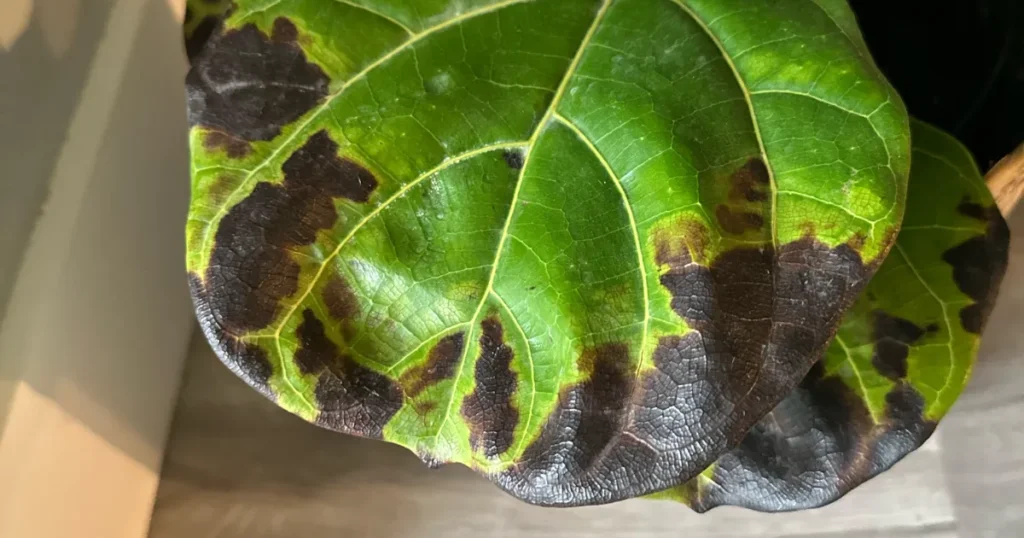
Brown spots on fiddle leaf fig leaves are caused by overwatering (root rot), underwatering (dry brown edges), low humidity (crispy brown tips), bacterial or fungal infections (soft spreading spots), sunburn (bleached then brown patches), or pest damage. Most cases resolve with adjusted watering, humidity trays, filtered light, and removing affected leaves.
The tricky part is that each cause looks slightly different, and treating for root rot when your plant actually has sunburn will only make things worse. That’s why identifying the pattern of the spots is the first step and that’s exactly what we’ll cover here.
What Causes Brown Spots on Fiddle Leaf Fig Leaves?
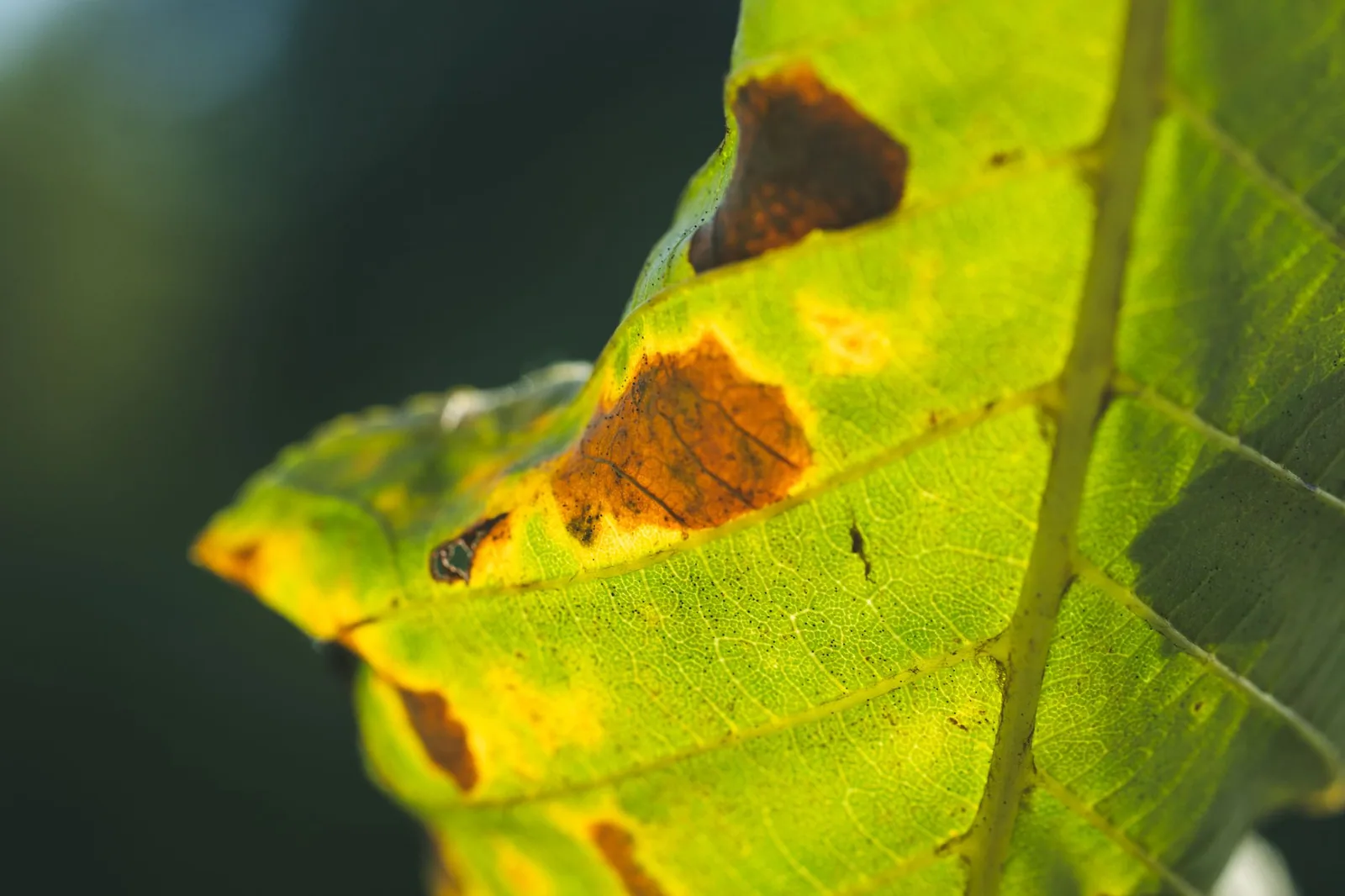
Before reaching for a fix, take a close look at where the spots appear, what color they are, and whether the edges are crispy or soft. These details tell you almost everything.
Just like diagnosing holes on rose leaves where the shape and location of the damage points directly to the cause fiddle leaf fig spots follow the same logic. Location and texture are your diagnostic tools.
Here are the six main causes to look for.
Overwatering and Root Rot
This is the most common culprit, and unfortunately the most serious.
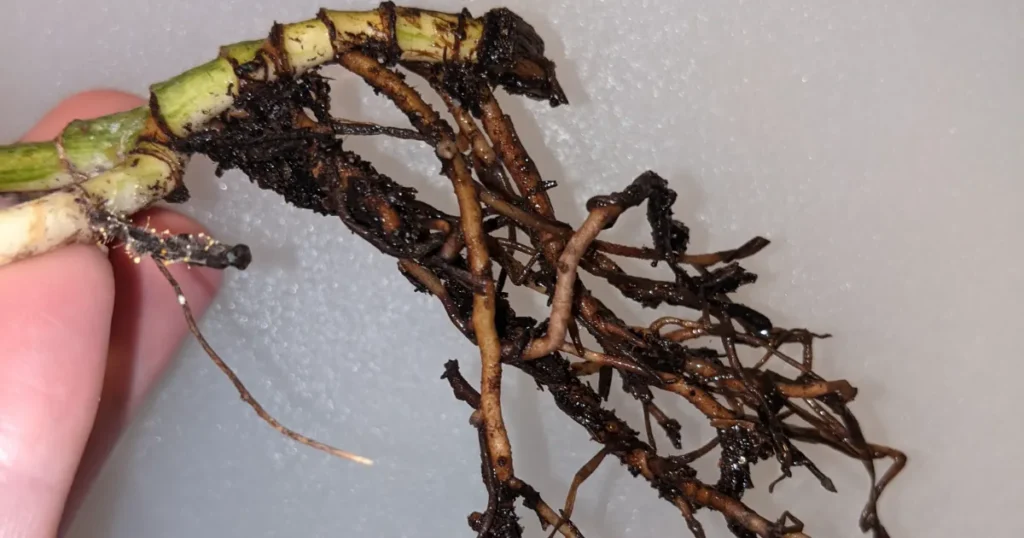
Overwatering deprives roots of oxygen, causing them to rot. The rot prevents the plant from moving water and nutrients upward, and the leaves show it with dark, soft, irregular brown spots often starting in the center of the leaf rather than the edges.
How to identify it:
The spots are typically dark brown to black, slightly mushy-looking, and spread from the middle of the leaf outward. The soil will feel consistently wet. You may also notice yellowing around the brown patches.
How to fix it:
Pull the plant from its pot and inspect the roots. Healthy roots are white or tan and firm. Rotted roots are brown-black, mushy, and may smell. Trim any rotted roots with sterilized scissors, let the root ball air out for 3060 minutes, and repot into fresh, well-draining potting mix. Reduce watering immediately water only when the top 2 inches of soil are dry.
Underwatering
Underwatering produces a distinctly different pattern that’s easy to spot once you know it.
How to identify it:
Brown spots from underwatering appear at the edges and tips of leaves first. The edges will feel dry and papery almost crispy to the touch. The spots are lighter brown and the surrounding leaf tissue may look dull. The soil will be bone dry well below the surface.
If you’re also seeing your leaves curl inward alongside the browning, that’s a classic moisture-stress combo you can read more about that in this post on plant leaves curling.
How to fix it:
Water thoroughly until it drains freely from the bottom. Allow the plant to absorb it for 3 – 0 minutes, then empty the saucer. Get onto a consistent watering schedule: in most indoor conditions, every 710 days in summer and every 1014 days in winter is a good starting point.
Low Humidity
Fiddle leaf figs are tropical plants that naturally thrive in humid rainforest conditions. Most indoor environments especially in winter with central heating fall far short of that.
How to identify it:
Low-humidity damage looks like dry, crispy brown tips and margins. The texture is thin and papery. Unlike underwatering, the soil may actually be moist the problem is the air, not the water supply. This is also a frequent cause of coffee plant leaves turning brown, and the fix is similar for both.
How to fix it:
Aim for 3065% humidity around your fiddle leaf fig. A pebble tray filled with water placed beneath the pot, a nearby humidifier, or grouping several plants together will all help raise ambient humidity. Avoid placing the plant near heating vents or air conditioning units.
Bacterial Infection
Bacterial infections are trickier than the environmental causes and they tend to spread fast if ignored.
How to identify it:
Bacterial spots are irregular in shape and often appear in clusters. They’re typically reddish-brown to tan, with a slightly water-soaked look when they first appear. Crucially, they often follow the leaf’s veins and spread from the edges inward toward the center. You may notice the spots spreading even after you’ve improved your watering.
Bacterial infections are the cause most likely to be misdiagnosed as overwatering. The key difference: bacterial spots spread even on a plant with perfect watering, and they tend to cluster near the leaf edges and veins.
How to fix it:
Remove all affected leaves immediately using clean, sterilized shears don’t compost them. Improve air circulation around the plant. Avoid getting water on the leaves when watering. In stubborn cases, a copper-based bactericide can help slow the spread.
Fungal Infection
Fungal infections share some characteristics with bacterial ones, but there are key differences to look for.
How to identify it:
Fungal spots are often rounder and more uniform in shape than bacterial ones. They may have a darker border surrounding a lighter center, almost like a bullseye. You might also notice a faint white or grey powdery coating in or around the spots. Unlike bacterial infections, fungal spots sometimes appear anywhere on the leaf surface not just along the edges.
If you’ve seen similar patterns on other plants, check out this post on brown spots on rose leaves fungal diseases share a lot of characteristics across plant types.
How to fix it:
Remove and dispose of all infected leaves. Apply a diluted neem oil solution (2 teaspoons neem oil + ½ teaspoon dish soap per quart of water) to both the tops and undersides of remaining leaves. Improve air circulation, and avoid overhead watering. Repeat the neem oil treatment every 710 days until the spots stop appearing.
For fungal and pest issues, I finish treatment with neem oil spray applied to both leaf surfaces every 710 days until the spots stop appearing.
I use bliss pure neem oil from Amazon for a great price. It works great when it comes to shining leaves and provides a layer of protection for plants against common pests.

Sunburn
Fiddle leaf figs love bright light but direct, intense sunlight through glass can scorch their leaves faster than almost any outdoor sun exposure.
How to identify it:
Sunburn damage appears as bleached or washed-out patches that eventually turn brown. The affected areas are usually on the side of the plant closest to the light source and may look pale or yellowish before the brown sets in. The texture is dry and papery, similar to underwatering, but localized to sun-facing leaves.
How to fix it:
Move the plant back from direct sun. Fiddle leaf figs do best in bright, indirect light near a south- or east-facing window is ideal, but filtered through a sheer curtain. Once the leaf is scorched, the brown patch won’t reverse, but moving the plant will stop new damage.
Pest Damage
Pests are a less common cause of brown spots on fiddle leaf figs, but they’re worth checking for especially if you’ve already ruled out the environmental causes.
How to identify it:
Pest damage typically appears as small, scattered brown or yellow spots rather than large patches. Check the undersides of leaves for spider mites (tiny dots and fine webbing), scale insects (small, immobile brown bumps along stems), or mealybugs (white cottony clusters). If you notice unusual markings or deposits on the leaves, it’s worth also checking for black eggs on leaves some pest species lay eggs alongside the damage they cause.
How to fix it:
Wipe down both sides of the leaves with a damp cloth first to physically remove pests. Then apply neem oil solution (same ratio as above) weekly for 3 – 4 weeks. For heavier infestations, insecticidal soap spray works well and is safe for use indoors.
How to Diagnose Your Plant: Quick Reference Table
| Cause | Visual Pattern | Texture | Location on Leaf | Fix |
|---|---|---|---|---|
| Overwatering / Root Rot | Dark brown-black, irregular | Soft, mushy | Center of leaf | Reduce watering, repot if needed |
| Underwatering | Light brown, crispy | Dry, papery | Edges and tips | Water thoroughly, adjust schedule |
| Low Humidity | Dry brown tips/margins | Thin, papery | Tips and edges | Pebble tray, humidifier |
| Bacterial Infection | Reddish-brown, irregular | Water-soaked to dry | Edges, follows veins | Remove leaves, improve airflow |
| Fungal Infection | Rounder spots, bullseye pattern | Dry, may have powder | Anywhere on surface | Neem oil, remove affected leaves |
| Sunburn | Bleached then brown patches | Dry, papery | Sun-facing side | Move to indirect light |
| Pest Damage | Small scattered spots | Dry | Anywhere | Neem oil, insecticidal soap |
How to Fix Brown Spots: Step-by-Step
Once you’ve matched the pattern to a cause, here’s how to act.
Step 1: Remove affected leaves.
Cut off all badly spotted leaves at the base of the stem using sterilized scissors or shears. This prevents bacterial and fungal issues from spreading, and redirects the plant’s energy to healthy growth. If brown spots are progressing and leaves are dropping off, check this guide on fiddle leaf fig leaves falling off for additional context on managing decline.
Step 2: Check the roots.
Unpot the plant if overwatering is suspected. Firm, pale roots are healthy. Dark, mushy, or smelly roots indicate rot trim them back and repot into dry, well-draining soil.
Step 3: Adjust your watering.
Stick your finger 2 inches into the soil before every watering. If it still feels damp, wait. A consistent “water when dry at 2 inches” approach prevents both overwatering and underwatering.
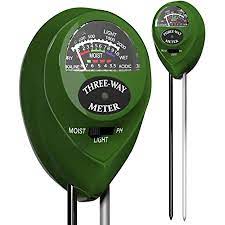
I keep a soil moisture meter on hand for all my fiddle leaf figs it takes the guesswork out of watering and has saved me from overwatering more times than I can count.
Take the guesswork out of watering plants and keeping the soil moist. It is both cost-effective and durable.
Best of all, it also measures pH and light. It’s worth a look.
Step 4: Raise humidity.
Place a pebble tray with water under the pot, or position a small humidifier nearby. This single step resolves a surprising number of brown tip cases.
Step 5: Treat for pests or disease if needed.
Apply neem oil solution to all leaf surfaces every 710 days for 3 – 4 weeks. For bacterial infection, remove all spotted leaves and hold off on misting.
Step 6: Relocate if sunburn is the issue.
Move the plant 3 – 5 feet back from any window receiving direct afternoon sun, or add a sheer curtain.
Prevention: Keeping Brown Spots From Coming Back
Prevention mostly comes down to getting the basics consistently right.
Water deeply but infrequently, always checking soil moisture before watering. Keep the plant in bright, indirect light not direct sun, not a dark corner. Maintain humidity above 3 – 0% year-round, especially in winter.
Wipe leaves with a damp cloth every 2 – 3 weeks. This removes dust, deters pests from settling in, and lets you spot early pest activity before it becomes a real problem.
Tip: Inspect the undersides of leaves every time you water. Most pest infestations and early fungal spots are caught and stopped here before they ever become visible from the top.
Repot every 1 – 2 years into fresh potting mix. Old, compacted soil holds excess moisture and reduces drainage, making root rot far more likely.
When to Worry
Most brown spots on fiddle leaf figs are manageable. But here’s when to take more urgent action.
If spots are spreading rapidly despite correct watering, and multiple new leaves are developing spots within days that’s bacterial infection moving fast. Strip all affected leaves, isolate the plant from other houseplants, and treat immediately.
If more than 5 – 0% of the plant’s leaves are affected, the plant is under significant stress. Focus on correcting one variable at a time (usually watering first), give it 2 – 3 weeks to stabilize, and avoid fertilizing while it’s recovering.
If you see roots growing out of drainage holes and spotting is combined with yellowing across multiple leaves, the plant is both root-bound and stressed repotting becomes the priority.
Frequently Asked Questions
Can I cut off brown spots on fiddle leaf fig leaves?
You can trim brown edges and tips with clean scissors to improve appearance, but you cannot reverse brown spots already on the leaf. Removing the entire leaf is often better than trimming, since damaged tissue can become an entry point for bacteria.
Should I mist my fiddle leaf fig to prevent brown spots?
Misting can temporarily raise humidity but creates wet leaf surfaces that encourage bacterial and fungal infections especially if the water sits on leaves overnight. A pebble tray or humidifier is safer and more effective.
How often should I water my fiddle leaf fig?
There’s no universal schedule it depends on pot size, light, and season. The most reliable method: water when the top 2 inches of soil are dry. In most homes, that’s roughly every 710 days in summer and 1014 days in winter.
Will brown spots spread to other leaves?
Environmental brown spots (sunburn, underwatering, humidity) won’t spread they’re not contagious. Bacterial and fungal infections absolutely can spread, which is why removing affected leaves quickly matters.
Do brown spots mean my fiddle leaf fig is dying?
Not at all. Brown spots are a symptom, not a death sentence. Most fiddle leaf figs recover well once the cause is identified and corrected. Even a heavily spotted plant can bounce back with the right care.
The Bottom Line
Brown spots on fiddle leaf fig leaves look alarming, but they’re one of the most common and most solvable problems these plants face. The key is always the same: read the pattern before you reach for a fix.
Soft, dark spots in the center point to overwatering. Crispy edges point to underwatering or dry air. Spreading spots that follow veins point to bacteria. Once you match the symptom to the cause, the fix is usually straightforward adjust watering, raise humidity, improve airflow, or move the plant out of direct sun.
If you only do one thing today, check the soil moisture before your next watering overwatering is the single most common cause of brown spots on fiddle leaf figs, and fixing it costs nothing.
Related Posts
- Fiddle Leaf Fig Leaves Falling Off: Causes & What to Do
- Plant Leaves Curling: Why It Happens and How to Fix It
- Brown Spots on Rose Leaves: Causes and Treatments
- Holes on Rose Leaves: What’s Causing Them and How to Stop It
- Pale Plant Leaves: What They Mean and How to Fix Them
Related Articles
Pepper leaves curling? Learn the 7 most common causes — from underwatering and heat stress to aphids and viral disease — plus step-by-step fixes to help your plants recover fast.
Pepper Leaves Turning Yellow: Why It Happens and How to Fix It
Pepper plant leaves turning yellow? Learn the 7 most common causes — from nitrogen deficiency to overwatering — and get specific, actionable fixes to bring your pepper plants back to health.