
It’s a frustrating sight, especially when you’ve put real care into your roses. But before you panic, know this: brown spots are one of the most common rose problems, and every single cause on this list has a fix.
Brown spots on rose leaves are usually caused by fungal diseases like black spot or anthracnose, bacterial infections, sunscald, or nutrient deficiencies. The 7 most common causes include overwatering creating fungal conditions, poor air circulation trapping moisture, nitrogen deficiency causing older leaf browning, and heat stress each with a specific fix you can start today. Most cases respond well to targeted treatment within 2 – 3 weeks, especially when caught early.
The key is knowing which problem you’re actually dealing with. A nitrogen fix won’t help a fungal infection, and a fungicide won’t solve a drainage issue. This guide walks through each cause, how to identify it, and exactly what to do about it.
Why Do Brown Spots Appear on Rose Leaves?
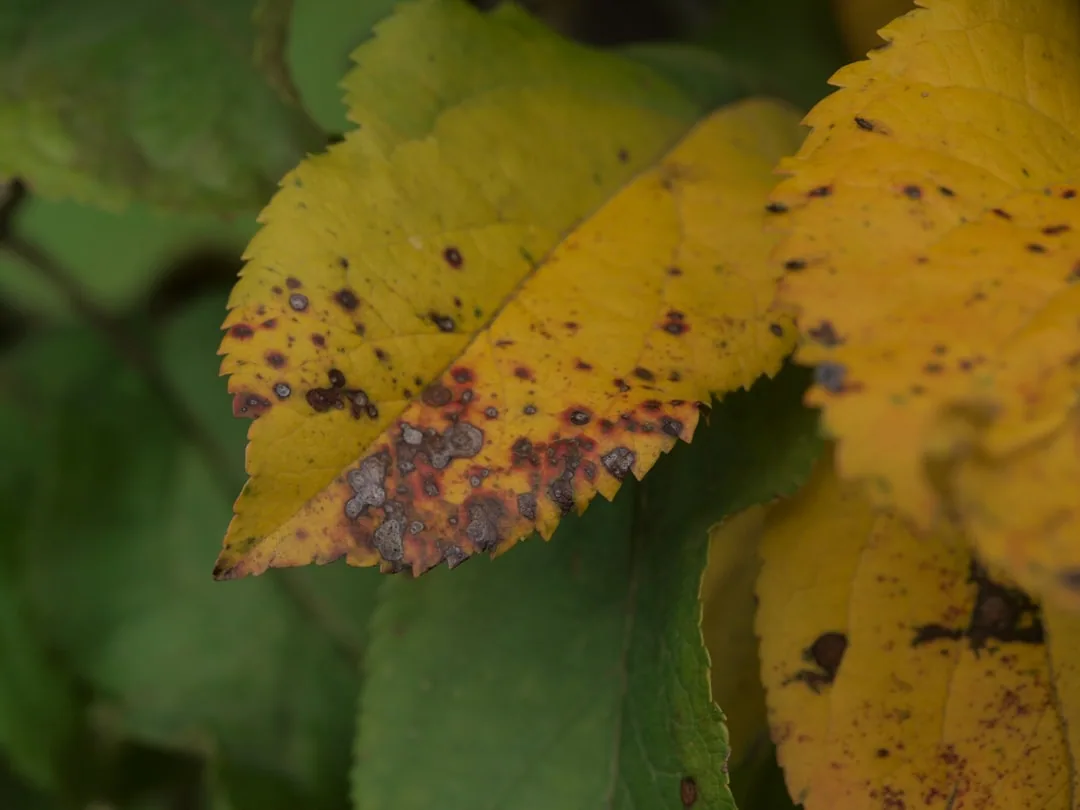
Brown spots form when rose leaf tissue is damaged or dying. That damage can come from fungal spores, bacteria, environmental stress, or a nutrient shortage all of which trigger the same visible symptom.
Moisture is the common thread running through most causes. Wet leaves, waterlogged roots, and humid stagnant air all create the conditions pathogens love. Identifying the spot’s shape, location, and pattern is the fastest way to pinpoint the cause.
1. Black Spot Fungus (Diplocarpon rosae)
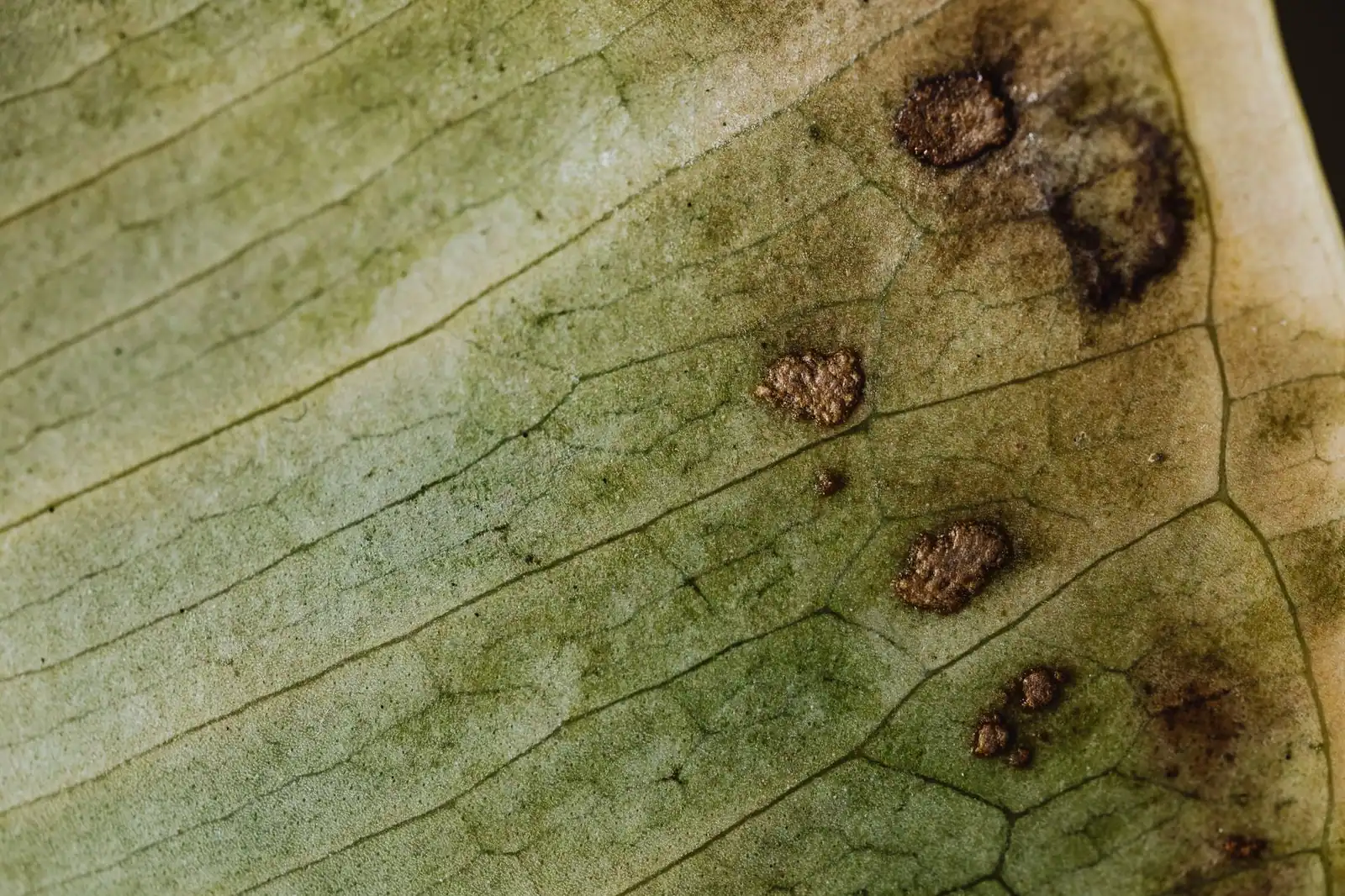
Black spot is the most widespread rose disease in the world. Despite its name, the spots often appear dark brown before turning fully black which is why it’s frequently misidentified.
What it looks like: Circular spots, 315 mm across, with fringed or feathery edges. Yellow halos surround each spot. Infected leaves turn yellow and drop prematurely, sometimes stripping the entire plant bare by midsummer.
What causes it: The fungus Diplocarpon rosae spreads through water splash. Rain, overhead irrigation, and even morning dew carry spores from fallen leaves back up to healthy foliage.
For a deeper dive into this specific disease, the post on black spots on rose leaves covers the full range of treatment options in detail. You may also notice your rose has holes on rose leaves alongside the spots a sign that multiple stressors are at work at once.
How to treat black spot fungus
- Remove infected leaves: Strip all spotted and yellowed leaves from the plant immediately. Do not compost them bag and bin them.
- Clear fallen debris: Rake up and dispose of any dropped leaves around the base of the plant, since spores overwinter in leaf litter.
- Apply a fungicide: Spray with a copper-based fungicide or a 1:9 mixture of baking soda and water (1 teaspoon baking soda per 1 litre of water). Coat both sides of remaining leaves thoroughly.
- Repeat the treatment: Reapply every 710 days, or after any rainfall, for at least 4 – 6 weeks.
- Switch to drip irrigation: Stop watering overhead. Water at the base of the plant to keep foliage dry.
2. Anthracnose Fungal Infection
Anthracnose is another fungal disease that targets roses, but it has a distinct look that sets it apart from black spot.
What it looks like: Irregular, sunken spots with dark brown or purplish-red borders. The centre of each spot often dries out and falls away, leaving a ragged hole. Spots appear on both upper and lower leaf surfaces.
What causes it: The fungi Sphaceloma rosarum and related species thrive in warm, wet conditions. Prolonged leaf wetness more than 1 – 2 hours is the primary trigger for spore germination.
How to treat anthracnose
- Prune affected stems: Cut back any canes showing lesions to at least 1 – 5 cm (6 inches) below the visible damage. Sterilise pruning shears with 7 – 0% isopropyl alcohol between cuts.
- Remove and dispose of infected leaves: Never leave infected material on the soil surface.
- Spray with a fungicide: Apply a chlorothalonil-based or copper-based fungicide, following label rates. Spray the entire plant, including the undersides of leaves.
- Improve drainage around the plant: If water pools near the base, work in perlite or coarse grit to improve soil structure.
- Repeat applications: Treat every 1014 days during wet weather until new growth appears clean.
3. Bacterial Leaf Spot (Pseudomonas syringae)
Bacterial leaf spot is less common than fungal diseases but can be more difficult to control once established. It often appears after a period of cool, wet weather.
What it looks like: Water-soaked patches that quickly turn brown or black. Spots are often angular rather than circular, bounded by leaf veins. A yellow margin may surround the lesion. In severe cases, the centre drops out.
What causes it: The bacterium Pseudomonas syringae enters through natural leaf openings or wounds. It spreads rapidly in cool, rainy conditions (1020°C / 5068°F) and is carried by water splash and contaminated tools.
How to treat bacterial leaf spot
- Remove all infected material: Strip affected leaves and cut back any infected stems. Dispose of all material in sealed bags do not compost.
- Sterilise your tools: Wipe pruning shears with 7 – 0% isopropyl alcohol or a 1 – 0% bleach solution after each cut.
- Apply a copper bactericide: Spray the entire plant with a copper-based bactericide (copper hydroxide or copper oxychloride) at the label-recommended rate. Reapply every 710 days.
- Avoid wetting foliage: Switch to base watering only. Water in the morning so any accidental splash dries quickly.
- Do not fertilise heavily during treatment: High nitrogen encourages the soft, vulnerable new growth that bacteria colonise most easily.
4. Overwatering and Poor Drainage
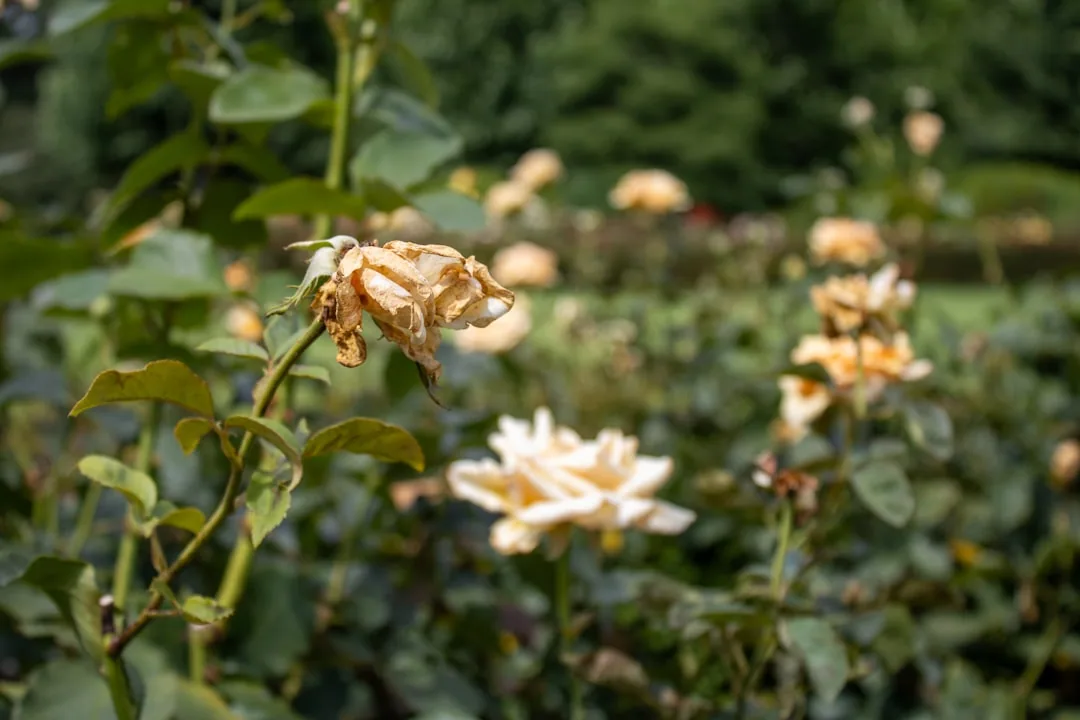
Not every brown spot comes from a pathogen. Overwatering is a surprisingly common cause and it also creates the wet conditions that invite fungal and bacterial problems to follow.
What it looks like: Brown spots that are soft and slightly mushy to the touch. Yellowing often starts on lower, older leaves first. The soil around the plant stays wet for days after watering.
What causes it: When roots sit in waterlogged soil, they lose the ability to take up oxygen. The plant becomes stressed, and leaves begin to show damage. Overwatering also triggers root rot, which compounds the problem quickly.
If you’re also noticing plant leaves curling alongside the brown spots, overwatering is a very likely culprit the two symptoms often appear together.
How to fix overwatering and poor drainage
- Check the soil moisture: Push your finger 5 cm (2 inches) into the soil. Only water when the top layer feels dry to the touch.
- Improve soil drainage: Work perlite, coarse sand, or grit into the top 2 – 0 cm (8 inches) of soil around the plant at a ratio of 1 part amendment to 3 parts existing soil.
- Raise the planting area: If your rose sits in a low spot, consider mounding the soil or transplanting to a raised bed.
- Reduce watering frequency: Most established roses need deep watering just once or twice a week in summer, less in cooler months.
- Check for root rot: If the roots appear brown, slimy, or smell foul, trim the affected roots back to healthy tissue and treat with a diluted hydrogen peroxide drench (1 part 3% H‚‚O‚‚ to 4 parts water) before replanting in fresh, well-draining soil.
5. Sunscald from Intense Afternoon Heat
Sunscald catches many gardeners off guard because it looks like a disease but has nothing to do with pathogens.
What it looks like: Pale tan or bleached-brown patches on the upper surface of leaves that face direct sun. The damaged areas have a papery texture. Spots appear suddenly after a heatwave or when a plant is moved from shade to full sun.
What causes it: Intense afternoon sun heats leaf tissue beyond what the plant can handle, destroying chlorophyll and cell structure. Newly planted roses and those that have been in shade are most vulnerable.
How to fix sunscald
- Provide afternoon shade: Install a shade cloth (3040% density) over the plant during the hottest part of the day (1 – 2 pm4 pm) until temperatures drop.
- Water deeply in the morning: Well-hydrated plants tolerate heat stress far better. Water at the base, providing at least 4 – 6 litres per plant per session.
- Mulch the base: Apply a 710 cm (3 – 4 inch) layer of organic mulch around the base to keep roots cool and retain moisture.
- Remove the most damaged leaves: Leaves that are more than 5 – 0% scorched will not recover. Remove them to redirect the plant’s energy.
- Acclimate new plants gradually: When moving a rose from a sheltered spot to full sun, increase sun exposure by 1 – 2 hours per day over 1 – 2 weeks.
6. Nitrogen Deficiency in Older Leaves
A nutrient shortage doesn’t always look like pale leaves. In roses, nitrogen deficiency can show up as browning particularly on the older, lower foliage.
What it looks like: Older leaves at the base of the plant turn pale yellow-green, then develop brown tips and margins. New growth at the top of the plant may look fine initially. The browning progresses from the leaf tip inward.
What causes it: Nitrogen is a mobile nutrient when the plant is short of it, it pulls nitrogen from older leaves to support new growth. Sandy soils, heavy rainfall, and over-watering all accelerate nitrogen depletion.
This pattern of older-leaf browning is closely related to the broader issue of pale plant leaves if you’re seeing both symptoms, a soil test is worth doing.
How to fix nitrogen deficiency
- Apply a balanced rose fertiliser: Use a granular fertiliser with an NPK ratio of 1 – 0-1 – 0-1 – 0 or a rose-specific formula. Apply at the label rate, typically 6090 g per plant.
- Use a liquid nitrogen boost: For faster results, apply a liquid fertiliser such as fish emulsion (diluted at 3 – 0 ml per 4.5 litres of water) every 2 weeks for 4 – 6 weeks.
- Test your soil: A basic soil test (available at garden centres) will confirm nitrogen levels and flag any other deficiencies.
- Top-dress with compost: Apply a 5 cm (2 inch) layer of well-rotted compost around the base of the plant to slowly release nutrients over time.
- Avoid over-watering: Excess water flushes nitrogen out of the root zone. Correct your watering schedule alongside any fertiliser application.
7. Poor Air Circulation Trapping Moisture
This cause is often overlooked because it’s not about what you’re doing it’s about how the plant is positioned and pruned.
What it looks like: Brown spots that appear mainly on inner leaves and branches, where foliage is most dense. The problem tends to worsen after periods of humid or still weather.
What causes it: When rose canes are crowded, air cannot move freely through the plant. Moisture from dew, rain, or irrigation lingers on leaf surfaces for hours longer than it should long enough for fungal spores to germinate.
How to fix poor air circulation
- Prune the centre of the plant: Remove inward-growing canes and any crossing branches. Aim for an open, vase-like shape that allows air to flow through freely.
- Thin crowded foliage: Remove dense clusters of leaves from the interior of the plant, especially where they overlap.
- Space plants correctly: If roses are planted too close together (less than 6090 cm apart for most varieties), consider transplanting one to improve airflow.
- Prune in the morning: This allows any cuts to dry out during the day, reducing the risk of infection entering through fresh wounds.
- Follow up with a preventative fungicide: After pruning, apply a copper-based spray to the entire plant to address any latent spores that may already be present.
Quick Reference: Brown Spots on Rose Leaves
| Cause | Spot Shape | Location on Plant | Key Sign | Primary Fix |
|---|---|---|---|---|
| Black Spot Fungus | Circular, fringed edges | Upper leaves | Yellow halo, leaf drop | Copper fungicide + remove debris |
| Anthracnose | Irregular, sunken | Both surfaces | Centre falls out | Fungicide + prune canes |
| Bacterial Leaf Spot | Angular, water-soaked | Any | Bounded by veins | Copper bactericide + sterilise tools |
| Overwatering | Soft, mushy | Lower leaves first | Soggy soil | Reduce watering + improve drainage |
| Sunscald | Bleached, papery | Upper surface, sun-facing | Appears after heatwave | Shade cloth + deep morning watering |
| Nitrogen Deficiency | Brown tips and margins | Older/lower leaves | Pale yellow-green base colour | Balanced fertiliser + compost |
| Poor Air Circulation | Scattered, inner foliage | Interior of plant | Worsens in humid weather | Prune to open shape |
Universal Prevention Tips for Healthy Rose Leaves
- Water at the base, never overhead. Wet foliage is the single biggest driver of fungal and bacterial disease on roses. Use drip irrigation or a soaker hose, and water in the early morning so any splash dries quickly.
- Keep fallen leaves cleaned up. Fungal spores overwinter in leaf litter and reinfect your plant the following season. Rake and bin fallen leaves weekly during the growing season never compost diseased material.
- Prune for an open shape each year. A well-pruned rose with good airflow dries faster after rain and resists disease far better than a dense, crowded plant. Do your main pruning in late winter or early spring before new growth begins.
- Fertilise on a schedule, not just when problems appear. Roses are heavy feeders. Apply a balanced rose fertiliser at the start of the growing season and again after the first flush of flowers to maintain strong, disease-resistant foliage.
- Mulch the root zone every spring. A 710 cm (3 – 4 inch) layer of organic mulch suppresses weeds, retains moisture, and reduces the water splash that carries fungal spores from soil to leaves.
- Inspect your plants weekly. Early detection is the most effective treatment. Catching a few black spot lesions before they spread is infinitely easier than treating a fully infected plant. A quick 5-minute check each week makes a real difference.
- Apply neem oil as a preventative spray every 1 – 0 days. I spray my roses every 1 – 0 days with cold-pressed neem oil from Amazon it stops fungal spores before they germinate and keeps bacterial infections at bay. Mix at 2 teaspoons (1 – 0 ml) of neem oil concentrate per 1 litre of water, add a few drops of dish soap as an emulsifier, and spray the entire plant including leaf undersides in the early morning or evening to avoid leaf burn.
I use bliss pure neem oil from Amazon for a great price. It works great when it comes to shining leaves and provides a layer of protection for plants against common pests.

The Bottom Line
Brown spots on rose leaves are almost always fixable and once you know what you’re looking at, the path forward is clear. Fungal diseases like black spot and anthracnose need fungicide treatment and better moisture management. Bacterial infections call for copper bactericides and strict tool hygiene. Environmental causes like sunscald and poor drainage are solved by adjusting your care routine.
The pattern of the spots tells you most of what you need to know. Circular spots with yellow halos point to fungal disease. Angular, water-soaked patches suggest bacteria. Bleached papery areas mean sun damage. Browning on the oldest leaves first usually means the plant is hungry.
The single best thing you can do for your roses is keep their leaves dry, their roots well-drained, and their canopy open most brown spot problems never start when those three conditions are met.
Related Posts:
- Holes on Rose Leaves: Causes and How to Fix Them
- Black Spots on Rose Leaves: Causes and Solutions
- Plant Leaves Curling: Why It Happens and What to Do
- White Spots on Tomato Leaves
- Black Eggs on Leaves
Related Articles
Pepper leaves curling? Learn the 7 most common causes — from underwatering and heat stress to aphids and viral disease — plus step-by-step fixes to help your plants recover fast.
Pepper Leaves Turning Yellow: Why It Happens and How to Fix It
Pepper plant leaves turning yellow? Learn the 7 most common causes — from nitrogen deficiency to overwatering — and get specific, actionable fixes to bring your pepper plants back to health.