
You’re not alone fiddle leaf fig leaf drop is one of the most common complaints from fiddle leaf fig owners, and it’s understandably alarming when it starts happening fast.
Fiddle leaf fig leaves fall off when the plant experiences inconsistent watering, sits in a drafty spot or cold room, receives too little light, develops root rot from overwatering, or goes through transplant shock after being moved or repotted. The good news is that most cases are completely fixable by moving your plant to a bright spot away from vents, watering only when the top two inches of soil are dry, and keeping temperatures steady between 6085°F (1529°C), you can stop the leaf drop and encourage new growth.
From my years of keeping fiddle leaf figs, I’ve found that most of these plants don’t die from one single problem they drop leaves because of a combination of small stressors stacking up over time.
If your fiddle leaf is shedding leaves, don’t panic. The key is figuring out which stressor is driving the drop, then fixing it one step at a time. I’ve also found it helpful to cross-reference with general plant leaf drop patterns many of the same causes apply.
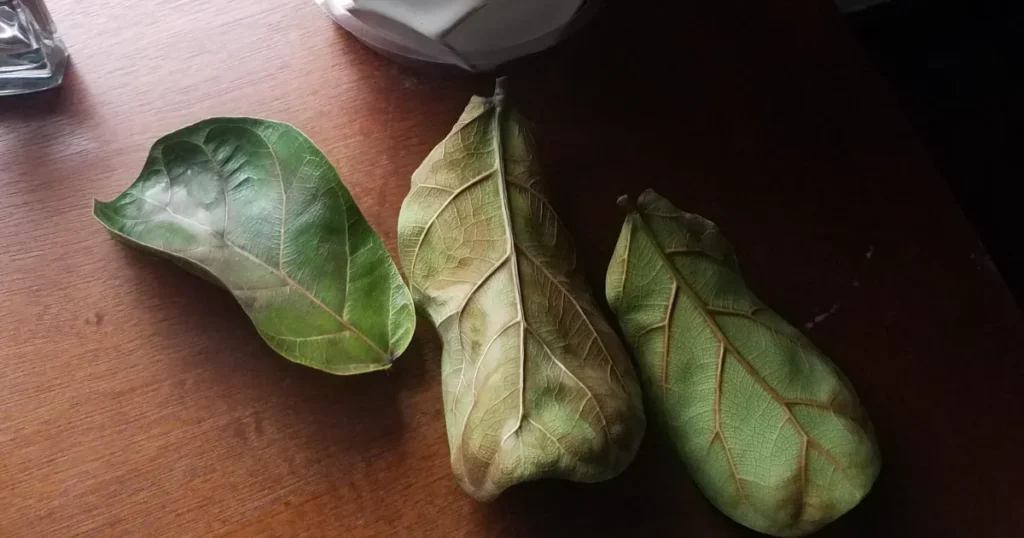
Why Is My Fiddle Leaf Fig Losing Leaves?
Fiddle leaf figs (Ficus lyrata) are notoriously sensitive to changes in their environment. They’ll throw a fit if you move them across the room, let the temperature dip near a vent, or skip a watering or two.
The trick is to look at how the leaves are falling off and which ones are going first. That pattern tells you almost everything you need to know.
Inconsistent Watering The Most Common Culprit
Fiddle leaf figs want consistency above everything else. If you water heavily one week, skip two weeks, then water again, the plant loses leaves in protest.
Both overwatering and underwatering cause leaf drop but they look slightly different.
With underwatering, leaves tend to dry out, go crispy at the edges, and drop suddenly. With overwatering, leaves may yellow first or develop brown patches before falling.
The fix: check the soil before every watering. Stick your finger two inches deep if it still feels moist, wait. If it’s dry, water thoroughly until it drains from the bottom.
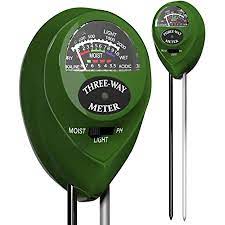
I keep a 3-in-1 soil moisture meter on hand for all my fiddle leaf figs it takes the guesswork out of watering and tells me exactly when the top two inches are dry.
Take the guesswork out of watering plants and keeping the soil moist. It is both cost-effective and durable.
Best of all, it also measures pH and light. It’s worth a look.
Root Rot from Overwatering
Root rot deserves its own mention because it’s responsible for a large share of fiddle leaf fig deaths that start with leaf drop.
When roots sit in soggy soil for too long, they suffocate and begin to decay. The leaves turn brown (often starting near the base), go limp, and fall off one by one. The soil may smell sour or musty.
If you suspect root rot, unpot the plant and check the roots. Healthy roots are white or light tan and firm. Rotted roots are brown, black, and mushy.
Trim off any rotted sections with clean scissors, let the roots air out for an hour, then repot into fresh well-draining soil. You can also water the soil lightly with a diluted 3% hydrogen peroxide solution (1 part peroxide to 3 parts water) to help kill any remaining rot-causing organisms.
Drafts, Cold Air, and Temperature Swings
Fiddle leaf figs are tropical plants. They hate cold drafts, air conditioning vents, open windows in winter, and radiators that blast dry heat.
Any sudden temperature change even 510°F can trigger leaf drop within days. Leaves near the edge of the canopy often fall first since they’re closest to the environmental stress.
Keep your plant in a spot that stays between 6085°F (1529°C) year-round. Check that it’s not sitting directly under an air vent, near a drafty window, or next to a heating unit.
Too Little Light
Fiddle leaf figs need a lot of bright, indirect light to stay healthy. In low-light conditions, the plant can’t sustain all of its leaves, so it drops the older, lower ones to conserve energy.
If you notice leaf drop consistently happening at the bottom of the plant and the remaining leaves look pale or dull, light is likely the issue. You can also read more about pale or yellowing leaves to confirm whether light stress is behind the color changes you’re seeing.
Move the plant to your brightest room ideally within 3 – 6 feet of a south or east-facing window. Avoid direct afternoon sun, which can scorch the large leaves.
Transplant Shock After Moving or Repotting
Here’s something I wish someone had told me early on: fiddle leaf figs hate being moved. Even shifting them from one side of the room to the other can trigger a round of leaf drop.
This is called transplant shock (or move shock), and it’s especially common after repotting. The plant isn’t dying it’s just adjusting. As long as you move it to the right conditions and leave it alone, it should stabilize within a few weeks.
The best thing you can do is resist the urge to keep repositioning it. Find the right spot, put it there, and commit.
Pests and Sticky Residue
Sometimes the leaf drop isn’t about watering or light at all it’s pests.
Spider mites, scale, and mealybugs can all weaken fiddle leaf figs to the point of dropping leaves. Watch for webbing under the leaves, cottony white clusters along the stems, or a sticky film on the leaves or floor beneath the plant.
That sticky residue is a tell-tale sign of an infestation it’s the honeydew that sap-sucking insects leave behind. For a deeper look at this symptom, this guide on sticky plant leaves breaks down exactly what’s happening and how to treat it.
Treat with diluted neem oil (2 tsp neem oil + 1 tsp dish soap + 1 quart water) applied to all leaf surfaces, including the undersides, every 7 days until the infestation clears.
I finish my fiddle leaf fig pest-prevention routine with a diluted neem oil spray applied to all leaf surfaces, including the undersides.
I use bliss pure neem oil from Amazon for a great price. It works great when it comes to shining leaves and provides a layer of protection for plants against common pests.

How to Identify the Cause of Fiddle Leaf Fig Leaf Drop
Use the visual pattern of the falling leaves to narrow down the cause before you take action.
The approach is similar to diagnosing other leaf problems like the method used in this guide on holes on rose leaves, where visual patterns point directly to the underlying cause.
Key principle: Always look at which leaves are falling first (top, bottom, or all over) and what condition they’re in (dry, brown, yellow, limp) before changing anything about your care routine.
Leaves falling from the bottom first, no discoloration:
This is usually light stress or the plant naturally shedding older foliage. Not serious.
Leaves yellowing first, then falling:
Likely overwatering or root rot. Check the soil moisture and inspect the roots.
Leaves turning crispy and brown at edges, then dropping:
Underwatering, low humidity, or cold/hot draft exposure.
Leaves going limp, dark brown, and soft before falling:
Root rot, especially if the lower leaves are affected and the soil smells off.
Sudden mass leaf drop after moving or repotting:
Transplant shock. The plant is stressed, not dying.
Sticky residue + leaf drop:
Pest infestation. Inspect carefully with good lighting.
If you’re also noticing leaves curling before they drop, that’s a separate stress signal worth exploring this guide on plant leaves curling explains what’s driving that response and how it connects to other symptoms.
Quick Reference Diagnosis Table
| Cause | Visual Pattern | Solution |
|---|---|---|
| Inconsistent watering | Leaves dry out OR yellow before dropping | Water only when top 2 inches are dry |
| Root rot | Brown, soft leaves; musty soil smell | Unpot, trim rotted roots, repot in fresh soil |
| Cold draft / temp swing | Edges turn brown, sudden drop | Move away from vents and cold windows |
| Too little light | Lower leaves drop, remaining leaves pale | Move to bright indirect light (within 3 – 6 ft of window) |
| Transplant shock | Sudden drop after moving or repotting | Leave plant in place; let it adjust |
| Pests | Sticky leaves, webbing, cottony clusters | Neem oil spray every 7 days |
How to Fix Fiddle Leaf Fig Leaf Drop
Work through these steps in order. Don’t change multiple things at once fiddle leaf figs don’t respond well to sudden shifts, and you won’t be able to tell what’s working.
Check soil moisture first:
Before anything else, rule out a watering issue. Stick your finger two inches into the soil. If it’s wet, hold off on watering and let it dry out. If it’s bone dry, water deeply.
Inspect the roots if overwatering is suspected:
Gently remove the plant from its pot. If roots are brown and mushy, trim them, let them dry briefly, and repot in fresh well-draining mix.
Check the location for drafts or vents:
Hold your hand near the plant at different times of day. If you feel any air movement from a vent, AC, or window, move the plant.
Assess the light:
Count how far the plant sits from the nearest window. If it’s more than 6 feet away, move it closer. Bright indirect light is ideal.
Leave it alone after fixing:
Once you’ve corrected the issue, stop moving the plant. Don’t repot it. Resist changing the watering schedule weekly. Give it 3 – 4 weeks to stabilize.
Treat for pests if needed:
If you find pests, treat immediately with neem oil spray and repeat weekly for 3 – 4 weeks.
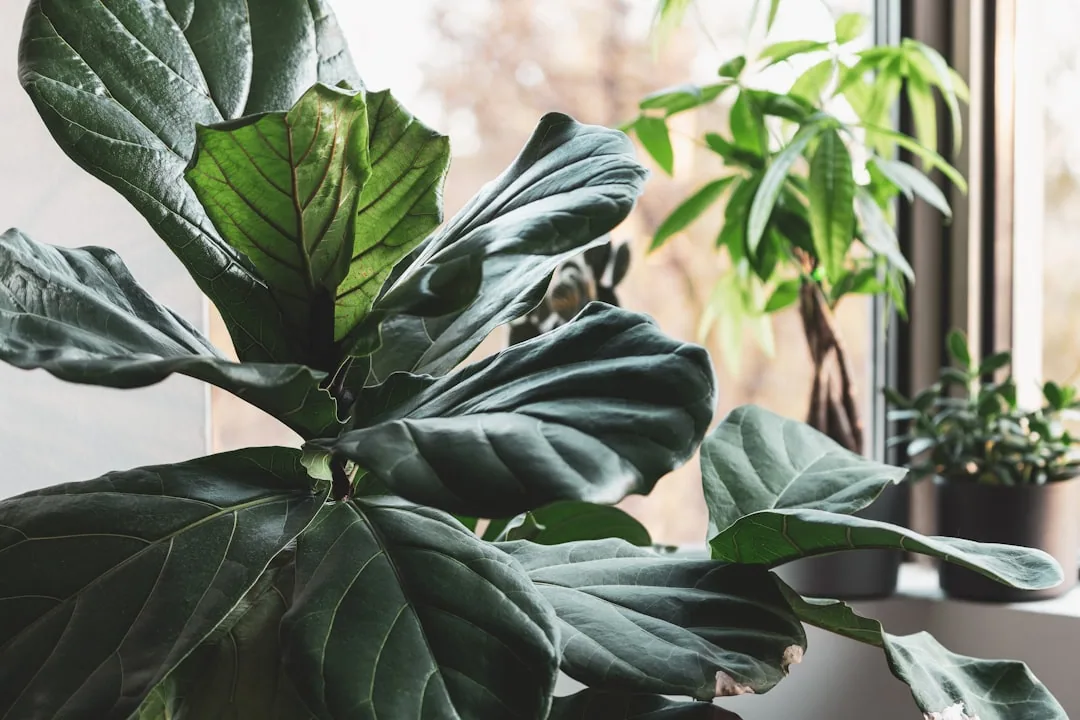
Prevention: Keeping Your Fiddle Leaf Fig Stable Long-Term
The best thing you can do for a fiddle leaf fig is create a stable routine and stick to it.
Find a bright spot with consistent temperatures and leave the plant there year-round. If you need to rotate it occasionally for even growth, do it gradually a quarter turn every two weeks rather than a sudden 180-degree flip.
Water on a schedule based on soil moisture, not the calendar. In summer, that might mean watering every 710 days. In winter, every 1421 days is more typical.
Keep humidity above 3 – 0% ideally 4060%. A small pebble tray with water near the plant or a room humidifier helps during dry winter months.
Fertilize with a balanced liquid fertilizer (NPK 3-1-2 is ideal for fiddle leaf figs) every 2 – 4 weeks during the growing season (spring and summer). Stop fertilizing in fall and winter.
Check the leaves every week or two for early signs of pests. Catching an infestation early makes a huge difference.
When to Worry About Fiddle Leaf Fig Leaf Loss
Not every fallen leaf is a crisis. It’s completely normal for a fiddle leaf fig to drop a leaf or two when it first comes home, or during seasonal transitions.
Start to take it seriously if:
- More than 3 – 5 leaves drop within a week
- The plant loses leaves rapidly and isn’t stabilizing after a few weeks
- New leaves are also failing or dropping before maturing
- Roots appear severely rotted with more than half of the root ball affected
- The trunk feels soft or mushy at the base
If the root rot is severe and the stem base is compromised, recovery becomes difficult. At that point, taking stem cuttings to propagate new plants may be the best option.
Frequently Asked Questions
Why is my fiddle leaf fig suddenly dropping leaves?
Sudden leaf drop is almost always caused by a change a move, a temperature shift, a draft, or an irregular watering stretch. Think back over the past 2 – 3 weeks: did anything change in the plant’s environment?
Will leaves grow back after falling off?
Yes, but only from growing points. Fiddle leaf figs won’t regrow leaves from bare sections of stem they grow new leaves from the tips of branches. Once you fix the underlying issue, you should see new growth emerge from the top of the plant.
Should I cut off brown leaves on my fiddle leaf fig?
Remove leaves that are more than 5 – 0% brown or completely dead. Healthy green sections still contribute energy to the plant, so don’t strip the plant down unless the leaves are clearly gone.
How often should I water my fiddle leaf fig?
There’s no fixed schedule it depends on the season, pot size, and humidity. The most reliable method: water only when the top 2 inches of soil feel dry. That usually works out to every 710 days in summer and every 2 – 3 weeks in winter.
Can I save a fiddle leaf fig with root rot?
Yes, in many cases if you catch it early. Remove the plant from its pot, trim off all mushy roots, let it air dry briefly, and repot in fresh soil. Keep it in bright light and hold off on watering for a few days after repotting.
The Bottom Line
Fiddle leaf fig leaf drop is almost always a response to stress inconsistent watering, cold drafts, low light, root rot, or the shock of being moved. The key is reading the pattern of how leaves are falling rather than guessing and changing everything at once.
Fix one thing at a time, give the plant 3 – 4 weeks to respond, and resist the urge to keep adjusting. These plants reward patience and consistency more than anything else.
Once you stabilize the environment bright indirect light, steady temperatures, and careful soil-based watering most fiddle leaf figs bounce back and start pushing out new leaves within a month.
Related Posts
- Plant Leaves Falling Off: Causes and Fixes
- Plant Leaves Curling: What’s Causing It
- Pale or Yellowing Plant Leaves
- What Causes Sticky Plant Leaves
- Watering Plant Leaves: Best Practices
- Holes on Rose Leaves: Diagnosing Leaf Problems
Related Articles
Pepper leaves curling? Learn the 7 most common causes — from underwatering and heat stress to aphids and viral disease — plus step-by-step fixes to help your plants recover fast.
Pepper Leaves Turning Yellow: Why It Happens and How to Fix It
Pepper plant leaves turning yellow? Learn the 7 most common causes — from nitrogen deficiency to overwatering — and get specific, actionable fixes to bring your pepper plants back to health.