
You reach for the cinnamon in your spice rack to bake something and then you remember you read somewhere that it works on plants too. But how, exactly? And does it actually do anything?
It turns out cinnamon is one of the most useful natural tools you can keep in your gardening kit.
Cinnamon is a natural antifungal and rooting aid that helps plants in seven practical ways: preventing damping-off disease in seedlings, treating fungal infections on leaves and stems, accelerating root development in cuttings, deterring pests like fungus gnats, healing pruning wounds, protecting stored bulbs from rot, and stopping mold growth in potting soil. Application methods range from dusting dry powder directly onto cuts and soil surfaces to mixing cinnamon water for soil drenches and sprays. Best of all, it’s inexpensive, non-toxic, and safe for most plants when used correctly.
The key is knowing which method to use for each situation. A light dusting works perfectly in some cases; a liquid drench works better in others. This guide walks you through all seven uses with exact quantities and steps so you get results the first time.
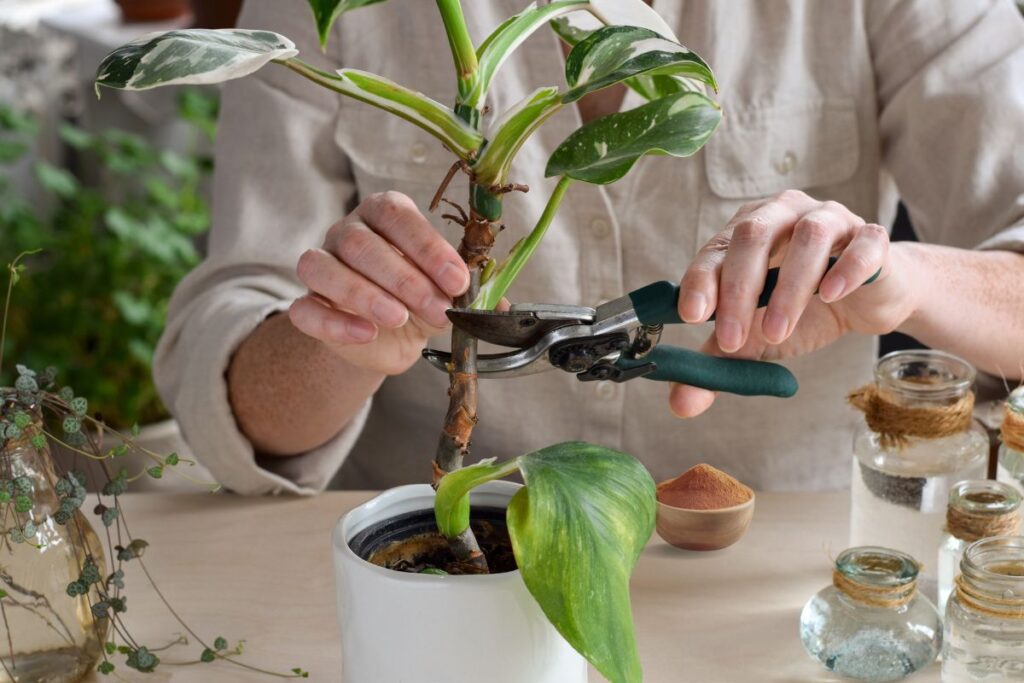
Why Cinnamon Works for Plants
Cinnamon contains cinnamaldehyde, the compound responsible for its distinctive smell. Cinnamaldehyde has well-documented antifungal and antibacterial properties that make it genuinely useful in the garden.
It also contains eugenol, which repels a range of insects. That’s why it works as both a fungal treatment and a pest deterrent.
The dry powder form is the most versatile. It sticks to moist surfaces, creates a physical barrier, and doesn’t wash off as quickly as liquid treatments. Cinnamon water (a simple infusion) extends those same benefits to soil drenches and foliar sprays.
7 Uses for Cinnamon on Plants
1. Prevent Damping-Off Disease in Seedlings
Damping-off is the frustrating condition where healthy seedlings suddenly collapse at the soil line. It’s caused by soil-borne fungi, and it spreads fast once it starts.
Cinnamon powder dusted over your seed-starting mix creates a protective antifungal barrier right at the surface exactly where damping-off fungi thrive.
I use organic Ceylon cinnamon powder from Amazon for this the finer grind works better for dusting seedlings and mixing into water than cassia cinnamon.
View on Amazon
If you’re also working on keeping soil consistently moist without over-saturating your seed trays, cinnamon gives you a useful second layer of protection against fungal problems.
How to prevent damping-off with cinnamon:
- Fill seed trays or pots with your usual seed-starting mix.
- Lightly dust the surface with cinnamon powder before sowing seeds aim for a thin, even coating, roughly ¼ teaspoon per 6-inch tray.
- After sowing, dust the surface again with a small pinch of cinnamon.
- Repeat the surface dusting after each watering, as water disperses the powder.
- Continue until seedlings have developed their first set of true leaves.
What it treats: Pythium, Fusarium, and Rhizoctonia the main damping-off culprits.
What it looks like when it’s working: No wilting or collapse at the soil line, and seedlings progress normally through germination.
2. Treat Fungal Infections on Leaves and Stems
Powdery mildew, leaf spot, and stem rot are among the most common fungal issues home gardeners deal with. Cinnamon won’t replace a systemic fungicide for severe infections, but it handles mild to moderate cases surprisingly well.
For leaf and stem issues, cinnamon water (a liquid infusion) works better than dry powder because it coats the surface evenly and penetrates leaf pores.
How to treat fungal infections with cinnamon:
- Add 1 teaspoon of cinnamon powder to 1 cup (240ml) of warm water.
- Stir and allow to steep for 1 – 0 minutes.
- Strain through a fine cloth or coffee filter to remove powder particles that would clog a spray bottle.
- Pour the strained liquid into a clean spray bottle.
- Spray directly onto affected leaves and stems, coating both sides of the leaves.
- Apply every 5 – 7 days until the infection clears.
- For powdery mildew, spray in the morning so leaves dry before evening.
What to watch for: Mild fungal spots should begin receding within 2 – 3 applications. If they spread despite treatment, move to a dedicated copper-based fungicide.
3. Speed Up Root Development in Cuttings
This is one of the most well-known cinnamon uses in gardening and it genuinely works. Cinnamon powder acts as a mild rooting stimulant while simultaneously protecting the cut end from rot and bacterial infection.
It won’t outperform commercial rooting hormones for difficult woody cuttings, but for herbs, houseplants, and soft-stemmed cuttings, it’s remarkably effective.
I pair cinnamon with a commercial rooting hormone powder from Amazon for stubborn woody cuttings the combination speeds up root development while preventing rot.
View on Amazon
You can also learn more about making a cinnamon water solution for plant health to use as a rooting soak before dipping in powder.
How to use cinnamon as a rooting hormone:
- Take a clean cutting just below a leaf node, removing lower leaves to leave a 2 – 3 inch bare stem.
- Allow the cutting to air-dry for 3060 minutes to let the cut surface callous slightly.
- Pour a small amount of cinnamon powder onto a clean plate roughly ½ teaspoon.
- Dip the cut end into the cinnamon, coating the bottom 1 inch of the stem evenly.
- Tap off any excess a thin coating is all you need.
- Insert immediately into moist propagation mix or perlite.
- Keep the propagation medium consistently moist and the cutting in bright, indirect light.
Best for: Pothos, basil, mint, geraniums, African violets, succulents, and most soft-stemmed houseplants.
4. Deter Fungus Gnats and Soil Pests

Fungus gnats lay their eggs in the top inch of moist potting soil. The larvae feed on fungal matter and, in larger numbers, on plant roots.
Cinnamon disrupts the fungal food source the larvae depend on, and the eugenol in cinnamon repels adult gnats from the soil surface. Used consistently, it significantly reduces infestations.
For context, cinnamon works alongside other approaches just as hydrogen peroxide for plants is another excellent soil drench for killing fungus gnat larvae on contact.
How to use cinnamon to deter fungus gnats:
- Allow the top inch of soil to dry out completely between waterings this removes the moist conditions gnats prefer.
- Dust the soil surface with a generous layer of cinnamon powder, covering the entire top of the pot.
- Lightly work the top ¼ inch of powder into the surface with a skewer or chopstick.
- Reapply after each watering, as water disperses the powder.
- For active infestations, also use cinnamon water as a soil drench: mix 1 tablespoon cinnamon to 1 litre of water, steep 2 – 0 minutes, strain, and water the plant normally.
- Repeat the drench every 7 days for 3 – 4 weeks.
What it does not replace: Yellow sticky traps for catching adult gnats. Use both together for faster results.
5. Heal Pruning Wounds and Prevent Infection
When you prune a stem or branch, you create an open wound that’s vulnerable to bacteria and fungal spores until it callouses over. Cinnamon acts as a natural wound sealant antimicrobial and fast-drying.
This is especially useful for succulent stems, orchid spikes, and woody houseplant stems that are slow to callous.
How to treat pruning wounds with cinnamon:
- Make a clean cut with sterilised pruning shears.
- Allow the cut surface to sit exposed for 5 minutes so any sap or moisture begins to dry.
- Dust cinnamon powder directly onto the cut surface enough to coat it visibly but not pile up.
- Do not water the wound or cover it with plastic wrap.
- Allow to air-dry completely; the cinnamon coating will harden slightly as it dries.
- For large pruning cuts on woody shrubs, apply a second dusting after 2 – 4 hours.
Works well on: Succulent offsets, orchid spikes after cutting, rose canes, and monstera stems.
6. Protect Stored Bulbs from Rot
Storing bulbs over winter is a common practice for dahlias, cannas, gladioli, and tulips. Rot is the biggest risk during storage and it spreads quickly from one bulb to others nearby.
Cinnamon powder coating the bulbs before storage inhibits the fungal growth responsible for rot without affecting the bulb’s viability come spring.
How to protect bulbs with cinnamon before storage:
- After digging bulbs, remove excess soil and allow them to air-dry for 2448 hours in a warm, ventilated spot.
- Inspect each bulb and discard any that show signs of soft rot or mold already.
- Place 1 – 2 tablespoons of cinnamon powder into a paper bag.
- Add bulbs to the bag in small batches and gently shake to coat all surfaces.
- Remove the bulbs and shake off excess powder a thin, even coat is sufficient.
- Store coated bulbs in paper bags or open wooden crates in a cool (510°C / 4050°F), dry, dark location.
- Check bulbs every 3 – 4 weeks through winter and remove any that show rot.
Works for: Dahlias, cannas, gladioli, caladiums, and begonia tubers.
7. Stop Mold Growth in Potting Soil
That white fuzzy layer on the surface of potting soil is usually saprophytic mold it feeds on decaying organic matter in the mix, not on your plant. It’s not dangerous, but it’s unsightly and signals conditions that could encourage other problems.
Cinnamon disrupts mold growth at the surface quickly and prevents it from returning when conditions are managed alongside treatment.
How to stop mold in potting soil with cinnamon:
- Scrape off the visible white mold layer with a spoon and dispose of it (don’t compost it).
- Allow the top 1 – 2 inches of soil to dry out completely.
- Dust the soil surface generously with cinnamon powder roughly ½ teaspoon per 6-inch pot.
- Do not water for at least 4 – 8 hours after applying.
- When mold has not returned after 1 week, reduce future watering frequency to prevent recurrence.
- Reapply a light dusting of cinnamon every 2 – 3 weeks as a preventative measure.
Address the root cause too: Mold in potting soil almost always means you’re overwatering or the pot lacks drainage holes. Fix those conditions alongside the cinnamon treatment.
Quick Reference Table
| Use | Form | Amount | Frequency | Best For |
|---|---|---|---|---|
| Prevent damping-off | Dry powder | ¼ tsp per 6″ tray | After each watering | Seedlings |
| Treat fungal infections | Cinnamon water | 1 tsp per 240ml water | Every 5 – 7 days | Leaves & stems |
| Rooting cuttings | Dry powder | ½ tsp on a plate | Once per cutting | Soft-stemmed plants |
| Deter fungus gnats | Dry powder + drench | 1 tbsp per 1 litre | Every 7 days | Potted plants |
| Heal pruning wounds | Dry powder | Enough to coat cut | Once (+ 24hr repeat) | All plants |
| Protect stored bulbs | Dry powder | 1 – 2 tbsp per bag | Once at storage | Bulbs & tubers |
| Stop soil mold | Dry powder | ½ tsp per 6″ pot | Every 2 – 3 weeks | All potted plants |
When NOT to Use Cinnamon on Plants
Cinnamon is gentle, but a few situations call for caution.
Avoid heavy application on seedling roots. A dusting on the soil surface is fine, but packing cinnamon powder directly around delicate roots can inhibit growth rather than help it.
Don’t use cinnamon water as a foliar spray on hot, sunny days. Apply sprays in the morning or evening to avoid any risk of leaf scorch from residue drying in direct sun.
It won’t fix a severe fungal infection. If you’re dealing with advanced black rot, severe powdery mildew covering entire plants, or root rot already underway, cinnamon is a maintenance tool not a rescue. Use a dedicated fungicide for serious infections.
Avoid direct application on very young or newly germinated seedlings. Wait until the seed coat has shed and the first leaves are open before applying surface treatments.
How to Prevent Plant Problems Naturally
- Never leave standing water in saucers. Waterlogged soil is the single biggest trigger for both fungal disease and fungus gnats. Empty saucers within 3 – 0 minutes of watering.
- Use well-draining, aerated potting mix. Dense, water-retentive soil encourages every fungal problem cinnamon helps treat. Add perlite at a ratio of 1 part perlite to 3 parts potting mix for better drainage.
- Sterilize tools between plants. Dip pruning shears in a 1 – 0% bleach solution (1 part bleach to 9 parts water) between cuts to prevent spreading fungal spores.
- Allow the top inch of soil to dry between watering’s. Most houseplant fungal issues and pest problems start with consistently wet soil. A moisture meter takes the guesswork out of timing.
- Quarantine new plants for 2 weeks. New additions can bring pests and disease into your space. Keep them separate from your collection until you’re confident they’re clean.
- Apply a preventative neem oil drench once a month. Mix 2ml neem oil with 1 litre of water and a drop of dish soap. Apply as a soil drench to prevent fungus gnats, root aphids, and soil-borne fungi before they establish.
The Bottom Line
Cinnamon is one of the most practical natural remedies for home gardeners. It handles an impressive range of problems from seedling disease to rooting cuttings to pest deterrence with a single inexpensive ingredient already in most kitchens.
The dry powder is your everyday tool for direct applications. The water infusion extends its reach to foliar sprays and soil drenches. Both methods are safe, non-toxic, and easy to prepare.
Used consistently and at the right stage, cinnamon can prevent many of the most common plant problems before they need treating at all.
Related Posts:
- Using Hydrogen Peroxide on Plants: 1 – 1 Uses & Mixing Ratios
- Cinnamon Water for Plants: A Simple Boost for Plant Health
- How to Keep Soil Moist
- How to Keep a Moss Pole Moist
- Prevent Mulch from Washing Away: 6 Proven Methods
Related Articles
Pepper leaves curling? Learn the 7 most common causes — from underwatering and heat stress to aphids and viral disease — plus step-by-step fixes to help your plants recover fast.
Pepper Leaves Turning Yellow: Why It Happens and How to Fix It
Pepper plant leaves turning yellow? Learn the 7 most common causes — from nitrogen deficiency to overwatering — and get specific, actionable fixes to bring your pepper plants back to health.