
You’re out in the garden, and something has been quietly shredding your plants. The leaves look stippled, curled, or just off and when you look closely, you spot the culprits: aphids, spider mites, or whiteflies clustered on the undersides.
Your first instinct might be to reach for a chemical spray. But before you do, there’s a cheaper, safer fix sitting in your kitchen.
Garlic spray repels aphids, spider mites, whiteflies, fungus gnats, and a range of other soft-bodied insects by masking plant scents and chemically irritating pests on contact. To make it, crush 2 full garlic bulbs, steep them in 1 quart of water overnight, strain the liquid, add 1 teaspoon of liquid dish soap, and spray every 5 – 7 days directly on leaf surfaces top and bottom. It’s safe for edibles, breaks down naturally in sunlight and soil, and costs pennies per batch.
The key is knowing how to make it properly, when to apply it, and what to realistically expect from it. Get those three things right and you’ll have a genuinely useful weapon in your natural pest control arsenal.
Why Garlic Works as a Pest Repellent

Garlic isn’t just pungent to us it’s genuinely offensive to insects, and for good reasons rooted in basic chemistry.
Garlic contains a compound called allicin, which is released when cloves are crushed or chopped.
Allicin acts as a natural deterrent, interfering with the sensory receptors insects use to locate host plants. Essentially, it masks the signals that draw pests to your garden in the first place.
Beyond masking scent, garlic has a mild insecticidal effect on soft-bodied pests. When it contacts aphids, spider mites, or whiteflies directly, it irritates their bodies and disrupts their feeding.
It also has antifungal properties, which is a bonus. Regular application can help suppress early fungal issues like powdery mildew, a two-for-one that makes it worth keeping in your routine.
Unlike synthetic pesticides, garlic spray degrades quickly in sunlight and soil, leaving no harmful residue on your edibles. That’s a big deal if you’re growing food.
What Pests Garlic Spray Controls
Garlic spray is most effective against soft-bodied, sap-sucking insects. Here’s a practical breakdown:
- Aphids – highly effective; garlic disrupts their ability to locate plants
- Spider mites – effective at contact; repeat applications needed
- Whiteflies – effective as a repellent; less so once established in large numbers
- Fungus gnats – effective when applied as a soil drench in addition to a foliar spray
- Caterpillars and cabbage worms – moderate; garlic spray won’t kill them but can discourage egg-laying
- Thrips – some repellent effect
- Mosquitoes – good repellent for treated foliage around seating areas
It is less effective against hard-bodied beetles, scale insects with waxy shells, or well-established, large infestations. For those, you’d want to combine garlic spray with something like a neem oil drench more on that below.
The Basic Garlic Spray Recipe
This is the standard recipe I use, and it’s the simplest starting point.
What you’ll need:
- 2 full bulbs of garlic (not just cloves – the whole bulb)
- 1 quart (roughly 1 liter) of water
- 1 teaspoon liquid dish soap (plain, unscented works best)
- A blender or mortar and pestle
- Fine mesh strainer or cheesecloth
- A spray bottle
How to make it:
Crush or blend the garlic:
Separate and peel the cloves, then crush them thoroughly using a blender or mortar and pestle. The goal is to break the cell walls and release as much allicin as possible.
Steep overnight:
Combine the crushed garlic with the quart of water in a jar or pitcher. Cover and leave it at room temperature overnight at least 8 hours, but 1 – 2 is better.
Strain thoroughly:
Pour the liquid through a fine mesh strainer or cheesecloth into your spray bottle. Any solid particles left in the bottle will clog the nozzle. Strain twice if needed.
Add the dish soap:
Add 1 teaspoon of liquid dish soap and shake gently to combine. The soap acts as an emulsifier and helps the spray stick to leaf surfaces instead of beading off.
Label and use within 1 week:
Garlic spray doesn’t keep well. Use it within 5€“7 days, stored in a cool spot or the refrigerator. If it smells more like rot than garlic, discard it and make a fresh batch.
Tip: If you prefer a more concentrated base you can dilute later, use the same amount of garlic with just 1 cup of water during steeping. Then dilute 1 part concentrate with 1 – 0 parts water before spraying.
Stronger Variations for Stubborn Pests
When the basic recipe isn’t cutting through a heavier infestation, these additions can boost its effectiveness.
Garlic + Chili Pepper Spray
Add 5€“6 dried chili peppers (or 1 teaspoon of cayenne powder) to your garlic steep. Capsaicin compounds in chili complement allicin and are particularly effective against caterpillars and aphids.
Use the same steeping and straining process. Add the soap last.
Garlic + Neem Oil Spray
This is my go-to for spider mites and persistent aphid colonies. Neem oil disrupts insect hormone cycles, which garlic alone can’t do.
After straining your garlic liquid, add 2 tablespoons of neem oil along with the dish soap (the soap emulsifies the neem oil too). Shake well before each spray session, as neem oil will separate on standing.
This combination covers both contact repellency (garlic) and systemic disruption (neem), making it notably more effective than either alone.
For spider mites and persistent aphid colonies, I combine garlic spray with neem oil the two-pronged approach is noticeably more effective than either alone.
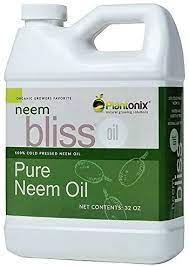
I use bliss pure neem oil from Amazon for a great price. It works great when it comes to shining leaves and provides a layer of protection for plants against common pests.
Garlic + Hydrogen Peroxide Spray
For plants dealing with both pests and soil fungal issues, you can add 2 tablespoons of 3% hydrogen peroxide to your strained garlic spray. Hydrogen peroxide oxygenates the root zone and kills fungal spores without harming your plant.
If you’re not familiar with using hydrogen peroxide in the garden, this guide on using hydrogen peroxide for plants is worth reading first it covers safe concentrations, timing, and exactly what it treats.
How to Apply Garlic Spray Correctly
Making a good spray is only half the job. Application matters just as much.
Spray in the early morning or evening:
Avoid applying in direct midday sun. Wet leaves in strong sunlight can scorch, and the spray evaporates too quickly to do its job.
Cover the undersides of leaves:
Most sap-sucking pests live on the undersides of leaves. If you only spray the tops, you’re missing the problem. Work methodically, lifting leaves as you go.
Wet the plant thoroughly:
The spray needs to make contact with the pests and with the plant surface. A light mist won’t cut it. Drench until the leaves are fully coated and liquid just begins to drip.
I keep a quality spray bottle on hand for consistent application the nozzle needs to deliver a thorough drench, not just a light mist.
This cost-effective and durable misting bottle will deliver a continuous and even supply of mist to your plant, ensuring that it is well watered through misting.

Apply every 5€“7 days:
Garlic spray breaks down quickly in sunlight, usually within a few days. Consistency matters more than a single heavy application. For active infestations, spray every 5 days for 3 weeks before evaluating whether you need to escalate.
Do a small test patch first:
Any spray even a natural one can cause sensitivity in some plants. Apply to a few leaves and wait 2 – 4 hours before treating the whole plant. If no yellowing or spotting appears, you’re safe to proceed.
What Not to Do
A few common mistakes can either reduce effectiveness or damage your plants.
Don’t skip straining:
Solid garlic bits will clog your spray nozzle within a few pumps. Strain thoroughly and rinse the bottle between batches.
Don’t use too much soap:
More than 1€“2 teaspoons of dish soap per quart can damage leaf surfaces and cause burning. Stick to the ratio.
Don’t apply to stressed or drought-stricken plants:
Any spray applied to a plant that’s already under stress from underwatering is more likely to cause leaf damage. Water your plants the day before treating.
Don’t expect overnight results:
Garlic spray is a repellent and mild irritant, not an instant insecticide. You’re discouraging pests and creating conditions they don’t want to return to. That takes consistent application over 2€“3 weeks.
Using Garlic Spray on Edibles
One of garlic spray’s biggest advantages is that it’s safe for vegetables, herbs, and fruit plants. Because it breaks down naturally, there’s no chemical residue concern at harvest time.
That said, a few practical notes:
- Rinse edibles before eating. The taste of raw garlic spray on a salad is not what you want.
- Avoid spraying open flowers on edible crops. Garlic can deter pollinators when applied directly to blooms. Spray foliage only, and time applications to avoid active pollinator visits (early morning is ideal).
- Leafy greens are fine the spray washes off completely with water.
For herbs like basil and cilantro that are harvested frequently, garlic spray is an excellent choice because there’s no waiting period before you can harvest.
Garlic Spray vs. Other Natural Pest Controls
Garlic spray is one tool, not a complete solution. Here’s how it fits alongside other natural options.
Garlic spray excels as a first-line repellent for soft-bodied pests. It’s fast to make, cheap, and safe for edibles. The limitation is that it breaks down fast and has no residual killing effect.
Neem oil works more slowly but has a broader mode of action it disrupts insect hormone cycles and is more effective on established infestations. It also treats fungal problems.
Hydrogen peroxide targets soil-borne pathogens and root rot fungal issues rather than surface pests, making it complementary rather than competing with garlic spray.
Insecticidal soap is more immediately effective on contact than garlic spray but has no repellent effect.
The best approach for a serious infestation is usually a rotating combination: garlic spray every 5 days for foliar repellency, a neem drench once a week for systemic action, and a hydrogen peroxide watering every 2 weeks to keep the root zone healthy.
For a deeper look at using garlic water as a preventative soil treatment and foliar feed, this guide on using garlic water on plants covers the dilutions and application schedule that work well for regular maintenance.
Frequently Asked Questions
Can I use garlic powder instead of fresh garlic?
Fresh garlic releases significantly more allicin than powder. Garlic powder will produce a weaker spray, but it can work in a pinch. Use 2 tablespoons of garlic powder per quart of water and steep for at least 4 hours before straining.
Will garlic spray hurt beneficial insects like ladybugs or bees?
Garlic spray is primarily a repellent, not a broad insecticide. It’s far less harmful to beneficial insects than synthetic pesticides. To be safe, avoid spraying directly on blooms during peak pollinator hours (midday) and don’t apply to plants in active flower.
How long does garlic spray last once made?
No longer than 5€“7 days at room temperature. Refrigerating it can extend this slightly. The spray is no longer effective and may actually smell of rot once the allicin has degraded. Make fresh batches regularly.
Can I use it on indoor plants?
Yes, but ventilate well. The smell inside a home after spraying garlic indoors is intense. Spray near an open window, or take potted plants outside to treat them.
Is it safe for seedlings?
Yes, but dilute it further for seedlings use 1 part garlic spray to 2 parts water. Young plants are more sensitive to any foliar application.
How soon will I see results?
Expect to see fewer pests within 5€“1 – 0 days of consistent application. Garlic spray works by making your plants undesirable over time, not by killing on contact.
The Bottom Line
Garlic spray is one of the most practical, low-cost natural pest controls you can make at home. It won’t replace every product in your arsenal, but for early-stage aphid, spider mite, and whitefly problems especially on edibles it’s hard to beat.
The recipe is simple, the ingredients are kitchen staples, and consistent application every 5€“7 days genuinely moves the needle. Combine it with neem oil or hydrogen peroxide when you need a broader approach, and you’ve got a natural pest control system that costs almost nothing.
Make a batch this week, apply it consistently for three weeks, and you’ll likely wonder why you didn’t start using garlic spray sooner.
Related Posts
- Using Hydrogen Peroxide on Plants: Ratios, Uses & How to Apply
- Using Garlic Water on Plants: Pest Prevention & Foliar Care
Related Articles
Pepper leaves curling? Learn the 7 most common causes — from underwatering and heat stress to aphids and viral disease — plus step-by-step fixes to help your plants recover fast.
Pepper Leaves Turning Yellow: Why It Happens and How to Fix It
Pepper plant leaves turning yellow? Learn the 7 most common causes — from nitrogen deficiency to overwatering — and get specific, actionable fixes to bring your pepper plants back to health.