
You walk outside to check on your roses, and something’s off. The leaves are dotted with dark, irregular spots and a few of them are already yellowing and dropping to the ground.
It’s frustrating, especially when your roses were looking so healthy just days before.
Black spots on rose leaves are almost always caused by black spot fungus (Diplocarpon rosae), a common fungal disease that thrives in warm, humid conditions. The main causes include overhead watering that leaves foliage wet overnight, poor air circulation around plants, infected leaf debris left in the garden, susceptible rose varieties, warm and humid weather patterns, and overcrowded planting.
Understanding why the disease is spreading is the most important first step. Treating the symptoms without fixing the cause just means the problem comes back.
This guide covers all six root causes, how to treat each one, and how to prevent black spot from returning season after season.
Why Does Black Spot Happen on Rose Leaves?
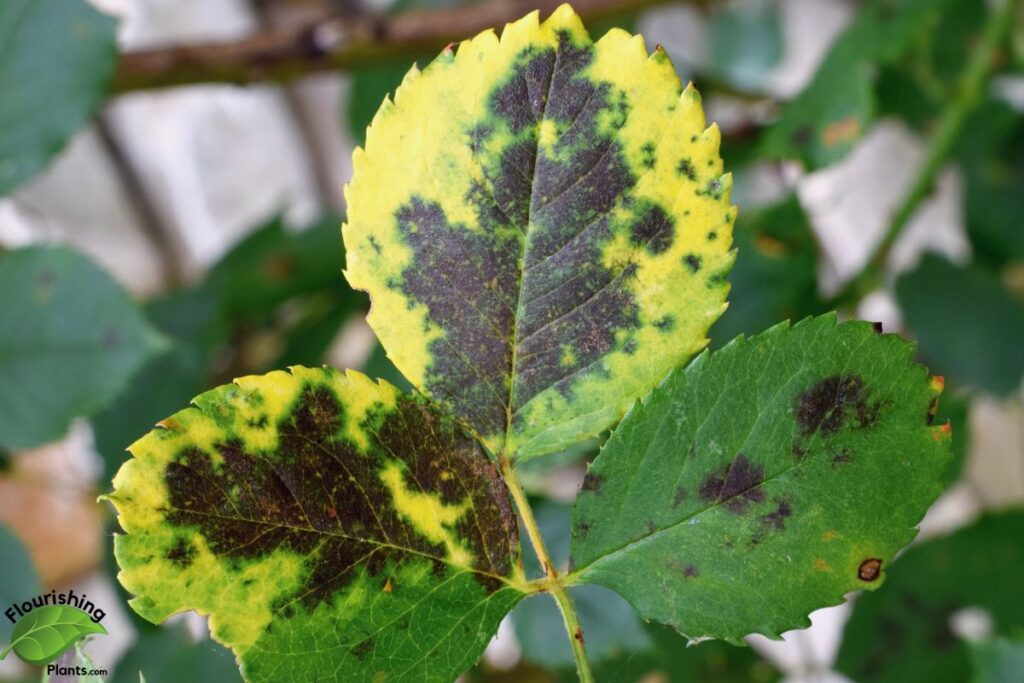
Black spot is caused by the fungus Diplocarpon rosae. It spreads through spores that land on wet leaf surfaces and germinate within hours.
Once the spores take hold, you’ll see circular black spots usually with fringed or feathery edges within 3 to 1 – 0 days. Yellow halos often form around the spots, and infected leaves drop early.
The disease overwinters in fallen leaf debris and infected canes. When warm, wet weather returns in spring, the spores are released and the cycle begins again. Breaking that cycle is what treatment is all about.
1. Overhead Watering That Leaves Foliage Wet
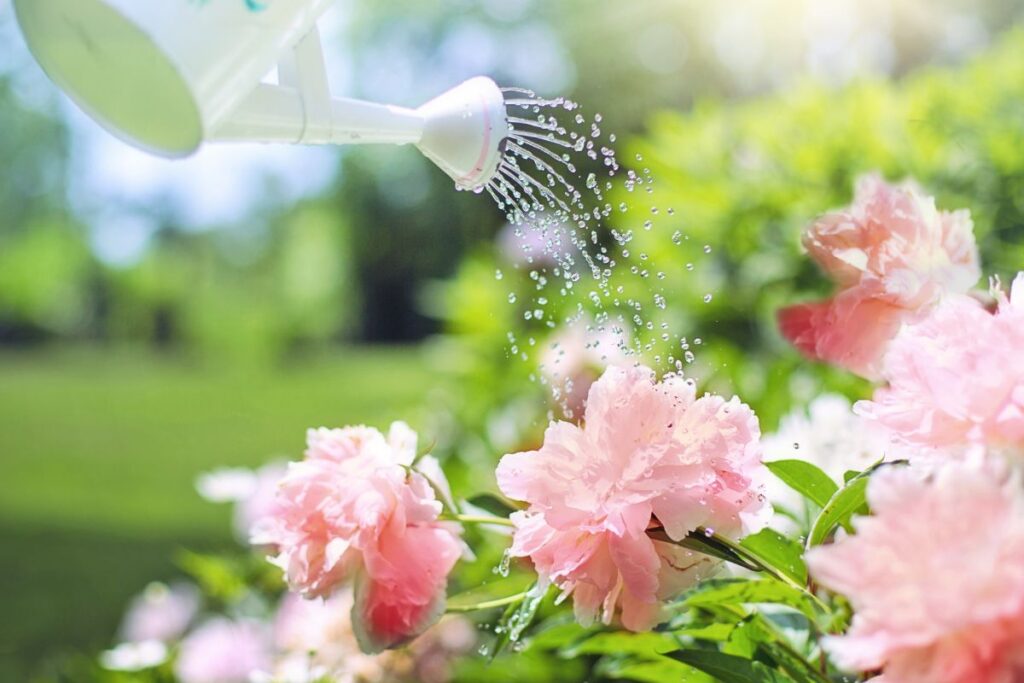
This is the single most common trigger for black spot. When water sits on rose leaves for more than a few hours especially overnight fungal spores have everything they need to germinate.
What it looks like: Small, round black spots with ragged or fringed edges appearing first on lower leaves. The spots are usually 110 mm in diameter. Yellow discolouration spreads outward from each spot before the leaf drops.
What causes it: Sprinkler systems, overhead hoses, or watering late in the day all leave foliage wet for extended periods. Evening watering is especially risky because leaves stay damp all night.
Note: If you’re also seeing physical damage like holes on your rose leaves, pests and fungal disease can occur at the same time both are worth addressing together.
How to treat and prevent moisture-driven black spot:
- Switch to drip irrigation or a soaker hose to water at the base only.
- If you must use overhead watering, do it early in the morning so leaves dry within 2 – 3 hours.
- At first signs of black spot, apply an organic copper-based fungicide I use one from Amazon that works great at stopping the spread early. View on Amazon
- Spray the upper and lower leaf surfaces, coating thoroughly.
- Repeat every 710 days while conditions remain warm and humid.
- Continue applications for at least 3 – 4 weeks or until new growth stays clean.
2. Poor Air Circulation Around Rose Bushes

Roses need airflow. When branches are tangled and dense, moisture lingers on leaves far longer than it should creating the perfect environment for fungal spores.
What it looks like: Black spot appearing throughout the interior of the bush first, where airflow is lowest. Older, inner leaves are often the first to show spots and drop.
What causes it: Unpruned canes crossing each other, or roses growing close to walls, fences, or other shrubs that block air movement on one or more sides.
How to improve airflow and reduce black spot:
- In early spring (before leafout), prune to open up the centre of the bush remove any canes crossing inward.
- Aim for a vase-shaped structure with an open centre.
- Remove at least one-third of the oldest, thickest canes each year.
- After pruning, thin any remaining branches that are closer than 1 – 5 cm (6 in) to each other.
- If the rose is against a wall or fence, ensure at least 4 – 5 cm (1 – 8 in) of clearance on the open sides.
- Follow up with a fungicide spray after pruning cut ends and freshly exposed leaves are vulnerable.
3. Infected Leaf Debris Left in the Garden

Diplocarpon rosae doesn’t disappear when leaves fall it overwinters in dead leaf material and infected canes on the ground. Every rain event then splashes spores back up onto your new growth.
What it looks like: A fresh wave of black spot appearing on new leaves in spring, even when the plant itself looked clean over winter. The source is almost always last year’s debris still sitting around the base of the plant.
What causes it: Not cleaning up fallen leaves during the growing season, leaving pruning debris in the bed, or composting infected material (home compost piles rarely get hot enough to kill fungal spores).
If you’ve also noticed black eggs on leaves while inspecting your roses, that’s a sign other unwanted visitors may also be hiding in garden debris another reason to keep the bed clean.
How to eliminate infected debris:
- Rake up and remove all fallen leaves immediately as they drop don’t wait for a weekly clean-up.
- Bag all infected leaves and canes in sealed plastic bags; do not compost them.
- At the end of the season, remove all remaining leaf litter within 6 – 0 cm (2 ft) of the plant.
- In early spring, remove the top 1 – 2 cm of mulch around the base and replace with fresh mulch old mulch harbours overwintered spores.
- Apply a fungicide spray to the soil surface and lower canes before leaves emerge in spring.
4. Planting Susceptible Rose Varieties
Not all roses are equally vulnerable. Hybrid tea roses, grandifloras, and many classic varieties are highly susceptible to black spot. If you’re fighting the disease every single season despite doing everything right, the variety itself may be working against you.
What it looks like: Persistent, season-long black spot that returns immediately after treatment even with good sanitation and proper watering technique.
What causes it: Certain rose genetics simply lack resistance to Diplocarpon rosae. This doesn’t mean you have to give up on your favourite variety, but it does mean you’ll need to be more proactive with prevention.
How to manage susceptible varieties:
- Begin a preventative fungicide spray programme at the very first sign of leafout in spring don’t wait for spots to appear.
- Spray every 710 days throughout the growing season whenever temperatures are above 1 – 8°C (6 – 5°F).
- Alternate between copper-based and sulfur-based fungicides to prevent resistance buildup use copper for 2 – 3 applications, then switch to sulfur for 2 – 3.
- If planting new roses, choose disease-resistant varieties (look for ratings from the American Rose Society or the Royal National Rose Society).
- Resistant varieties to look for include ‘Knockout’, ‘Carefree Beauty’, ‘Bonica’, and many David Austin shrub roses.
5. Warm, Humid Weather Conditions
Sometimes black spot isn’t about anything you’re doing wrong it’s the weather. The fungus thrives when temperatures sit between 1824°C (6575°F) with high humidity or frequent rain.
What it looks like: A sudden, rapid spread of black spot across multiple plants at once often following a warm, rainy period or a stretch of overcast, humid days.
What causes it: You can’t control the weather, but you can prepare for it. High-humidity periods are predictable in most climates, and that’s when your defences need to be strongest.
Just as environmental stress can cause plant leaves to curl or show other symptoms, humid conditions push roses toward fungal problems even when everything else in your care routine is correct.
How to protect roses during high-risk weather:
- Check your local 7-day forecast regularly during spring and summer.
- Before a predicted rainy or humid stretch, apply a protective fungicide spray (copper or sulfur) as a barrier don’t wait for spots to appear.
- Reapply within 2448 hours after heavy rain washes off previous applications.
- Increase spray frequency to every 5 – 7 days during extended humid periods.
- Reduce nitrogen fertiliser during humid spells lush, soft new growth is more susceptible to infection.
6. Overcrowded Planting That Traps Moisture
Roses planted too close together create a microclimate that’s tailor-made for black spot. The canopies overlap, moisture doesn’t evaporate, and fungal spores spread from plant to plant with ease.
What it looks like: Black spot spreading quickly from one plant to neighbouring roses in the same bed, often affecting all plants in the cluster at the same rate.
What causes it: Planting roses closer than recommended spacing, or allowing shrubs and perennials nearby to grow into the rose’s space over time.
How to fix overcrowding:
- Check the recommended spacing for your specific rose variety most need at least 9 – 0 cm1.2 m (3 – 4 ft) between plants.
- If plants are already too close, thin surrounding perennials and shrubs first to open up space without moving the roses.
- If roses genuinely need to be transplanted, do so in early spring or autumn when temperatures are cool.
- Prune back any branches that are extending into a neighbouring plant’s space.
- After thinning, apply a fungicide spray to all affected plants within the bed on the same day.
Quick Reference: Black Spot Causes at a Glance
| Cause | First Symptom Location | Spreads Fast? | Fix |
|---|---|---|---|
| Overhead watering | Lower leaves first | Yes, if wet nightly | Switch to drip; water mornings only |
| Poor air circulation | Interior of bush | Moderate | Open-centre pruning |
| Infected debris | New spring growth | Yes, each season | Remove all fallen leaves immediately |
| Susceptible variety | All over the plant | Yes, season-long | Preventative fungicide from leafout |
| Warm, humid weather | Multiple plants at once | Very fast | Pre-emptive spray before rain events |
| Overcrowded planting | Spreads to neighbours | Fast across the bed | Thin plants; improve spacing |
Universal Prevention Tips for Black Spot on Roses
- Water at the base, never from above. Drip irrigation or soaker hoses are the single most effective infrastructure change you can make. If you use a hose, point it at the soil never at the leaves.
- Always water in the morning. Morning watering gives any accidental leaf moisture 2 – 3 hours to dry before humidity peaks in the afternoon. Evening watering is the highest-risk habit you can have with roses.
- Clean up fallen leaves every single time. Don’t let spotted leaves sit on the ground for even a day. Bag them immediately don’t compost infected material.
- Prune for an open centre each spring. Remove crossing canes and old growth to keep airflow moving through the bush. A 1 – 5-minute prune in early spring saves weeks of treatment later.
- Mulch the base but change it annually. A 5 – 7 cm (2 – 3 in) layer of fresh mulch stops rain from splashing soil-borne spores up onto lower leaves. Replace the top layer each spring to avoid harbouring overwintered fungus.
- Avoid high-nitrogen fertiliser during humid periods. Excess nitrogen pushes fast, soft growth that’s highly susceptible to fungal infection. Use a balanced rose fertiliser and hold off on heavy feeding when rain is forecast.
- Watch for pest damage alongside fungal disease. Pests like aphids and scale cause sticky residue on leaves and weakened tissue that makes infection more likely. Treat pest problems promptly as part of your overall rose health routine.
- Start a preventative neem oil spray programme. I spray cold-pressed neem oil from Amazon every 710 days during warm, humid weather it prevents black spot before it starts and also protects against other fungal diseases and soft-bodied pests.
View on Amazon Mix at 2 tablespoons of neem oil concentrate per gallon of water with a few drops of dish soap as an emulsifier. Apply to upper and lower leaf surfaces in the early morning.
The Bottom Line
Black spot is the most common rose disease in home gardens, but it’s not unbeatable. Once you understand that the fungus needs wet leaves and warm temperatures to take hold, the fixes become obvious: keep foliage dry, keep air moving, and remove every scrap of infected material before spores can overwinter.
Treatment works best when it starts early. At the first sign of spots, apply a copper or sulfur-based fungicide and correct the underlying cause whether that’s your watering routine, your pruning habits, or the spacing in your bed. Waiting until the plant is heavily infected makes recovery much slower.
The most important thing to remember is this: black spot is a preventable disease, and the same basic habits dry foliage, good airflow, clean beds, and a regular preventative spray will keep it from coming back year after year.
Related Posts:
- Holes on Rose Leaves: Causes and How to Fix Them
- Black Eggs on Leaves: What They Are and What to Do
- Plant Leaves Curling: Causes and Solutions
- Pale Plant Leaves: Why It Happens and How to Fix It
- Leaves Turning Dark Green: Causes and What to Do
Related Articles
Pepper leaves curling? Learn the 7 most common causes — from underwatering and heat stress to aphids and viral disease — plus step-by-step fixes to help your plants recover fast.
Pepper Leaves Turning Yellow: Why It Happens and How to Fix It
Pepper plant leaves turning yellow? Learn the 7 most common causes — from nitrogen deficiency to overwatering — and get specific, actionable fixes to bring your pepper plants back to health.