
You’re inspecting your thriving tomato plants when you spot it squiggly white lines tracing across the leaves. What could be causing these unusual marks? While these markings can be concerning, they’re not uncommon. And the good news is, they can usually be addressed with some targeted care.
The most common cause of white lines on tomato leaves is leaf miner larvae tunneling between leaf surfaces. However, other possibilities include early-stage powdery mildew, sunscald, nutrient deficiencies, or pesticide damage. Fortunately, most of these issues can be resolved with careful identification and treatment.
Understanding the specific issue affecting your tomato plants is essential to nursing them back to health. In this guide, we’ll delve into the common causes of white lines, discuss effective treatment methods, and provide tips for prevention.
Why Do These White Lines Appear?
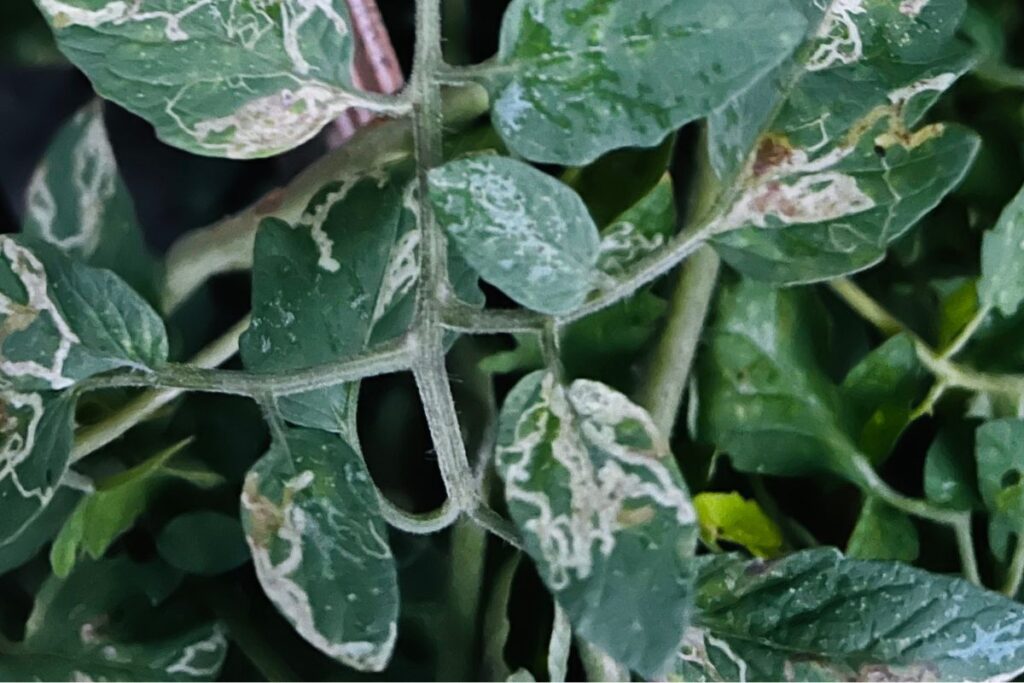
White lines on tomato leaves often result from various factors, with the most frequent being leaf miners. Identifying the exact cause is crucial for effective treatment. Let’s explore the possible culprits behind these mysterious marks.
1. Leaf Miners
Leaf miners are the larvae of certain insects, such as moths or flies, that feed on the material between the top and bottom layers of leaves. This feeding pattern creates the distinctive squiggly white lines you see.
What they look like: Winding, irregular, and often squiggly white lines across the leaf surface.
What they do: Their tunneling damages leaf tissue, reducing photosynthesis efficiency and overall plant vigor.
What causes them: Adult insects lay eggs on the leaf surface, and the emerging larvae burrow into the leaves.
How to get rid of leaf miners:
- Remove and destroy affected leaves to disrupt the lifecycle.
- Apply neem oil, an organic pesticide, to deter egg-laying adults. Using Neem Oil on Succulents offers tips beneficial for tomato plants as well.
- Introduce natural predators like parasitic wasps.
- Use floating row covers to prevent adult insects from reaching plants.
2. Powdery Mildew
In its early stages, powdery mildew can appear as white streaks or patches on leaves. Over time, these streaks can spread and cover more of the leaf surface.
What it looks like: White, powdery patches that can develop into lines.
What it does: It inhibits photosynthesis by coating the leaf surface, weakening the plant.
What causes it: Fungal spores thriving in high humidity and poor air circulation.
How to fix powdery mildew:
- Remove any heavily infected leaves.
- Improve air circulation by spacing plants appropriately.
- Apply a solution of 1 part 3% hydrogen peroxide to 9 parts water to affected areas, as detailed in our How to Use Hydrogen Peroxide on Plants guide.
- Use a sulfur-based fungicide for severe cases.
3. Sunscald / Heat Stress
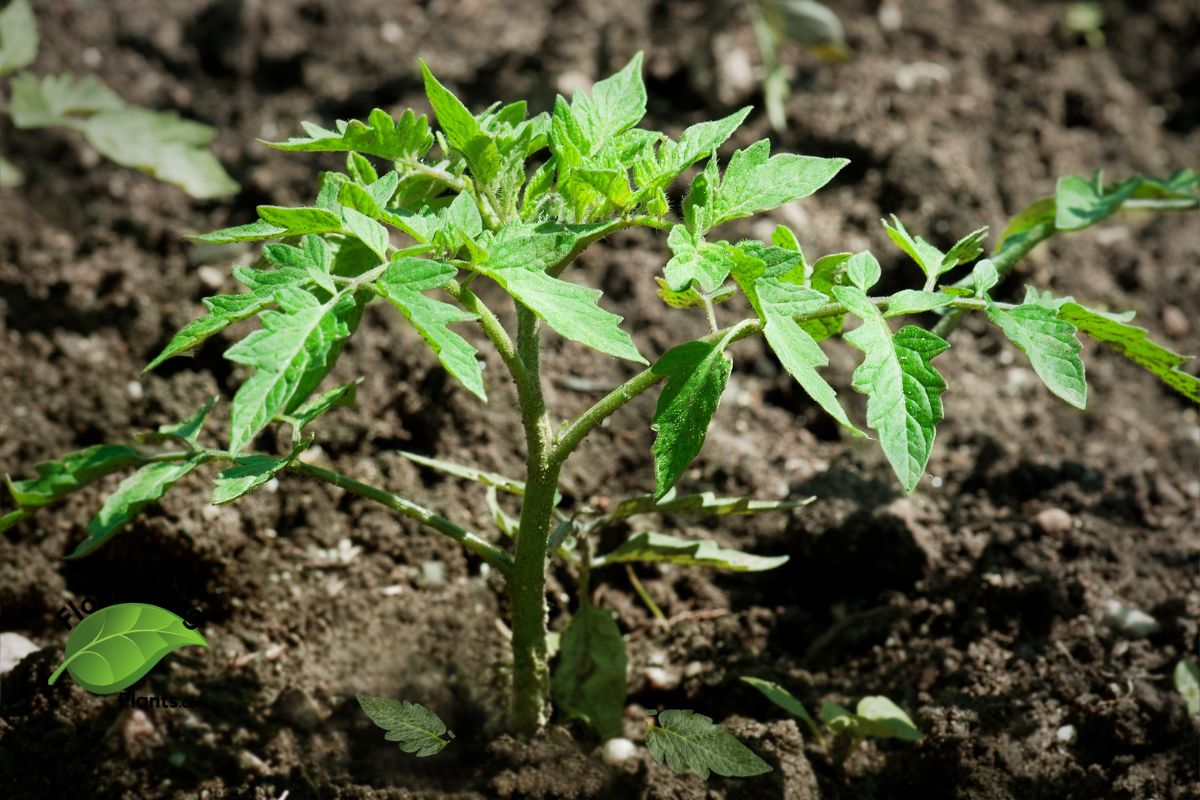
Excessive sunlight and heat can cause white or bleached areas on tomato leaves, often leading to white streaks or patches.
What it looks like: White or yellowish spots that may lead to browned, crispy edges.
What it does: Reduces leaf vitality and can stress the plant.
What causes it: Prolonged exposure to intense sunlight without adequate watering.
How to prevent sunscald:
- Provide shade during the hottest parts of the day using shade cloths.
- Ensure consistent watering to keep plants adequately hydrated, utilizing Using Rainwater for Plants.
- Mulch soil to help retain moisture and regulate temperature.
4. Nutrient Deficiencies or Pesticide Burn

White lines may also indicate a nutrient imbalance or chemical burn from improper pesticide application.
What it looks like: Streaks or spots that could be golden or white, with potential leaf edges curling or yellowing.
What it does: Nutrient imbalances or burns disrupt normal plant function, hindering growth.
What causes it: Lack of essential nutrients like magnesium or excessive chemical exposure.
How to address nutrient or chemical issues:
- Conduct a soil test to identify nutrient gaps.
- Amend soil with organic compost or balanced fertilizers. Consider Using Rotted Wood as Soil Amendment for natural improvement.
- Reduce usage of harsh chemicals and follow label instructions precisely.
- Recover soil health with diluted organic treatments like molasses. Learn more about the benefits in Molasses For Plants.
Universal Prevention Tips
Preventing issues before they start can save time and protect the health of your tomato plants. Follow these tips:
- Promote Healthy Soil. Ensure your soil is nutrient-rich and well-draining. Consider using rotted wood or molasses amendments to boost soil health.
- Rotate Crops. To prevent pest buildup, rotate crops each season, changing planting locations.
- Monitor Regularly. Check plants frequently for early signs of damage to catch issues before they escalate.
- Prune Properly. Remove excess foliage to maintain good air circulation, reducing fungal risks.
- Use Neem Oil. Regularly apply neem oil to deter a range of pests organically.
Using natural methods not only treats the problems but also strengthens plants against future issues, cultivating a balanced growing environment.
The Bottom Line
Identifying the exact cause of white lines on your tomato leaves is key to choosing the correct treatment. Whether it’s leaf miners, fungal infections, or environmental factors, targeted actions can restore your plants to health. Effective management and prevention strategies will keep your tomatoes thriving and pest-free.
Related Posts:
- Using Neem Oil on Succulents: How to Apply and The Benefits
- Molasses For Plants: 5 Benefits & Drawbacks Explained
- Using Hydrogen Peroxide On Plants: 1 – 1 Uses & Mixing Ratios
Meta description: Discover the causes of white lines on tomato leaves and how to fix them. Learn about leaf miners, powdery mildew, and prevention tips for healthy tomatoes.
Why does this happen?
Tomato leaves can develop white lines for several reasons, which disrupt the plant’s growth and affect yield. Understanding the root causes helps implement the right solutions.
- Leaf miners: These pests burrow through leaves, creating tunnels or serpentine patterns that appear as white lines.
- Environmental stresses: Excessive sun exposure, wind damage, or rapid changes in temperature can cause tissue damage, resulting in white markings.
- Fungal infections: Diseases like powdery mildew leave a white powdery residue, which can spread quickly if not controlled.
Main Causes and Fixes
1. Leaf Miners
Leaf miners are notorious for their destructive feeding habits, tunneling their way through plant leaves, leaving unmistakable trails of white lines.
What they look like: These tiny insect larvae create visible, meandering white trails within the leaf.
What they do: They disrupt the plant’s photosynthesis process, leading to reduced growth and yield.
What causes them: Leaf miner adults lay eggs on leaves, and once hatched, larvae bore their way into the leaf tissue.
How to get rid of leaf miners:
- Remove and destroy affected leaves to prevent re-infestation.
- Introduce natural predators like parasitic wasps to control leaf miner populations.
- Apply neem oil spray bi-weekly to deter egg-laying adults.
- Use reflective mulches around plants to confuse and repel adult insects.
- Consider rotating crops to break the leaf miner lifecycle.
2. Powdery Mildew
This fungal disease appears as a white or gray powdery growth on both the top and bottom surfaces of leaves.
What it looks like: Irregular patches of white or gray fuzzy spots that expand over time.
What it does: It hinders photosynthesis and weakens the plant, potentially leading to premature leaf drop.
What causes it: High humidity and poor air circulation create ideal conditions for this fungus.
How to treat powdery mildew:
- Trim affected foliage to reduce fungal spread.
- Enhance airflow by spacing plants adequately.
- Apply a homemade solution of 1 tablespoon baking soda mixed with 1 gallon of water weekly.
- Use sulfur or copper-based fungicides as a last resort, ensuring to follow safety guidelines.
- Water plants in the morning to allow leaves to dry throughout the day.
3. Environmental Stress
Sudden changes in the environment can inflict stress on tomato plants, causing visible white scarring or sunscald on the foliage.
What it looks like: Scorched or whitish patches usually along the edges or surfaces of leaves.
What it does: Causing discoloration and wilting, these stress-induced marks reduce the plant’s vigor.
What causes it: Intense sunlight, drying winds, or fluctuating temperatures can damage delicate leaf tissues.
How to alleviate environmental stress:
- Provide shade cloths during peak sunlight hours to reduce heat stress.
- Water at soil level to maintain consistent moisture without wetting leaves.
- Utilize mulch to help regulate soil temperature and moisture.
- Set up windbreaks to protect against drying winds.
- Monitor weather forecasts to anticipate and mitigate extreme conditions.
By pinpointing whether leaf miners, mildew, or stress are to blame, you can apply targeted treatments and restore the health of your tomato plants. Comprehensive care not only resolves current issues but bolsters defenses against potential future challenges.
4. Leaf Miner Infestations
Leaf miners are small insect larvae that can wreak havoc on tomato plants by tunneling through leaves and creating unsightly trails.
What they look like: Pale, winding trails or blotches just beneath the leaf surface.
What they do: Leaf miners cause extensive leaf damage, reducing photosynthesis and potentially stunting plant growth.
What causes them: Adult flies or moths lay eggs on the leaves, and the larvae feed by creating tunnels within the leaf tissue.
How to control leaf miners:
- Remove and destroy affected leaves to interrupt the larvae’s life cycle.
- Encourage beneficial insects, like parasitic wasps, which naturally reduce leaf miner populations.
- Use floating row covers to prevent adult moths or flies from laying eggs on plants.
- Apply neem oil weekly to disrupt the larvae’s development.
- As a last resort, use insecticides that target larvae, following label instructions carefully.
5. Physiological Leaf Curl
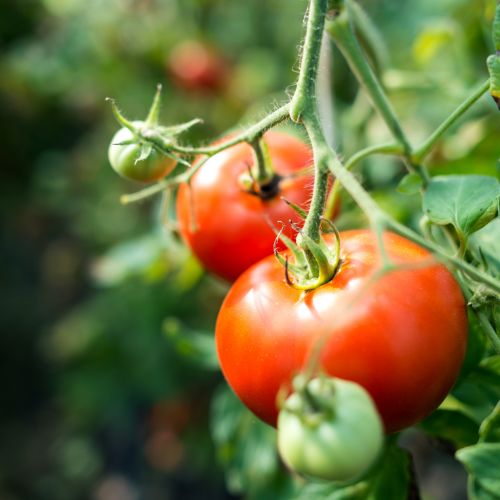
Tomato leaves may curl due to non-disease-related physiological factors that impact plant growth.
What it looks like: Leaves curl upwards or inward, typically without any discoloration or lesions.
What it does: While usually not harmful, it indicates stress due to environmental or nutritional issues.
What causes it: Water imbalance, excessive heat, or nutrient deficiencies can lead to physiological leaf curl.
How to address physiological leaf curl:
- Ensure a consistent watering schedule to prevent water stress.
- Apply a balanced fertilizer to correct any nutritional deficiencies.
- Mulch around plants to retain soil moisture and keep roots cool.
- Avoid high-nitrogen fertilizers, which can accentuate leaf curl.
- Monitor the ground pH level, keeping it between 6.2 and 6.8 to ensure optimal nutrient uptake.
6. Bacterial Speck and Spot
Bacterial infections like speck and spot are common tomato ailments that can lead to discolored lesions on leaves and fruit.
What they look like: Small, dark, water-soaked spots with yellow halos on leaves and stems.
What they do: If untreated, these spots coalesce, leading to significant leaf drop and reduced fruit yield.
What causes them: Spread by splashing water, they thrive in wet conditions and can be seed-borne.
How to manage bacterial speck and spot:
- Remove infected plant debris to reduce bacterial sources.
- Stake plants to improve air circulation and minimize moisture retention on foliage.
- Practice crop rotation, avoiding tomatoes or related crops in the same spot for at least two years.
- Apply copper-based bactericides to prevent the spread of infection.
- Water directly at the soil level to reduce moisture on leaves and stems.
The Bottom Line
White lines on tomato leaves are almost always a signal that something needs your attention but rarely a death sentence for your plants. In most cases, leaf miners are the culprit, leaving behind those telltale squiggly trails as their larvae tunnel between leaf layers.
But as we’ve covered, powdery mildew, sunscald, nutrient deficiencies, and bacterial infections can all produce similar-looking damage, which is why accurate identification is the most important first step.
Remember, a few damaged leaves don’t spell disaster. Tomato plants are remarkably resilient, and with consistent monitoring, prompt action, and preventative care, your garden can bounce back stronger than before. Catch problems early, treat them gently, and your tomatoes will reward you with a healthy, abundant harvest.
Related Articles
Pepper leaves curling? Learn the 7 most common causes — from underwatering and heat stress to aphids and viral disease — plus step-by-step fixes to help your plants recover fast.
Pepper Leaves Turning Yellow: Why It Happens and How to Fix It
Pepper plant leaves turning yellow? Learn the 7 most common causes — from nitrogen deficiency to overwatering — and get specific, actionable fixes to bring your pepper plants back to health.