
You walk out to check on your tomato plants and notice the leaves have curled upward along their edges, almost like they’re trying to roll into a tube. It doesn’t look right and now you’re wondering if something is seriously wrong.
Here’s the reassuring news: leaf curl in tomatoes is one of the most common issues home gardeners deal with, and it’s rarely fatal.
Tomato leaves curl upward due to six main causes: heat stress and underwatering, overwatering and root problems, broad mite or pest damage, viral disease (especially Tomato Yellow Leaf Curl Virus), herbicide drift, and physiological leaf roll. Most cases are fixable once you identify the cause. Heat stress and physiological roll are the most common and least serious culprits, while viral disease and herbicide damage are harder to reverse but still manageable with the right steps.
Knowing which cause is behind the curl makes all the difference. A plant wilting from drought needs the opposite treatment from one drowning in waterlogged soil.
Why Do Tomato Leaves Curl Up in the First Place?
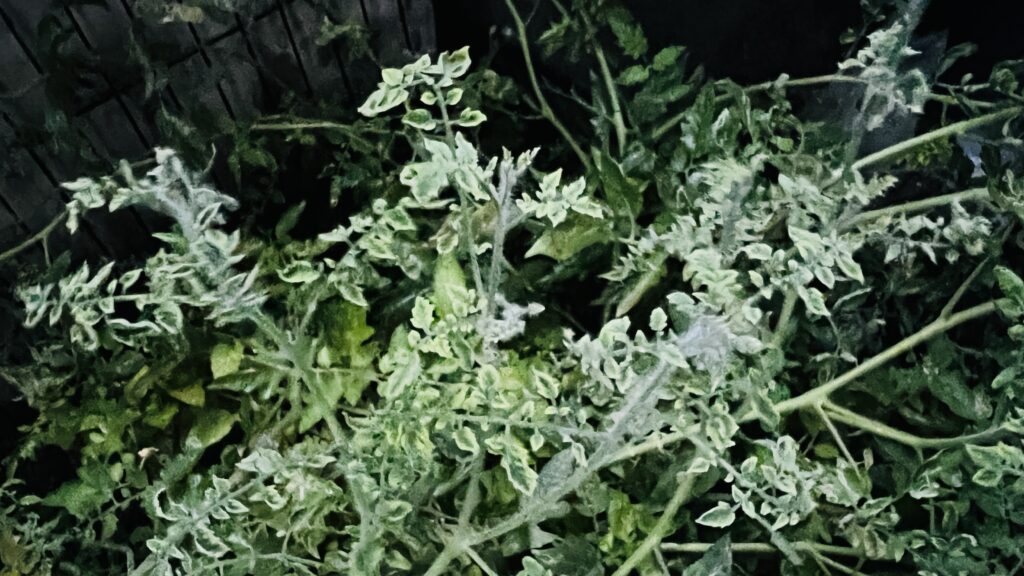
Tomato leaves are surprisingly expressive. When something is off in the environment, the roots, or the plant’s tissues curling is often the first visible signal.
Upward curling (rolling inward from the edges) is the plant’s way of reducing the surface area exposed to stress. Think of it as the leaf protecting itself.
Downward curling is a different issue and often points to different causes. This post focuses on upward curl specifically, which is the most common complaint. For a broader look at leaf curling across plant types, check out Plant Leaves Curling: The Causes and Easy Solutions.
The 6 Causes of Tomato Leaves Curling Up
1. Heat Stress and Underwatering
This is the number one reason tomato leaves curl, especially in summer. When temperatures climb above 8590°F (2932°C) or the plant hasn’t had enough water, it curls its leaves to slow moisture loss through transpiration.
What it looks like: Leaves roll tightly inward along the length of the leaf. The curl is most pronounced on the upper and middle sections of the plant first. Leaves may also feel dry or slightly crispy, and the soil will be dry an inch or more below the surface.
What causes it: High temperatures, direct afternoon sun, inadequate watering frequency, or a pot that dries out too fast.
How to fix heat stress and underwatering:
- Water deeply at the base of the plant until water drains freely this is more effective than frequent shallow watering.
- Water tomatoes every 1 – 2 days in hot weather (above 8 – 5°F), aiming for 1 – 2 inches of water per week total.
- Add a 2 – 3 inch layer of mulch around the base to retain soil moisture and keep roots cooler.
- If growing in containers, move pots out of direct afternoon sun or add a shade cloth (3040% shade) during peak heat (124 PM).
- Check soil moisture daily by inserting your finger 1 – 2 inches into the soil water when it feels dry at that depth.
2. Overwatering and Root Problems

Overwatering is just as stressful as underwatering and the leaf curl can look almost identical at first glance. The key difference is what the soil looks like when you check it.
What it looks like: Leaves curl upward and may also look slightly puffy, pale, or yellow. The lower leaves are often affected first. The soil feels consistently wet or soggy, and there may be a sour smell from the pot or bed.
What causes it: Watering too frequently, pots without drainage holes, compacted soil that holds water, or prolonged rain. Damaged or rotting roots can’t take up nutrients properly even when water is available which triggers the same stress response as drought.
If your tomato leaves are also looking pale or washed out alongside the curl, the guide on Pale Plant Leaves: Causes and Effective Fixes covers the nutrient angle in detail.
How to fix overwatering and root problems:
- Stop watering immediately and let the soil dry out until the top 2 inches are dry to the touch.
- Check that your pot or raised bed has adequate drainage for containers, ensure at least one drainage hole per 6 inches of pot diameter.
- If roots are visibly brown, mushy, or foul-smelling, trim the affected roots back to healthy white tissue with sterile scissors.
- Repot into fresh, well-draining potting mix if root rot is severe mix in 2030% perlite to improve drainage.
- Resume watering on a schedule (rather than daily), checking soil moisture before each water.
3. Broad Mites or Other Pest Damage
Pest damage is easy to overlook because the culprits are often too small to see with the naked eye. Broad mites in particular cause a very distinctive curl that’s often mistaken for a disease.
What they look like: Leaf curl from broad mites is tight and often appears on new growth first. Affected leaves look twisted, bronzed, or hardened almost leathery. You may also notice stunted new shoots. Other pests like aphids and whiteflies cause more of a cupping or downward curl, but heavy infestations can cause upward rolling too.
What they do: Broad mites inject toxic saliva into plant tissue as they feed, causing cell distortion. The damage is cumulative by the time you notice the curl, mites may have been feeding for several days.
What causes them: Warm, dry conditions accelerate broad mite reproduction. New plants from a nursery can also introduce them.
How to get rid of broad mites and pests:
- Inspect new growth with a 10x hand lens broad mites are microscopic (0.2 mm) but visible at magnification. Look for tiny, pale, oval-shaped mites moving slowly.
- Mix 2 tablespoons of neem oil with 1 teaspoon of liquid dish soap per litre (about 1 quart) of water.
- Spray the entire plant thoroughly, including the undersides of leaves and new growth, every 5 – 7 days.
- Continue for 3 – 4 weeks to break the mite life cycle.
- For severe infestations, use a miticide labelled for broad mites (such as spinosad) as a more targeted treatment apply once per week for 2 – 3 applications.
4. Tomato Yellow Leaf Curl Virus (TYLCV) or Other Viral Disease
Viral disease is the most serious cause of leaf curl on tomatoes. It won’t kill a plant overnight, but it will steadily reduce your harvest and there’s no cure once a plant is infected.
What it looks like: Leaves curl sharply upward and inward, forming a cupped or spoon shape. The leaf edges may turn yellow, and overall leaf size is often reduced. The whole plant may look stunted. Symptoms usually start on younger leaves and spread downward.
What causes it: TYLCV is transmitted by whiteflies (particularly the silverleaf whitefly, Bemisia tabaci). Other viruses like Cucumber Mosaic Virus can also cause curling. There is no chemical cure management is about stopping the spread.
How to manage tomato viral disease:
- Confirm the diagnosis check for whitefly presence on leaf undersides (tiny white insects that flutter when disturbed).
- Remove and bag any heavily infected plants immediately to reduce spread to neighbouring tomatoes.
- Control whitefly populations with yellow sticky traps placed at canopy height replace every 1 – 2 weeks.
- Apply neem oil spray (2 tbsp per litre of water + 1 tsp dish soap) to whitefly colonies on remaining plants every 5 – 7 days.
- For future seasons, use TYLCV-resistant tomato varieties (look for the “Ty” designation on seed packets).
- Keep the garden free of weeds, which act as virus reservoirs and whitefly breeding sites.
5. Herbicide Drift or Contamination
This one surprises many gardeners. Herbicide drift even from a neighbour’s yard or a nearby road treatment can cause very distinct leaf curl that’s often mistaken for disease.
What it looks like: Leaves curl and twist in an unusual, strappy way. New growth looks particularly distorted thin, elongated, or fern-like. Stems may also twist or show unusual crooking. Unlike pest damage, there’s usually no discolouration of the leaf tissue itself.
What causes it: Hormone-type herbicides (like 2,4-D or dicamba) mimic plant growth hormones at low concentrations. They’re used on lawns and farms. Contaminated compost, straw mulch treated with persistent herbicides (aminopyralid), or nearby spray drift can all be sources.
How to fix herbicide contamination:
- Remove and discard any mulch or compost that might be the contamination source do not compost it.
- Water the affected plants deeply (2 – 3 deep waterings over 4 – 8 hours) to dilute any soil-absorbed herbicide.
- Avoid adding any new organic matter from unknown sources until the cause is confirmed.
- Do not fertilise stressed plants hold off for at least 2 – 3 weeks to avoid adding further stress.
- If drift from a neighbouring property is the source, document the damage with photos and contact your local agricultural extension office.
- Mildly affected plants often recover over 4 – 6 weeks once the herbicide source is removed severely affected plants are unlikely to produce a useful harvest and should be replaced.
6. Physiological Leaf Roll
Not all leaf curl means something is wrong. Physiological leaf roll is a normal, harmless response and it’s one of the most frequently misdiagnosed “problems” in tomatoes.
What it looks like: The lower leaves, and occasionally the middle leaves, roll upward along the midrib. The plant looks healthy otherwise good colour, strong new growth, no yellowing or spotting. It’s most common on indeterminate (vining) varieties. Leaves feel firm and normal, not crispy or leathery.
What causes it: Rapid vegetative growth, heavy fruit load, pruning (especially heavy suckering), or hot afternoons. The plant is simply redistributing resources. Some varieties are more prone to it than others.
What to do about physiological leaf roll:
- Check the rest of the plant for signs of actual problems strong new growth and good colour confirm this is physiological, not pathological.
- No treatment is needed. Do not alter your watering schedule or apply any product.
- Ensure consistent moisture (1 – 2 inches of water per week) to reduce stress-triggered rolling.
- If heavy pruning preceded the curl, space out future sucker removal over several sessions rather than all at once.
Quick Reference Table
| Cause | Where Curl Appears | Soil Condition | Other Signs | Fix |
|---|---|---|---|---|
| Heat / Underwatering | Upper & middle leaves first | Dry | Wilting, crispy edges | Water deeply, mulch, reduce sun exposure |
| Overwatering | Lower leaves first | Wet / soggy | Pale or yellow leaves | Let dry out, improve drainage |
| Broad Mites / Pests | New growth first | Normal | Bronzed, leathery, stunted shoots | Neem oil spray, miticide |
| Viral Disease | Young leaves, spreads down | Normal | Yellowing, reduced leaf size, stunted growth | Remove infected plants, control whiteflies |
| Herbicide Drift | All new growth | Normal | Twisted, strappy, fern-like leaves | Remove contamination source, deep water |
| Physiological Roll | Lower & middle leaves | Normal | Everything else healthy | No action needed |
How to Prevent Tomato Leaves from Curling
- Water consistently and deeply. Irregular watering is the most common trigger for leaf curl. Aim for 1 – 2 inches per week, delivered in 2 – 3 deep sessions rather than daily shallow watering.
- Mulch around the base of every plant. A 2 – 3 inch layer of straw or wood chip mulch slows moisture loss from the soil surface, buffers soil temperature, and reduces both heat and drought stress significantly.
- Ensure excellent drainage. Whether you’re growing in the ground or in containers, soil that drains freely prevents overwatering and root rot. Add perlite to containers and avoid compacted beds.
- Inspect plants weekly for pests. Check the undersides of leaves and new growth for mites, whiteflies, and aphids every 710 days. Catching an infestation at 1 – 0 bugs is far easier than at 1,000.
- Source plants and compost carefully. Buy transplants from reputable nurseries, and only use compost from known sources to avoid herbicide contamination. Avoid mulch made from hay or straw unless it’s certified herbicide-free.
- Plant TYLCV-resistant varieties if whiteflies are common in your area. Look for “Ty-1” or “Ty-3” resistance genes listed on seed packets this single step eliminates the most damaging cause of leaf curl from the equation.
- Apply a preventative neem oil spray every 2 weeks during the growing season. Mix 2 tablespoons of neem oil and 1 teaspoon of dish soap per litre of water. Spray in the early morning or evening to avoid leaf burn. This keeps mite and whitefly populations suppressed before they cause damage.
The Bottom Line
Most tomato leaf curl is caused by something environmental too much heat, too little water, or too much water and resolves once the underlying condition is corrected. Start your diagnosis by checking the soil and the weather before assuming something more serious is happening.
If the curl is on new growth and looks distorted or leathery, think mites or herbicide. If it’s accompanied by yellowing and stunted growth, investigate for viral disease and whiteflies.
For a broader look at why leaves curl across different plant species, the guide on Plant Leaves Curling: The Causes and Easy Solutions is a great companion read. You might also find it useful to compare with Succulent Leaves Curling: 1 – 1 Causes with Solutions the stress-response patterns have a lot in common.
The single most important thing you can do for your tomatoes is maintain consistent moisture most cases of leaf curl start or are made worse by irregular watering.
Related Posts:
- Plant Leaves Curling: The Causes and Easy Solutions
- Pale Plant Leaves: Causes and Effective Fixes
- Succulent Leaves Curling: 1 – 1 Causes with Solutions
- Holes On Rose Leaves: The Known Culprits and Easy Fixes
- Prayer Plant Leaves Curling: Causes and Simple Solutions
Related Articles
Pepper leaves curling? Learn the 7 most common causes — from underwatering and heat stress to aphids and viral disease — plus step-by-step fixes to help your plants recover fast.
Pepper Leaves Turning Yellow: Why It Happens and How to Fix It
Pepper plant leaves turning yellow? Learn the 7 most common causes — from nitrogen deficiency to overwatering — and get specific, actionable fixes to bring your pepper plants back to health.