
Yellow leaves on plumeria are one of the most common complaints I hear from fellow plant lovers and in most cases, there’s a straightforward fix once you know what you’re dealing with.
Plumeria leaves turn yellow due to overwatering, underwatering, nutrient deficiency (especially nitrogen or iron), cold stress, natural leaf drop during dormancy, or root rot. Most cases resolve with adjusted watering schedules, a balanced fertilizer, warmer temperatures, and improved soil drainage. If you’re seeing the lower older leaves yellow in autumn, that’s completely normal deciduous plumeria varieties drop their leaves every year as part of their seasonal cycle.
Before you reach for any product or change your watering routine, take a close look at which leaves are yellowing, where on the plant the problem starts, and whether any other symptoms are present.
That pattern tells you almost everything. (If you’ve tackled leaf problems on other plants before, the same diagnostic logic from identifying holes on rose leaves applies here look for the pattern, then trace the cause.)
What Causes Plumeria Leaves to Turn Yellow?
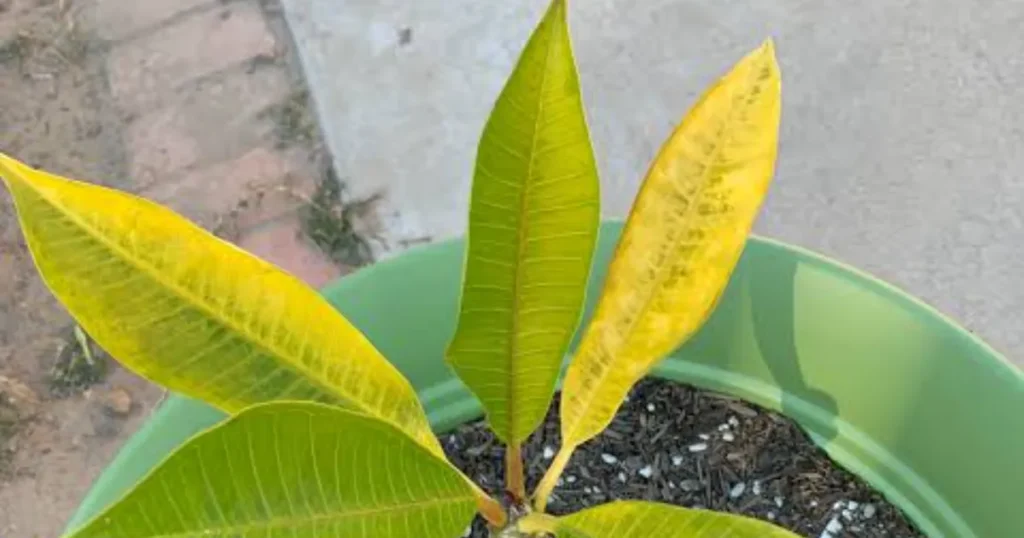
There isn’t one single answer there are six common causes, and each leaves a slightly different fingerprint on the plant. Once you learn to tell them apart, diagnosis gets much easier.
Overwatering
Overwatering is the number one reason plumeria leaves go yellow, and it’s the one most people accidentally make worse.
When the roots sit in soggy soil for too long, they can’t absorb oxygen properly. The plant essentially begins to drown from the inside, and yellowing leaves are its distress signal.
How to identify it:
The soil will still feel damp or wet even days after you watered. The yellowing tends to be uniform and spreads across multiple leaves, often starting in the lower canopy. You might also notice softness at the base of the stem or a faint musty smell from the soil both signs that root rot may have already begun.
Underwatering
Less common with plumeria than overwatering, but it does happen especially in hot summers when pots dry out faster than expected.
How to identify it:
The soil will be bone dry an inch or two below the surface. Leaves may also curl slightly or feel papery before yellowing if you’ve noticed that alongside the color change, take a look at why plant leaves curl for more context on drought stress signals.
Nutrient Deficiency
Plumeria are heavy feeders, particularly during the growing season. When they run short on key nutrients, the leaves are usually the first to show it.
How to identify it:
Nitrogen deficiency causes a general pale yellowing across older, lower leaves first the plant pulls nitrogen from older foliage to fuel new growth. Iron deficiency (chlorosis) shows up differently: the leaf tissue between the veins turns yellow while the veins themselves stay green. That interveinal pattern is the classic giveaway. For a broader look at pale or faded foliage, this guide on pale plant leaves breaks down what different discoloration patterns mean.
Cold Stress or Temperature Shock
Plumeria are tropical plants that genuinely dislike cold. They prefer temperatures above 5 – 0°F (1 – 0°C), and anything below that including cold drafts, air conditioning vents, or a sudden cold snap can trigger yellowing fast.
How to identify it:
The yellowing tends to appear quickly after a temperature change, rather than developing gradually. Lower or outer leaves are often most affected since they’re most exposed. If you’ve recently moved your plant, brought it indoors, or had an unseasonably cold night, temperature shock is a strong suspect.
Dormancy (Natural Seasonal Leaf Drop)
This one trips up newer plumeria growers more than any other. Most plumeria varieties are deciduous they naturally lose their leaves in fall and winter as they go dormant.
How to identify it:
The lower leaves turn yellow and drop cleanly, starting in late summer or early fall. The plant looks progressively more bare, but the stems stay firm and healthy. There are no spots, no mushy roots, no other symptoms. If this matches what you’re seeing, you don’t have a problem you have a healthy plant doing exactly what it’s supposed to do.
Root Rot
Root rot is the most serious cause on this list, and it’s almost always caused by prolonged overwatering or poor drainage. It can do significant damage before the symptoms become obvious above the soil.
How to identify it:
Yellow leaves combined with soft or discolored stems near the base, a foul smell from the soil, and dark mushy roots when you lift the plant out of its pot. If you suspect root rot, act quickly the longer it progresses, the harder it is to reverse.
How to Fix Yellow Plumeria Leaves
Once you’ve matched your plant’s symptoms to a cause above, here’s how to address it.
Fix Overwatering
Adjust your watering schedule immediately.
Let the soil dry out almost completely between waterings. For potted plumeria, push your finger two inches into the soil if it feels even slightly damp, wait another day or two before watering.
If the soil stays wet for days after watering, the issue may be poor drainage rather than frequency. Make sure your pot has drainage holes and that the mix isn’t too dense. A gritty, fast-draining mix (one part potting soil, one part perlite, one part coarse sand) works well for plumeria in containers.
For proper watering technique more broadly, this guide on watering plant leaves covers the key principles that apply here too.
Fix Underwatering
Water deeply and consistently.
When plumeria is underwatered, give it a slow, thorough soak until water drains freely from the bottom of the pot. Then establish a consistent schedule based on the season more frequent in summer heat, less in cooler months.
A moisture meter takes the guesswork out of this completely and is worth the small investment if you’re second-guessing yourself often.
I use a 3-in-1 moisture meter to take the guesswork out of watering it’s saved me from both overwatering and underwatering mistakes with my plumeria.
Take the guesswork out of watering plants and keeping the soil moist. It is both cost-effective and durable.
Best of all, it also measures pH and light. It’s worth a look.

Fix Nutrient Deficiency
Apply a balanced, high-phosphorus fertilizer during the growing season.
Plumeria do best with a fertilizer that’s lower in nitrogen and higher in phosphorus (look for an NPK ratio like 1 – 0-3 – 0-1 – 0 or a dedicated plumeria fertilizer). High nitrogen pushes leafy growth at the expense of blooms, so balance matters.
For iron chlorosis specifically, a foliar spray of chelated iron or an iron supplement added to the soil can correct the interveinal yellowing within a few weeks.
Feed from spring through late summer, then stop fertilizing in fall to let the plant prepare for dormancy naturally.
Fix Cold Stress
Move the plant somewhere warmer immediately.
If it’s in a container, bring it indoors or to a sheltered spot where temperatures stay consistently above 5 – 0°F. Keep it away from cold drafts, air conditioning vents, and exterior walls in winter.
New yellowed leaves may not recover, but the plant will stop producing more once temperatures stabilize. Give it a few weeks before expecting visible improvement.
Fix Root Rot
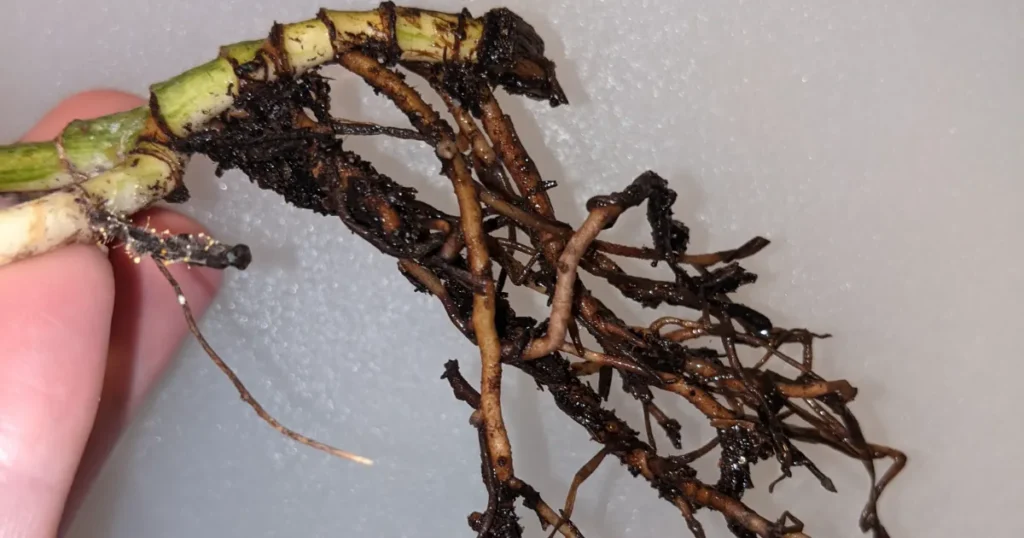
Act fast remove the plant from its pot and inspect the roots.
Healthy roots are firm and white or light tan. Rotten roots are dark brown or black, mushy, and may smell sour. Trim away all affected roots with clean, sterilized scissors, then dust the cuts with powdered sulfur or cinnamon to prevent further infection.
Repot into fresh, dry, well-draining soil and a clean container. Hold off on watering for 3 – 5 days to let the trimmed roots seal over before moisture is introduced again.
Quick Reference Diagnosis Table
| Cause | Visual Pattern | Fix |
|---|---|---|
| Overwatering | Uniform yellowing, damp soil, soft stem base | Reduce watering, improve drainage |
| Underwatering | Dry soil, papery/curling leaves, yellowing | Deep watering, consistent schedule |
| Nitrogen deficiency | Older lower leaves pale yellow first | Balanced fertilizer with moderate N |
| Iron deficiency (chlorosis) | Yellow between veins, veins stay green | Chelated iron supplement |
| Cold stress | Sudden yellowing after temperature drop | Move to warmth, avoid drafts |
| Dormancy | Lower leaves drop cleanly in fall | No action needed this is normal |
| Root rot | Yellow leaves + mushy stem/roots + smell | Remove rotted roots, repot in dry mix |
Prevention: How to Keep Plumeria Leaves Green and Healthy
Good prevention comes down to three things: consistent watering, regular feeding, and protecting your plant from cold.
Water deeply but infrequently plumeria genuinely prefer to dry out between waterings. In summer, that might mean watering every 5 – 7 days in a container; in cooler weather, every 1014 days or less.
Feed with a phosphorus-rich fertilizer every two to three weeks from April through August. Skip September onward to let the plant wind down naturally.
Keep temperatures above 5 – 0°F year-round, and if you grow plumeria outdoors in a cooler climate, plan to bring it inside before the first frost.
Watch for early pest pressure too aphids, mealybugs, and spider mites can stress the plant enough to trigger yellowing as a secondary symptom. If you notice anything unusual on the undersides of leaves, check for pest eggs on leaves or sticky residue both are early signs that insects may be contributing to the problem.
A neem oil spray (2 teaspoons of neem oil + 1 teaspoon of dish soap per quart of water) applied every two weeks during the growing season is excellent for keeping pests and fungal issues in check without harming the plant.
I finish my plumeria pest-prevention routine with a neem oil spray every two weeks during the growing season it keeps both insects and fungal issues at bay without harming the plant.
I use bliss pure neem oil from Amazon for a great price. It works great when it comes to shining leaves and provides a layer of protection for plants against common pests.

When to Worry
Most yellow-leaf situations on plumeria are manageable, but there are a few scenarios worth taking seriously.
Worry if the yellowing is spreading rapidly across the whole plant, especially if it’s accompanied by soft or discolored stems, a foul smell from the soil, or black mushy patches on the roots. That combination points to advanced root rot, which can kill a plant if not addressed within days.
Also keep an eye out if yellow leaves are paired with distorted new growth, sticky or webby residue on stems, or unusual spots those symptoms suggest a pest or disease issue on top of whatever else is going on.
In either case, the fix starts with getting the plant out of its pot to inspect the roots and soil. What you find there will guide your next steps.
Frequently Asked Questions
Should I remove yellow leaves from my plumeria?
Yes, once a leaf has turned fully yellow, it won’t recover. Removing it keeps the plant tidy and prevents any potential fungal issues from spreading. Use clean scissors and snip the leaf stem cleanly at the base.
Can plumeria recover from root rot?
Yes, if caught early enough. The key is removing all mushy roots, letting the plant dry out, and repotting in fresh dry soil. Plants with minor rot often bounce back within a month; severe cases may take a full growing season.
Why is my plumeria losing leaves in fall even though it looks healthy?
That’s dormancy completely normal for deciduous varieties. The stems will stay firm, and the plant will push new growth again in spring. Don’t fertilize or overwater during dormancy.
How often should I fertilize plumeria?
Every two to three weeks during the growing season (spring through late summer), using a fertilizer higher in phosphorus than nitrogen something like 1 – 0-3 – 0-1 – 0 or a dedicated plumeria blend. Stop fertilizing in September.
Does yellow foliage always mean a watering problem?
Not always. While overwatering and underwatering are the most common triggers, nutrient deficiencies, cold stress, and natural dormancy all produce yellow leaves too. Use the pattern and context clues which leaves, how fast, what changed recently to narrow it down.
The Bottom Line
Yellow leaves on plumeria are almost never a death sentence for your plant. The most common culprits overwatering, nutrient gaps, cold exposure, and dormancy are all fixable or completely normal depending on the season.
Take a moment to identify the pattern before you act: which leaves are yellowing, how quickly it’s spreading, what the soil feels like, and whether the timing lines up with a recent weather or care change. That observation step will save you from overcorrecting and making things worse.
Once you match the symptom to the cause, yellow plumeria leaves are one of the most straightforward plant problems to fix and with good drainage, consistent feeding, and a warm spot to call home, your plant will be back to producing those lush green leaves (and eventually those gorgeous blooms) before you know it.
Related Posts
- Holes on Rose Leaves: Causes and Fixes
- Why Are My Plant Leaves Curling?
- Pale Plant Leaves: What’s Causing the Color Loss
- Why Are My New Leaves Small?
- What Causes Sticky Plant Leaves?
Related Articles
Pepper leaves curling? Learn the 7 most common causes — from underwatering and heat stress to aphids and viral disease — plus step-by-step fixes to help your plants recover fast.
Pepper Leaves Turning Yellow: Why It Happens and How to Fix It
Pepper plant leaves turning yellow? Learn the 7 most common causes — from nitrogen deficiency to overwatering — and get specific, actionable fixes to bring your pepper plants back to health.