
You head outside to refresh your garden beds and notice something strange a fuzzy white crust, a blob of bright yellow foam, or a cluster of tiny cups scattered across your wood chips. It looks alarming, but before you reach for the rake, take a breath.
What you’re seeing is almost certainly mold growing on mulch, and in most cases it’s completely normal.
Mold growing on mulch is a natural decomposition process driven by moisture, organic matter, and warm temperatures. The 7 most common types are white saprophytic mold, yellow slime mold (Fuligo septica), bird’s nest fungi, artillery fungus, gray snow mold, pink mold, and mushroom fruiting bodies. Most are harmless to your plants and even beneficial to soil health but a few, like artillery fungus and pink mold, deserve a closer look.
The good news is that every type on this list can be managed or prevented with simple steps.
Knowing which type of mold you’re dealing with makes all the difference. Some you can ignore entirely; others need to be removed before they spread or cause cosmetic damage.
Why Mold Grows on Mulch
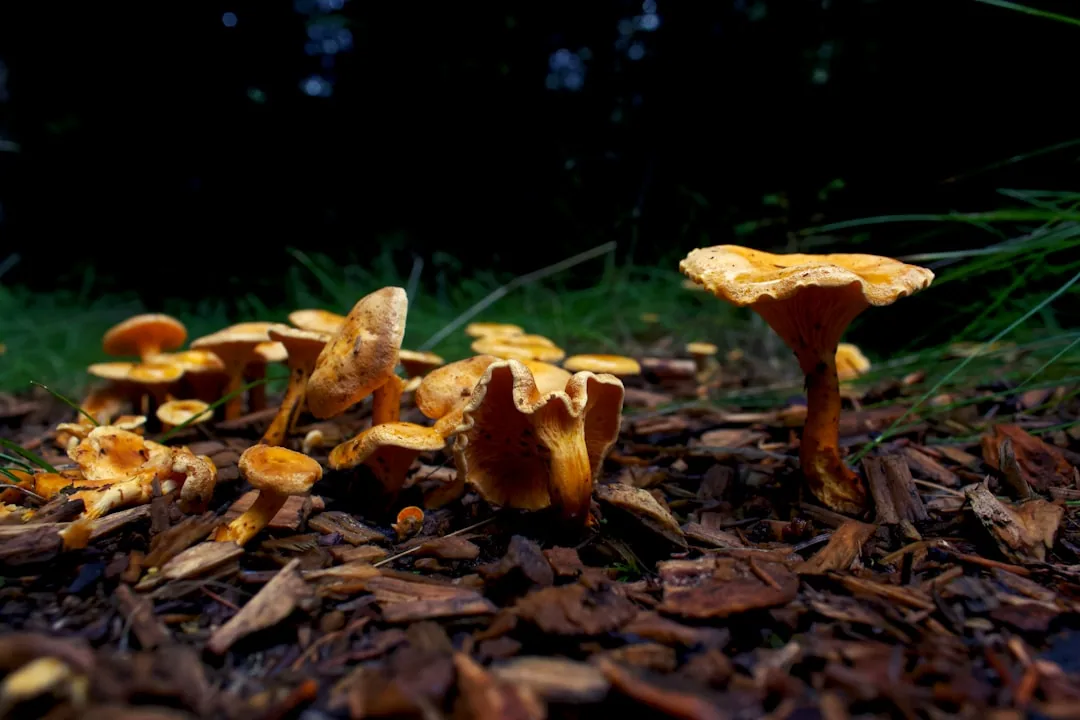
Mulch is essentially a pile of decomposing organic material sitting in warm, moist conditions. That’s the perfect recipe for fungal growth.
Fungi break down wood chips, bark, and straw into nutrients that feed your soil. Most of the mold you see is a sign that decomposition is working as it should.
Problems arise when mulch stays too wet for too long, is piled too thick, or has poor airflow. Those conditions favour aggressive mold types over the beneficial ones.
1. White Saprophytic Mold (Dog Vomit Slime Mold)
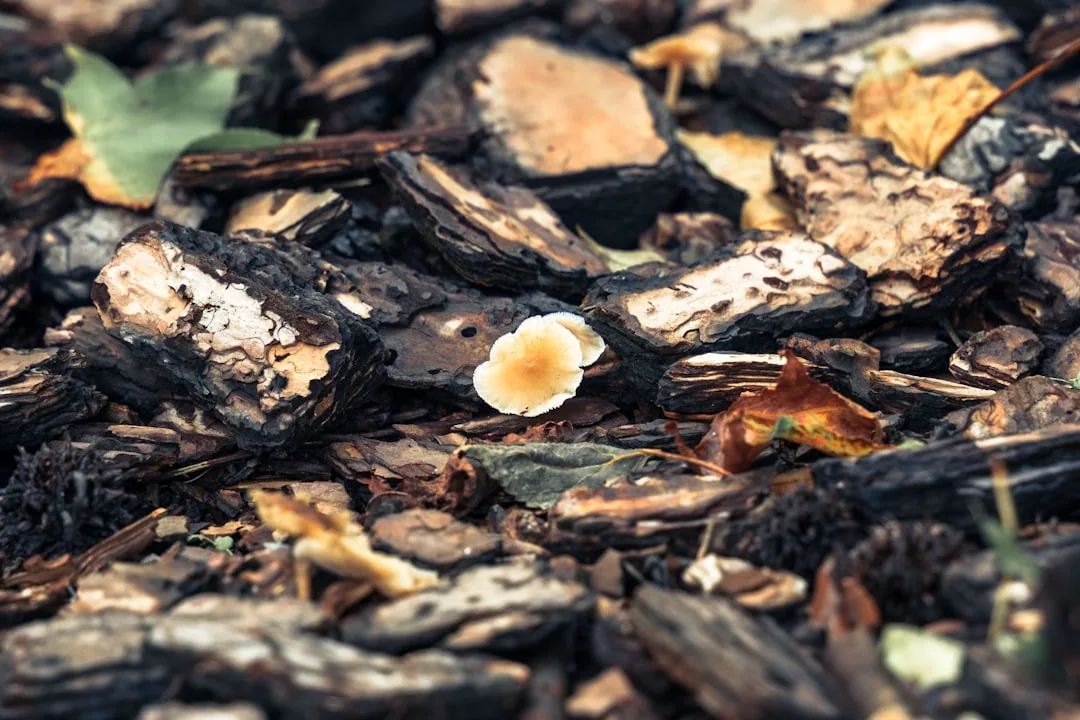
This is the most common mold you’ll find on mulch, and it has one of the least appealing nicknames in gardening. It starts as a white or cream-coloured fuzzy coating across the surface of your wood chips, then dries to a powdery crust.
What it looks like: A white, grey, or pale yellow mat of fine threads. When dry, it becomes a chalky, crumbly crust that breaks apart easily.
What it does: Absolutely nothing harmful. It feeds on dead organic matter in the mulch, not on your plants or their roots.
What causes it: Prolonged moisture, warm temperatures, and thick mulch layers that trap humidity underneath.
I use a handheld magnifying loupe (10x) from Amazon to look at mold types up close it makes it easy to tell harmless saprophytic threads from artillery fungus spore packs before they spread.
How to get rid of white saprophytic mold
- Rake the surface: Turn the top 2 – 3 inches of mulch to break up the mat and expose it to air and sunlight.
- Apply a hydrogen peroxide solution: Mix 1 part 3% hydrogen peroxide with 4 parts water and drench the affected area. This kills surface mold without harming your plants. For more uses of this treatment, see hydrogen peroxide solution.
- Reduce mulch depth: Pull mulch back to a 2 – 3 inch layer if it’s thicker than that deep layers hold too much moisture.
- Allow it to dry: Leave the bed undisturbed for 2448 hours. In most cases the mold disappears on its own once airflow improves.
2. Yellow Slime Mold (Fuligo septica)
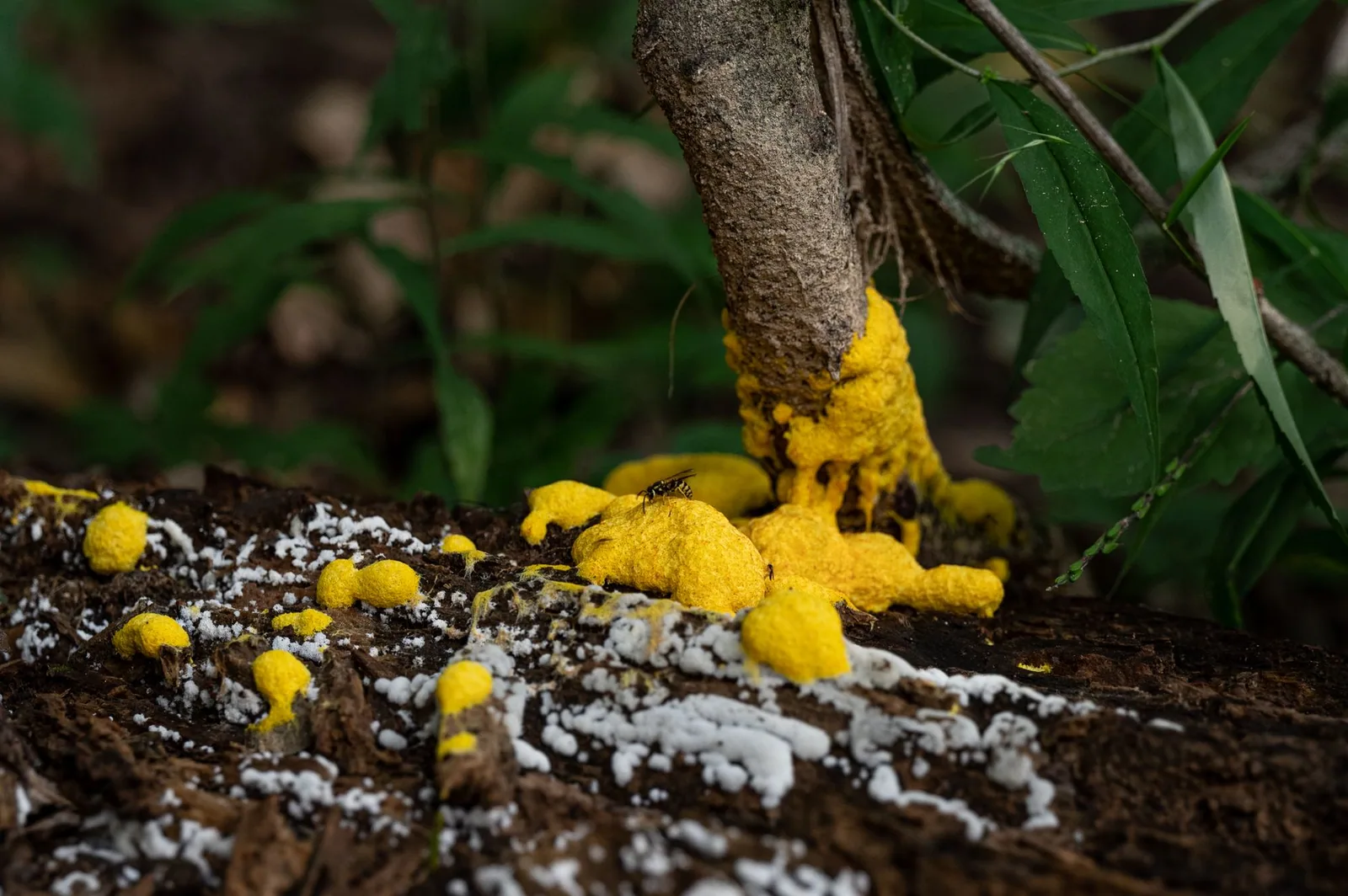
This one stops people in their tracks. It looks like scrambled eggs or foam insulation spilled across your garden bed, and it can appear almost overnight after heavy rain.
What it looks like: A vivid yellow, orange, or cream-coloured blob with a spongy or foamy texture. It can cover a patch of mulch the size of a dinner plate.
What it does: It’s a slime mold, not a true fungus, and it poses no threat to your plants. It feeds on bacteria and other microorganisms in the mulch.
What causes it: Hot, humid weather following heavy rainfall. It’s especially common in summer on fresh wood chip mulch. The same warm, moist conditions that drive mold growing on fertilizers also trigger this type.
How to get rid of yellow slime mold
- Leave it alone (option 1): In dry weather, it will shrink, turn brown, and disappear within a few days without any intervention.
- Scoop it out (option 2): If it bothers you, use a trowel to scoop the mass into a bag and dispose of it in the bin not the compost.
- Spray with water: A firm jet from a garden hose breaks up the mass and speeds drying.
- Rake and aerate: Turn the mulch underneath to reduce moisture and discourage a repeat appearance.
3. Bird’s Nest Fungi (Cyathus species)
These are genuinely fascinating and one of the more beautiful things you can find in a garden bed. Bird’s nest fungi look exactly like their name miniature nests, about the size of a fingernail, each containing several tiny “eggs.”
What they look like: Small grey, brown, or tan cups (310 mm wide) with a fluted or ridged interior. The “eggs” are spore packets called peridioles.
What they do: They decompose wood and organic matter. The cup shape is a clever evolutionary design raindrops splash the spore packets out of the cup and disperse them up to a metre away.
What causes them: Moist conditions and decaying wood mulch, particularly after prolonged wet weather in spring or autumn.
How to get rid of bird’s nest fungi
- Do nothing: They are completely harmless and will die off naturally as conditions dry out.
- Remove by hand: If you find them unsightly, simply pick the cups out and dispose of them.
- Replace old mulch: If bird’s nest fungi appear every season, your mulch may be too old and decomposed replace it with a fresh 2 – 3 inch layer.
4. Artillery Fungus (Sphaerobolus stellatus)
This is the one type of mold on mulch that genuinely earns your attention not because it harms plants, but because it causes serious cosmetic damage to everything nearby.
What it looks like: Tiny cream or orange-brown cup structures, about 1 – 2 mm wide, that fire sticky black spore masses into the air. The spore masses look like small black dots and stick firmly to surfaces like car paint, house siding, and windows.
What it does: The spores are nearly impossible to remove once they dry. They can permanently stain light-coloured surfaces.
What causes it: Moist, shaded conditions in wood chip or bark mulch, especially mulch placed close to buildings or vehicles.
How to get rid of artillery fungus
- Remove affected mulch: Bag and dispose of any mulch where you spot the tiny cups do not compost it.
- Scrub surfaces immediately: Remove fresh spore dots with a soft cloth and soapy water before they harden. Once dry, they are extremely difficult to shift.
- Switch mulch types: Replace wood chip mulch near your home with pine bark nuggets, rubber mulch, or stone artillery fungus does not thrive in these materials.
- Mix in compost: Studies suggest that blending mushroom compost into wood chip mulch at a 4 – 0% ratio significantly reduces artillery fungus. See notes on mixing old mulch into soil for guidance on turning over existing beds.
5. Gray Snow Mold (Typhula incarnata)
Gray snow mold is a cold-weather fungus that shows up in late winter or early spring, particularly under straw mulch or in lawn areas that were covered by snow for extended periods.
What it looks like: A pale grey or white matted crust on the soil surface. You may also notice tan or pink sclerotia (tiny hard dots) embedded in the mat.
What it does: Unlike most molds on this list, gray snow mold can damage grass blades and the crowns of young plants if it’s severe. It thrives under cold, wet conditions.
What causes it: Extended snow cover over moist mulch or turf, particularly in temperatures between 2840°F (ˆ’2 – 4°C).
How to get rid of gray snow mold
- Rake thoroughly: As soon as the snow melts, rake the affected area to break up the mat and improve airflow.
- Remove damaged material: Bag any heavily matted straw or dead grass don’t leave it in place.
- Allow the area to dry: Avoid watering until the surface has fully dried out.
- Overseed if needed: If grass crowns are damaged, overseed bare patches once soil temperatures reach 5 – 0°F (1 – 0°C).
- Reduce mulch depth in autumn: Keeping straw mulch to 2 inches or less going into winter significantly reduces the risk of gray snow mold the following spring.
6. Pink Mold (Trichothecium roseum)
Pink mold stands out immediately a dusty rose or salmon-coloured powdery coating on the surface of organic mulch. It’s more common in vegetable gardens where straw or hay mulch is used.
What it looks like: A pink, salmon, or light red powdery coating, usually in irregular patches across the mulch surface.
What it does: It primarily decomposes organic matter, but it can spread to plant stems and soft fruit if conditions are very wet. It’s worth monitoring near fruiting plants.
What causes it: High humidity, warm temperatures, and dense organic mulch like straw, hay, or using compost as mulch in poorly ventilated beds.
How to get rid of pink mold
- Remove affected mulch: Scoop out the pink-coated material and dispose of it in the bin.
- Improve airflow: Pull remaining mulch away from plant stems, leaving a 2-inch gap around each base.
- Apply a hydrogen peroxide drench: Mix 1 part 3% hydrogen peroxide with 4 parts water and apply to the exposed soil surface.
- Monitor plant stems: Check stems weekly for 2 – 3 weeks after removal. If pink mold reaches the stem, treat with a dilute neem oil spray.
7. Mushroom Fruiting Bodies (Various Species)
Finding mushrooms sprouting from your mulch is one of the most common gardening surprises and one of the least worrying. They’re simply the visible fruiting bodies of fungi already living inside your mulch.
What they look like: Anything from small brown button mushrooms to large toadstools with pale caps. They typically appear overnight after rain.
What they do: They indicate healthy, active decomposition in your mulch. The underground mycelium network is breaking down wood fibre and releasing nutrients into the soil.
What causes them: Moist conditions, warm temperatures, and well-established fungal colonies in older mulch. Shaded beds are more prone to persistent fruiting.
How to get rid of mushrooms in mulch
- Snap them off: Remove mushrooms at the base before they release spores if you want to slow regrowth.
- Do not eat them: Unless you are an expert mycologist, never eat mushrooms found in garden beds.
- Rake the surface: Disrupting the top layer of mulch reduces moisture retention and slows future fruiting.
- Replace old mulch: If mushrooms appear every season, the mulch is fully decomposed. Remove it and apply a fresh 2 – 3 inch layer.
When Mold on Mulch IS a Problem
| Mold Type | Harmful to Plants? | Harmful to Property? | Action Needed? |
|---|---|---|---|
| White Saprophytic Mold | No | No | Optional rake and aerate |
| Yellow Slime Mold | No | No | Optional remove if unsightly |
| Bird’s Nest Fungi | No | No | No |
| Artillery Fungus | No | Yes stains surfaces | Yes remove immediately |
| Gray Snow Mold | Sometimes (grass/crowns) | No | Yes rake and dry out |
| Pink Mold | Sometimes (stems/fruit) | No | Yes remove and monitor |
| Mushroom Fruiting Bodies | No | No | Optional snap off |
The vast majority of mold on mulch is harmless. The two that deserve prompt action are artillery fungus (because of property damage) and pink mold (because it can reach plant tissue in wet conditions).
I keep cold-pressed neem oil concentrate (organic) from Amazon on hand for the rare cases when pink mold spreads to plant stems a light foliar spray at 2 tablespoons per gallon of water stops it before it becomes a real problem.
If you want a perfect organic remedy for getting rid of worms that may be damaging your precious plants and veggies, then the Garden Safe neem oil extract will do the trick.

How to Prevent Mold on Mulch
- Keep mulch depth at 2 – 3 inches. Deeper layers trap moisture and create the dark, humid conditions mold loves. Shallower mulch dries out faster between rain events.
- Leave a gap around plant stems and tree trunks. Maintain a 2-inch clear zone between mulch and any stem or trunk. This prevents moisture from sitting against plant tissue.
- Rake and turn mulch regularly. Disturbing the surface every 4 – 6 weeks breaks up mold mats, improves airflow, and exposes spores to sunlight.
- Avoid overwatering mulched beds. Mold needs sustained moisture to establish. Let the top inch of mulch dry between watering sessions.
- Replace old mulch annually. Fully decomposed mulch holds more moisture and supports more fungal activity. Removing and refreshing it each spring keeps the cycle manageable. If you’re working on a lawn area, pairing good mulch management with best soil for growing grass gives you a strong foundation.
- Choose the right mulch for problem areas. Near buildings or vehicles, swap wood chips for pine bark nuggets, gravel, or rubber mulch to reduce artillery fungus risk.
- Apply dilute neem oil as a preventative. Mix 2 tablespoons of cold-pressed neem oil with 1 gallon of water and 1 teaspoon of dish soap. Spray the mulch surface every 3 – 4 weeks during warm, wet weather to suppress fungal growth before it starts.
The Bottom Line
Mold growing on mulch is almost always a sign of a healthy, functioning garden ecosystem. Fungi are the engine of decomposition, and the white crusts, yellow blobs, and tiny cups you find in your beds are proof that your mulch is doing exactly what it’s supposed to do.
The only two types that genuinely need your attention are artillery fungus which stains surfaces permanently and pink mold, which can occasionally spread to plant stems in very wet conditions. Everything else can be managed with a quick rake, a hydrogen peroxide drench, or simply left to disappear on its own.
The single most effective thing you can do is keep your mulch layer at 2 – 3 inches, turn it regularly, and never let it stay waterlogged that one habit prevents nearly every mold problem on this list.
Related Posts:
- Hydrogen Peroxide for Plants: 1 – 1 Uses & Mixing Ratios
- Mold Growing on Fertilizers
- Mixing Old Mulch Into Soil
- Termites in Mulch
- Preventing Mulch from Washing Away
Related Articles
Pepper leaves curling? Learn the 7 most common causes — from underwatering and heat stress to aphids and viral disease — plus step-by-step fixes to help your plants recover fast.
Pepper Leaves Turning Yellow: Why It Happens and How to Fix It
Pepper plant leaves turning yellow? Learn the 7 most common causes — from nitrogen deficiency to overwatering — and get specific, actionable fixes to bring your pepper plants back to health.